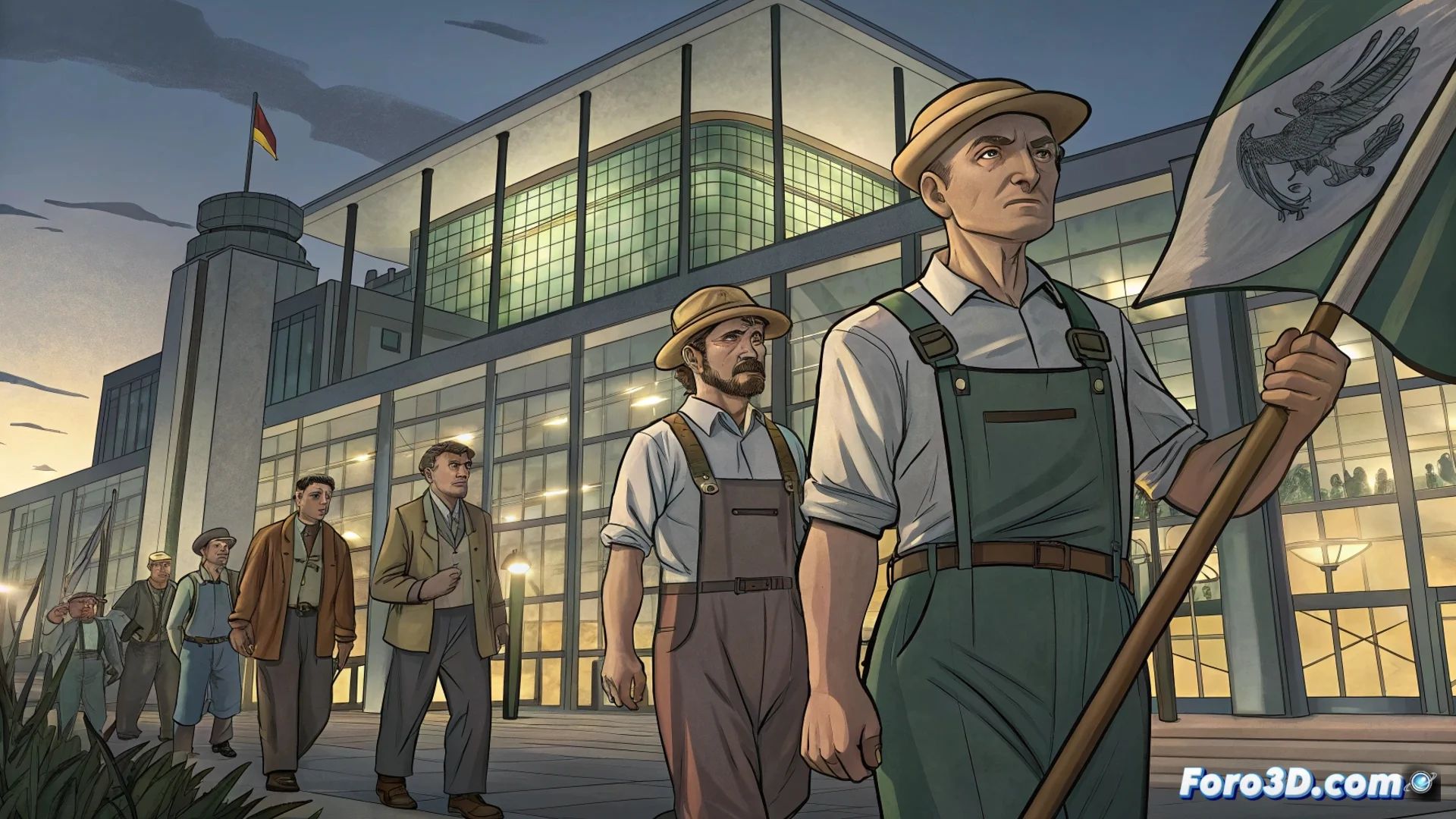
German Agrarian Associations Pressure to Protect the Sector
The main representatives of the agricultural sector in Germany are exerting intense pressure on the government in Berlin. Their central demand is to promote the EU's Common Agricultural Policy and firmly defend national production. The reason is clear: to counteract the impact they anticipate from agro-food imports from Mercosur countries. 🚜
The Focus on Perceived Unfair Competition
German agrarian organizations argue that trade agreements with the South American bloc endanger the viability of their farmers and ranchers. They claim that they are exposed to commercial rivalry that, in their opinion, is not based on equivalent rules regarding quality, environment, and animal welfare. This, they argue, increases their production costs and puts them at a disadvantage.
Action Strategies Deployed:- Organize awareness campaigns aimed at the public to gain social support.
- Hold frequent meetings with Bundestag deputies to directly influence legislation.
- Pressure to achieve protectionist measures or, alternatively, economic compensations that cushion the effect of an agreement with Mercosur.
The German agricultural sector mobilizes: the defense of their production standards is the red line they are not willing to cross.
Reactivating a Crucial European Debate
This movement brings back to the table a deep discussion within the European Union. It debates how to balance the principles of global trade openness with the need to protect a strategic sector such as agriculture. The German government navigates complex waters, caught between its international commitments and the internal pressure from a group with significant socioeconomic and political weight.
Key Points of the Internal Conflict:- The disparity of standards between European production and that of third countries.
- The social and political pressure exerted by a well-organized and visible sector in its protests.
- The tension between liberalizing trade and maintaining food sovereignty and local production models.
A Sector That Asserts Itself Strongly
While tractors become a habitual symbol of protest in European capitals, the agrarian mobilization in Germany raises a fundamental question: is the primary sector