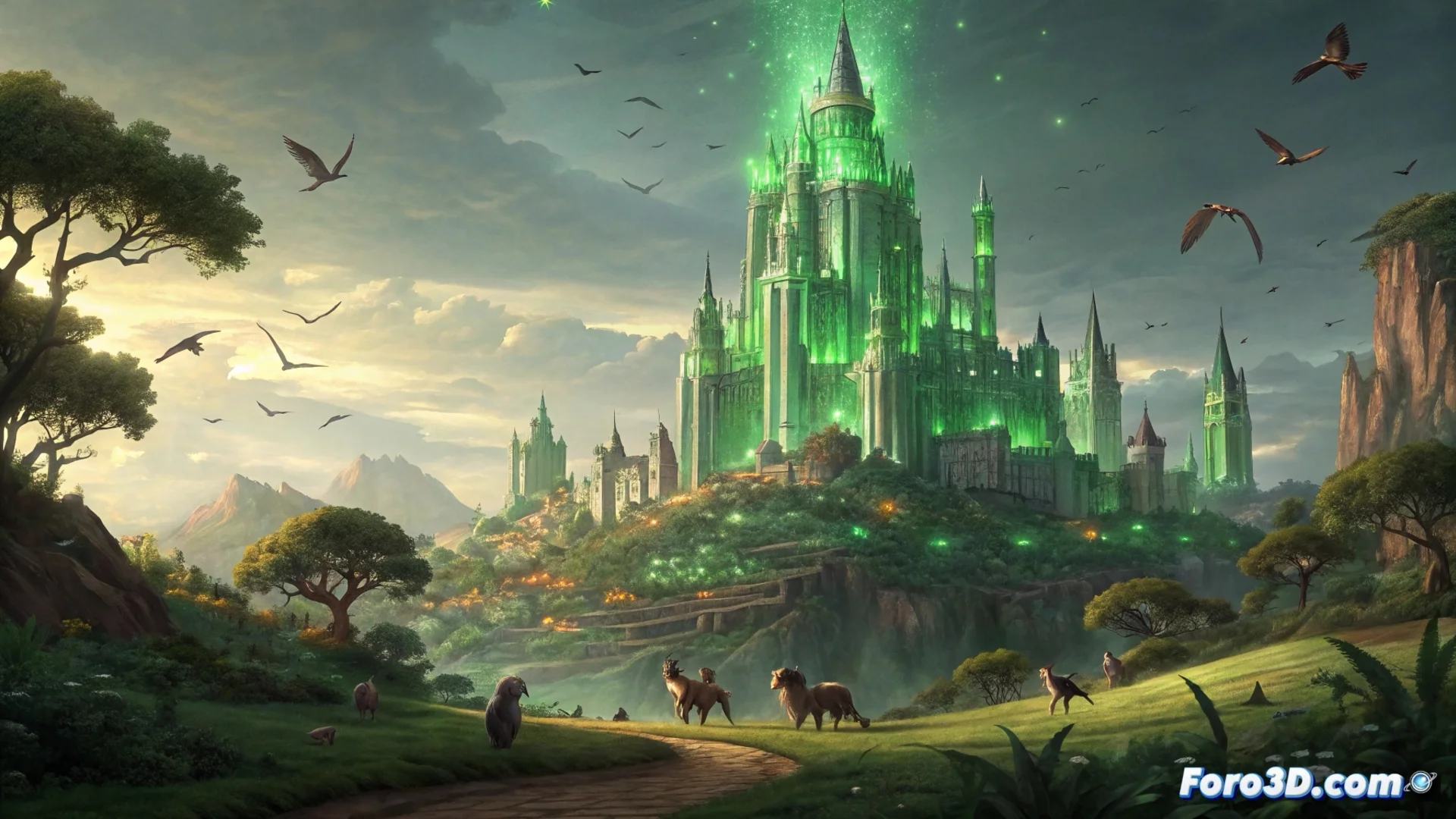
Framestore Expands the World of Oz with Visual Effects for Wicked: For Good
In the production of Wicked: For Good, the studio Framestore takes the universe of Oz beyond its known limits. Through large-scale visual effects, they make iconic scenarios transcend their physical restrictions, creating an immersive and magical experience 🎬.
Fusing the Physical with the Digital
The process begins with the sets built on the stage, which the artists scan with millimeter precision. From this data, the team models and textures in 3D to generate identical digital assets. These replicas serve as the foundation for building extensions that multiply the scale of locations like the Emerald City or Munchkinland. The key lies in applying lighting and rendering techniques that faithfully emulate the set's conditions, allowing the viewer to perceive a continuous and unified space.
Key Stages of the Process:- High-resolution scanning of physical sets to capture every detail.
- Modeling and texturing in 3D to create precise digital assets.
- Building digital extensions that expand the world beyond the physical set.
- Integrating lighting and rendering to unify real and digital without transitions.
The goal is for the viewer not to distinguish where the set ends and the visual effect begins.
Populating Oz with Digital Creatures
A different technical challenge was populating these expanded worlds. The team designs, models, and animates hundreds of computer-generated animals, from exotic birds to fantastic mammals. Each creature requires a complex animation system for its movements to be natural. The artists simulate hair, feather, and skin dynamics, integrating these elements into the scenes with believable physical interactions.
Steps in Creating CGI Creatures:- Design and model hundreds of animals with complex rigs for expressive animation.
- Simulate realistic dynamics of hair, feathers, and skin.
- Integrate the creatures into scenes with believable physical interactions.
- Balance their presence to enrich the narrative without stealing the spotlight.
The Art of Integrating Without Distracting
The final success lies in invisible integration. It's about ensuring a winged monkey in a suit doesn't divert attention from a singing witch. Achieving this harmony between characters, environments, and creatures is