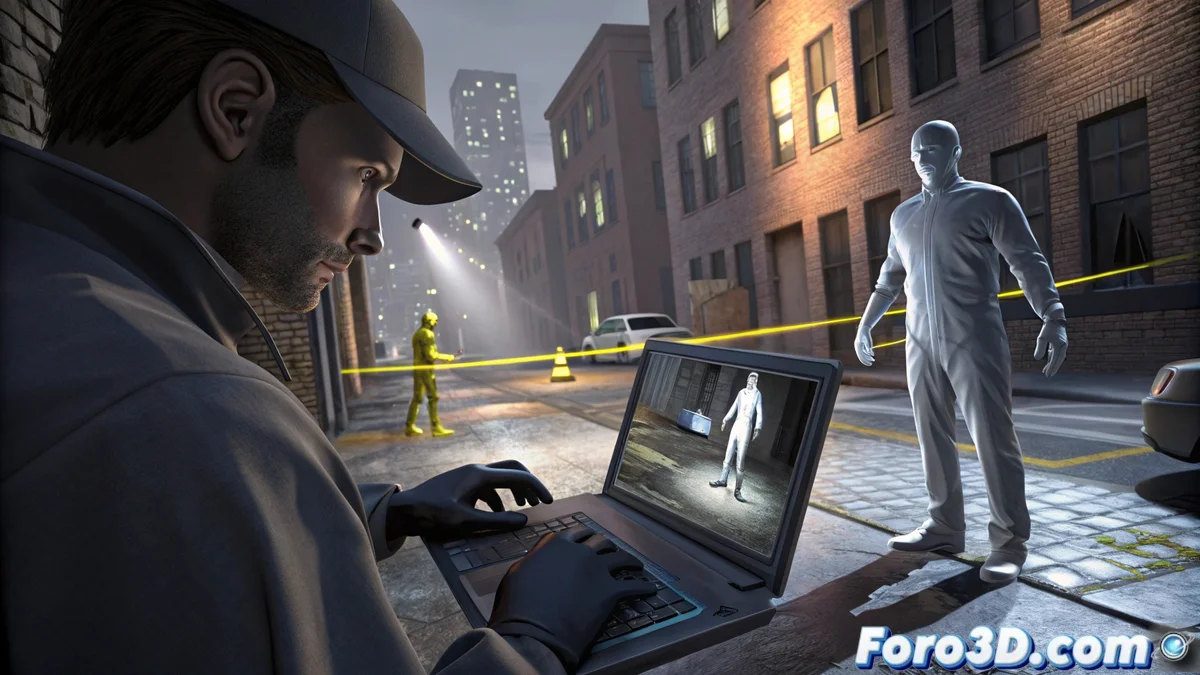
Forensic Shadow Dating Verifies Alibis with 3D Models
When a suspect claims to be at a location different from the crime scene, their alibi can be dismantled with a simple photograph. The key is not always in their face, but in the shadows that accompany them. To analyze them, investigators apply a 3D forensic workflow that combines several technical disciplines. 🕵️♂️
Reconstruct the Scene with Millimeter Precision
The first step is to digitally capture the crime scene. A 3D laser scanner, such as the Leica Cyclone system, is used to generate an exact virtual replica. This 3D model contains all the geometry, textures, and position of every object, serving as a digital twin of reality where tests can be performed.
Key Components of the Forensic Model:- Exact Geometry: Dimensions and shapes of all scene elements are recorded.
- Real Textures: Photographs are applied to achieve a photorealistic appearance.
- Geolocation: GPS coordinates are anchored for precise astronomical calculations.
The shadow is a silent witness that never lies about the time. 3D technology gives it a voice.
Simulate the Sun's Path with Specialized Software
With the 3D model ready, the next step is to recreate the lighting conditions on the day of the incident. For this, solar path software is used, such as Sun Seeker or the tools integrated in SketchUp. Investigators enter the date and time claimed by the suspect. The program calculates the angle of incidence of sunlight and projects virtual shadows onto the 3D model. These simulated shadows are the comparison pattern.
Tools for Solar Analysis:- Astronomical Software: Calculates the exact position of the sun for any date and location.
- Render Engines: Programs like 3ds Max or Blender generate virtual shadows on the 3D model.
- Comparison Software: Allows overlaying and analyzing differences between the real image and the render.
The Final Verdict is Given by the Shadows
The process is iterative. If the virtual shadows do not match in direction, length, or shape with those in the evidence photograph, the time is adjusted in the astronomical software. The simulation is repeated until the 3D render and the real image fit perfectly. The time that produces this match is the one certified by the photograph. This technique, which combines photogrammetry, astronomy, and rendering, provides an objective timeline to confirm or refute an alibi in a scientific and irrefutable manner. ⏳