Faceform Releases New Versions of Wrap and Wrap4D
The company Faceform has announced that the updates Wrap 2025.11 and Wrap4D 2025.11 are now available. These new versions are designed to optimize how artists work with 3D scan data and volumetric sequences, making the workflow for reconstructing models faster and more straightforward. 🚀
Key Improvements in Wrap 2025.11
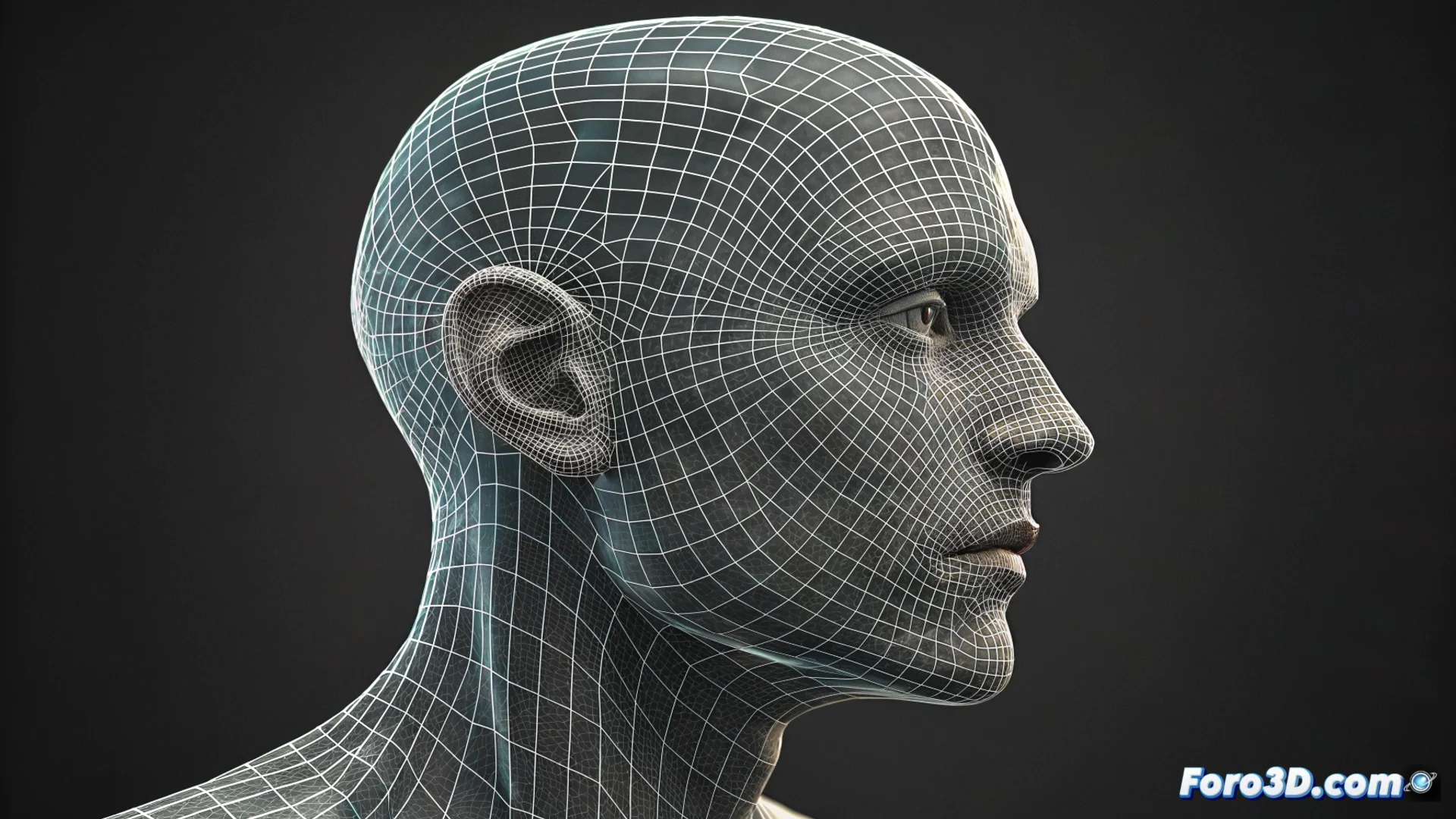
The Wrap 2025.11 version focuses on streamlining work with 3D scans. It introduces an automatic retopology mode that can generate meshes with clean topology from very dense or noisy scan data. This system is capable of processing both point clouds and complex meshes to produce animation-ready results. Additionally, an improved module has been added for merging multiple scans more efficiently, significantly reducing the time spent cleaning and joining data.
Main New Features:- New automatic retopology algorithm to create animatable meshes.
- Ability to process point clouds and noisy geometry.
- Optimized module for merging multiple scans quickly.
With these tools, the process from scan to usable model is greatly simplified.
Advances in Wrap4D 2025.11
For its part, Wrap4D 2025.11 specializes in reconstructing 4D geometry from volumetric capture sequences. The update improves algorithms for aligning and processing frames coherently, creating meshes that remain stable over time. It includes specific tools for cleaning artifacts and smoothing the resulting geometry, making it easier to obtain consistent 4D data ready for production use.
New Features in 4D Reconstruction:- Improved algorithms for aligning volumetric sequences.
- Tools for cleaning artifacts and smoothing the final mesh.
- Optimized workflow for generating coherent 4D data for animation.
A More Agile Workflow
The common goal of both updates is clear: accelerate model reconstruction. Whether from a single 3D scan or a complex 4D sequence, the new tools aim to minimize manual and technical work. As they colloquially mention, now the slowest part of the process might be brewing a strong coffee, though even that's still optional. ☕ The focus is on allowing artists to concentrate more on the creative part and less on cleaning data.