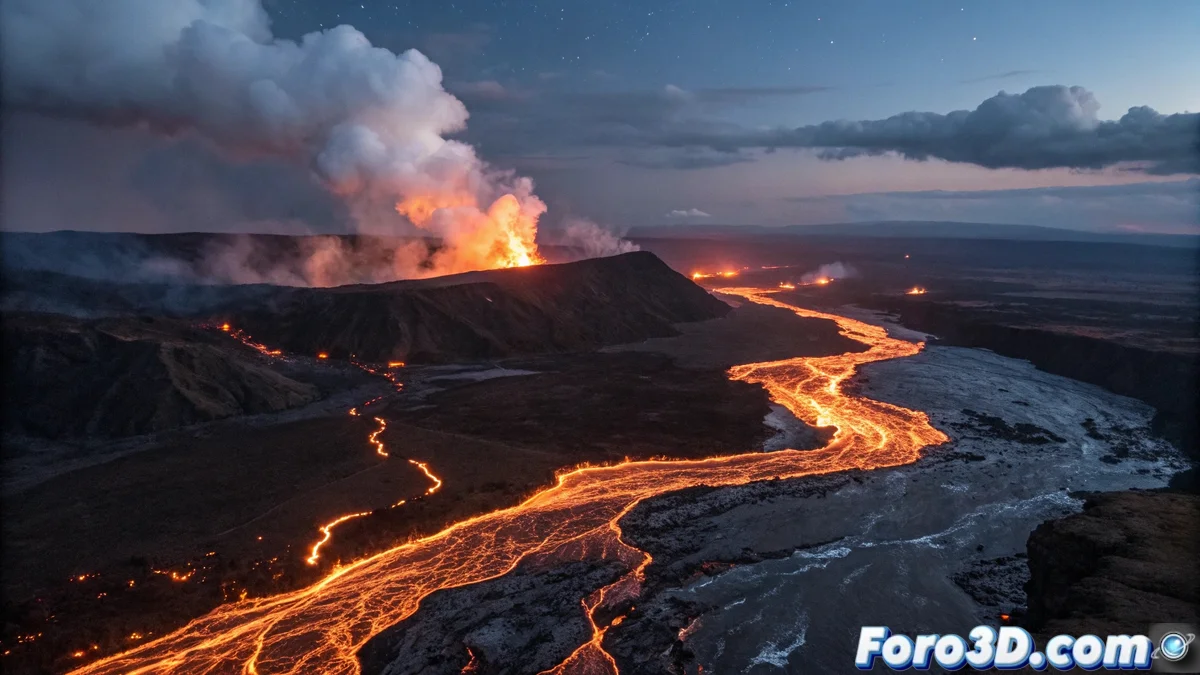
Eruptive Pause at Kīlauea Volcano Delays Lava Fountain Phase
The Halemaʻumaʻu crater of Kīlauea volcano has experienced a significant interruption in lava overflows this morning, indicating a notable delay in the start of the high fountain phase corresponding to eruptive episode number 36 🌋
Current Eruptive Behavior
According to reports from the USGS Hawaiian Volcano Observatory, crater inflation has stabilized in recent days, allowing the forecast period for the next eruptive phase to be extended, anticipated to occur before Tuesday, November 11. This pause provides scientists with a crucial observation window to analyze activity patterns.
Characteristics of Previous Activity:- The north vent had generated massive overflows and dome-shaped fountains with minimal spattering
- The emitted magma showed a high degree of degassing according to observations
- Volcanic tremor patterns have transitioned toward a more constant seismic activity
The volcano seems to be taking its time to decide when to put on its next natural pyrotechnic show, demonstrating that nature follows its own calendar
Volcanic Monitoring Parameters
Measurement instruments have not recorded significant changes in ground deformation, while sulfur dioxide emissions remain at relatively low levels, fluctuating between 1,200 and 1,500 tons per day. These values represent a moderate activity compared to previous episodes.
Current Key Indicators:- Ground deformation: no significant variations
- Volcanic tremor: transition to more stable patterns
- SO₂ emissions: remaining at low levels
Historical Eruptive Context
The previous episode, identified as number 35, which occurred between October 17 and 18, produced lava fountains that reached extraordinary heights of up to 460 meters and generated approximately 10 million cubic meters of volcanic material, covering about two-thirds of the crater floor. This prior event serves as a stark reminder of the destructive potential that Kīlauea can unleash, even when current phases appear more tranquil 🌄