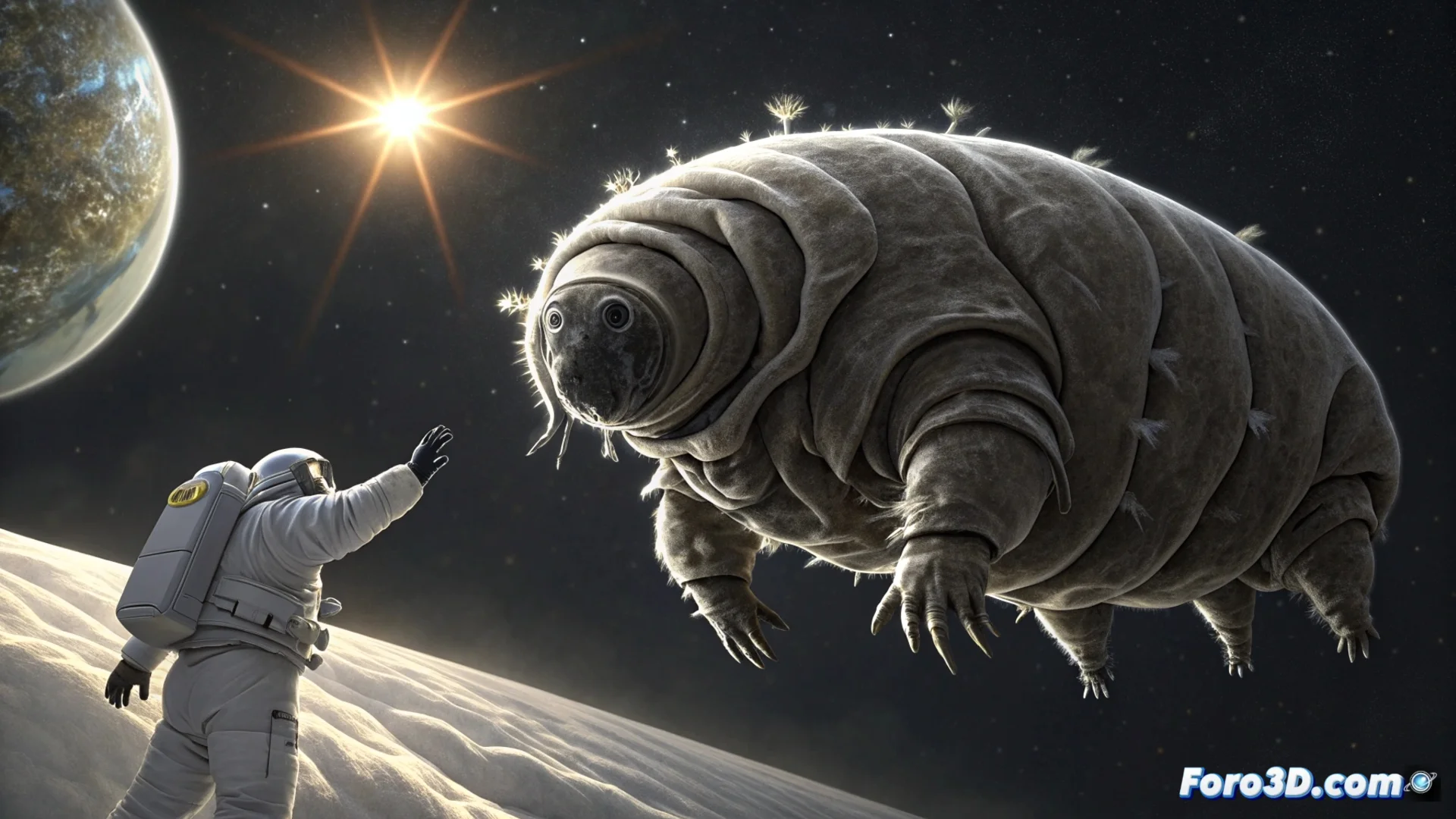
Equipping Astronauts with Tardigrade Resistance is More Complex Than Expected
A recent scientific analysis indicates that the obstacles to transferring the amazing ability of tardigrades to survive in the vacuum of space to humans are greater than estimated. Experts examine the unique proteins of these microorganisms, but incorporating these systems into human biology without generating collateral problems represents an enormous challenge. The prospect of using genetic modification so that astronauts tolerate extreme levels of radiation and desiccation seems increasingly distant 🧬.
Dsup Proteins Offer Protection, but Are Not a Complete Solution
Attention focuses on Dsup proteins, which tardigrades synthesize to shield their genetic material against radiation damage. Laboratory tests confirm that these proteins can give human cells in culture a degree of resistance. However, this benefit is partial and does not equate to the integral survival of the organism in the hostile space environment. The tardigrade activates a combination of tactics, such as completely dehydrating to enter cryptobiosis, something that Dsup proteins alone cannot replicate in a system as complex as ours.
Key Limitations of Biological Transfer:- The protective effect on human cells is limited and does not cover the entire physiology.
- The state of suspended animation (cryptobiosis) used by the tardigrade cannot be imitated.
- Survival in space depends on multiple mechanisms, not just protecting DNA.
Integrating mechanisms from a microscopic organism into human biology without altering essential functions is one of the most formidable challenges of bioengineering.
Modifying the Human Genome Carries Significant Risks
Altering the astronauts' genome to express tardigrade genes implies dangers that cannot be foreseen with exactitude. This intervention could trigger adverse immunological reactions or affect fundamental cellular processes in the long term. The scientific community also discusses the ethical implications of performing permanent genetic modification on people, especially for missions that are not crucial for preserving the species. For now, improving physical shields on spacecraft and spacesuits emerges as a more feasible and less risky route to protect crews.
Main Challenges and Considerations:- Unpredictable risks when interfering with the established human genome.
- Possibility of triggering unwanted autoimmune responses.
- Ethical debate on permanent modification in humans for space travel.
Conclusion: A Long Road Ahead
For the moment, the idea that humans achieve the tenacity of a water bear seems reserved for science fiction. Research advances, but the safest paths involve optimizing existing technology. Perhaps, in the short term, the closest thing is to admire the resilience of these microanimals from afar, or maybe carry a talisman in the shape of a tardigrade on board as a symbol of good fortune 🚀.