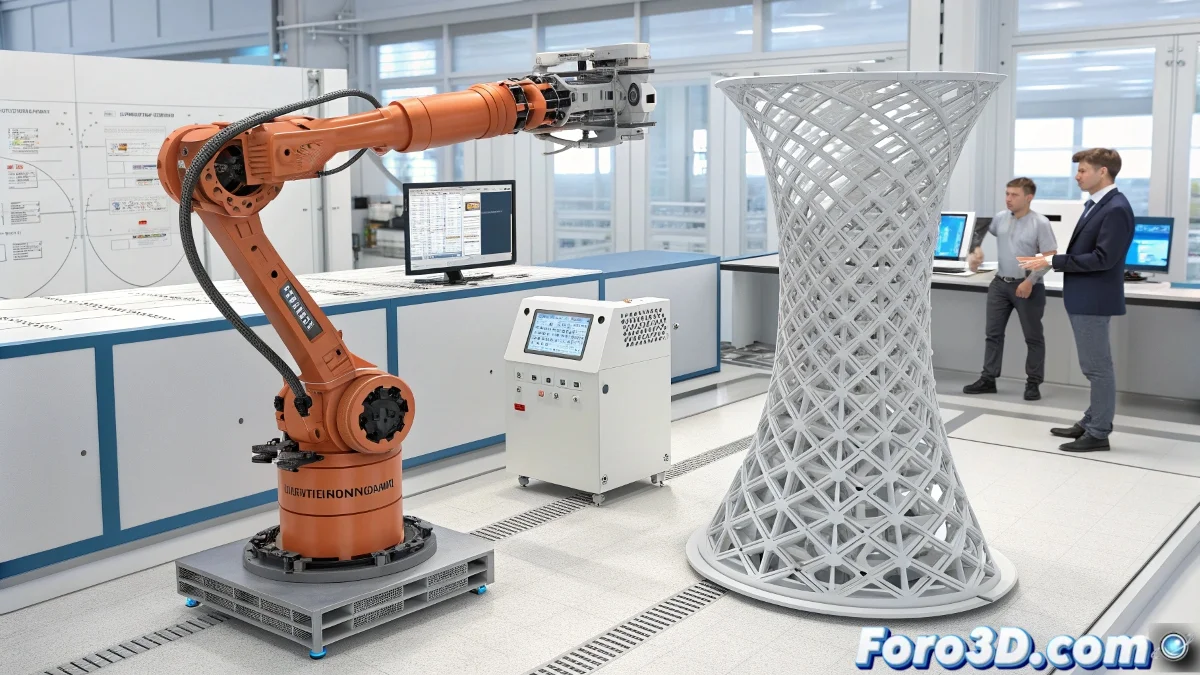
The Foam That Thinks: When a Material Does the Work of Ten
EPFL researchers have created what could be called the "chameleonic material" for robotics 🦎⚙️. Its programmable lattice structure demonstrates that with a single type of foam and a lot of smart geometry, properties can be achieved that previously required complex assemblies of multiple materials.
Geometry = Superpower
The secret lies in the internal cell design: - Hexagonal cells for greater rigidity - Concentric patterns for impact absorption - Auxetic structures for unusual behaviors All this in the same block of material, simply by changing its internal architecture as if it were physical programming code 💻🧱.
It's like having a Lego kit where each piece can be rigid or flexible depending on how you turn it. Except here the instructions are written in mathematical equations — explains the team, as their creation transforms from sponge to almost solid before their eyes.
Why Future Robots Will Love This Material
- Radical Simplification: One material replaces multilayer systems
- Real-Time Adaptability: Changes behavior according to needs
- Sustainable Manufacturing: Less waste and complex processes
- Lightweight: Ideal for aerial and portable applications
Applications range from rescue robots that adapt their rigidity to the terrain, to smart prostheses that modify their flexibility according to the activity. And all without changing materials, just "reprogramming" their internal structure.
So designers and engineers: get ready for a world where materials are not what they are, but what you configure them to be. The boundary between the physical and the digital has just become blurrier than ever... and spongily flexible 🛸💫.