Eddington: when VFX are so good that even Ari Aster doesn't notice them
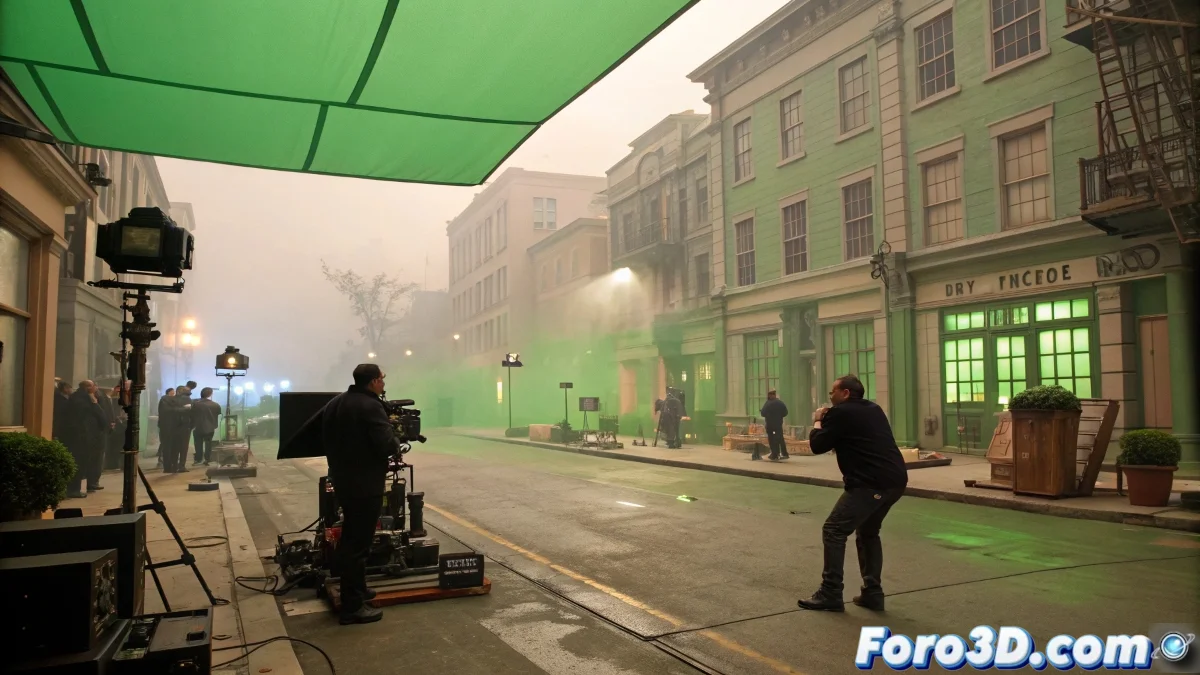
Ari Aster's new miniseries seems like a classic political drama... until you discover that half the town doesn't exist. Behind its loaded dialogues and intense performances, there's an army of digital artists who built everything from empty streets to street riots, all without leaving a visible digital trace. The perfect trick.
"We wanted the audience to feel the tension, not admire our renders" — VFX Supervisor at Brainstorm Digital.
A fictional town with more polygons than inhabitants
What we see on screen is a digital puzzle created by three studios:
- Brainstorm Digital: aged buildings and broken wires that never hung from a real pole
- Cadence Effects: AI-generated crowds for pandemic scenes 🤖
- Phosphene: atmospheric nights where even the rain has source code
The art of making the invisible visible
The technical challenges included:
- Dynamic matte paintings that respond to camera movement
- Fog simulations in Houdini with realistic physics
- Light integration between real actors and digital environments
Software that will never ask for credits
The pipeline was as diverse as it was invisible:
- Modeling in Maya and Blender for urban structures
- Texturing in Substance Painter for perfect wear
- Final compositing in Nuke and Fusion to erase the seams
The paradox of perfect VFX
The better the effect works, the more its existence is questioned. Eddington proves that VFX aren't just for spaceships: sometimes their best work is making an ordinary world believable. But now that you know, will you be able to watch the series without hunting for the treacherous pixel? 🔍 Note: If you find an unrendered graphic, Ari Aster probably left it there on purpose to scare you.