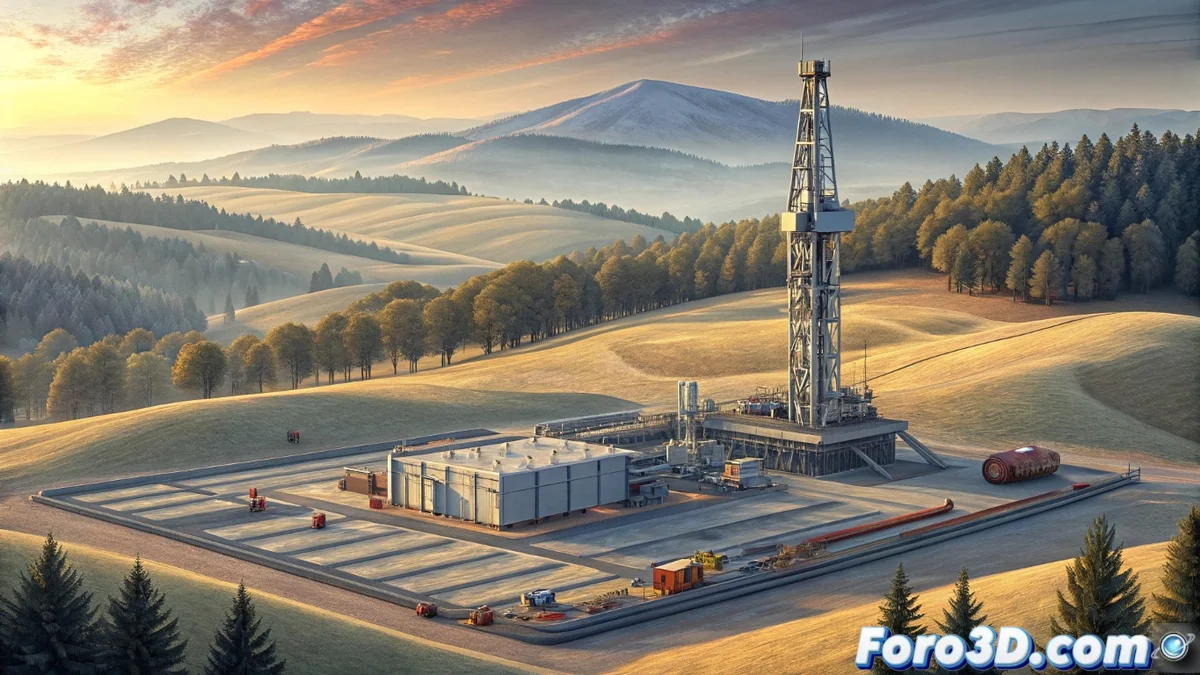
Eavor Tests a Closed Geothermal Circuit in Bavaria
An innovative project is taking shape in the German town of Geretsried. The Canadian company Eavor Technologies is implementing here a different method for generating geothermal energy, which avoids searching for natural hot water deposits. Instead, it builds a sealed artificial circuit at great depth to function as a massive heat exchanger. 🔧
Operation of the Underground Radiator
The technology, called Eavor-Loop, is based on drilling two vertical wells that are joined by multiple horizontal conduits, creating an extensive network underground. A special fluid circulates through this labyrinth, absorbs heat from the surrounding rock, and rises. On the surface, a thermoelectric plant transforms that thermal energy into electricity, without the need to extract steam or water from the subsurface. This process is completely autonomous.
Key Components of the System:- Input and Output Vertical Wells: Connect the surface to the deep network.
- Horizontal Conduits: Extend through the hot rock to maximize the heat exchange area.
- Working Fluid: Circulates in a closed cycle, heating continuously.
This approach solves traditional limitations of geothermal energy, allowing projects to be implemented in previously unviable locations.
Overcoming the Barriers of Classical Geothermal
Conventional geothermal systems rely on finding deposits with hot water and permeable rock. The Eavor Closed Circuit eliminates that requirement, greatly expanding the geographical areas where it can be installed. Additionally, it mitigates risks associated with other methods, such as wells losing pressure or inducing microseisms by fracturing the rock.
Main Advantages of the Closed Method:- Independence from Water Resources: Does not consume or contaminate underground aquifers.
- Lower Seismic Impact: By not requiring aggressive hydraulic stimulation, it reduces this risk.
- Flexible Location: Can be installed in regions without evident surface geothermal activity.
A Bet on the Earth's Heat
This project in Bavaria points to a complementary path to solar and wind energies. It demonstrates that it is possible to build deep infrastructure to harness the earth's heat in a constant and predictable way. What seems like a science fiction idea is already a technical reality operating under European soil, offering a solid alternative to decarbonize the energy supply. 🌍