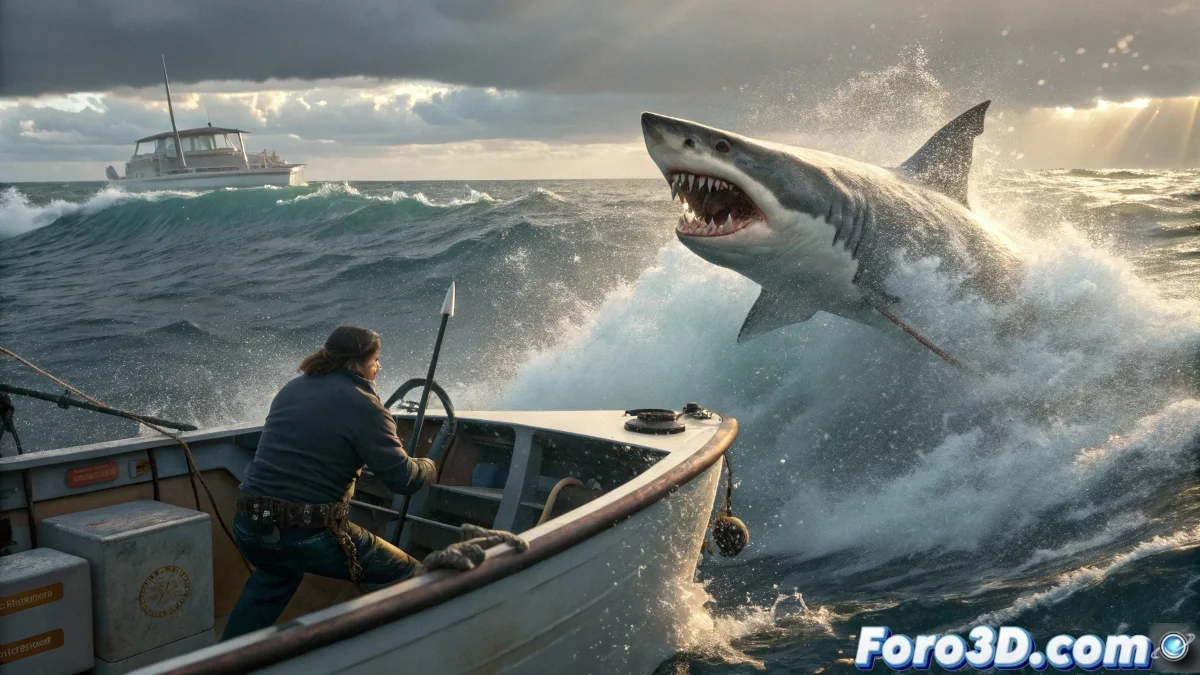
When the Ocean Obeys Digital Nodes
In the epic Devara, Oscar FX faced the most complex liquid challenge: making a digital shark and tons of simulated water dance to the rhythm of the narrative. The result is an aquatic ballet where every splash, every reflection, and every underwater attack serves the story without losing an ounce of spectacle. 🦈💦
"Our shark wasn't just a 3D model, it was a character with motivations... and a very bad temper" - Oscar FX VFX Supervisor
Anatomy of a Digital Predator
The creative process required:
- Modeling in Maya with 4K scaly details
- Specialized rigging for realistic underwater movements
- Houdini simulating water-body interactions
- Nuke to integrate the shark into 72 key shots
Physics of the Deep
The simulations included details that would make an oceanographer cry:
- Currents affecting both the shark and the actors' hair
- Splashes following the exact energy of each movement
- Light refractions changing according to depth
- Foam aging realistically on surfaces
As a technician joked: "We programmed more water variations than exist in the Indian Ocean". 🌊
Collaboration in Turbulent Waters
Working with DNEG and other studios, Oscar FX:
- Compatible render formats between 5 different studios
- Maintained coherence in underwater lighting
- Integrated their sequences with effects from other teams
- Respected director Koratala Siva's vision in every shot
When CGI Has Gills
The true achievement was making:
- The audience forget the shark wasn't real
- The actors' reactions match the CGI
- The digital water wet just like the real thing
- The narrative tension surpass the technical spectacle
As the director aptly summarized: "We wanted the audience to feel the fear of water, not admire our renders". And they certainly achieved it - they created a digital predator so convincing that even the audience in their seats unconsciously dried their hands. Because in cinema, the best effects are the ones felt on the skin... even if just by reflex. 🎥💧