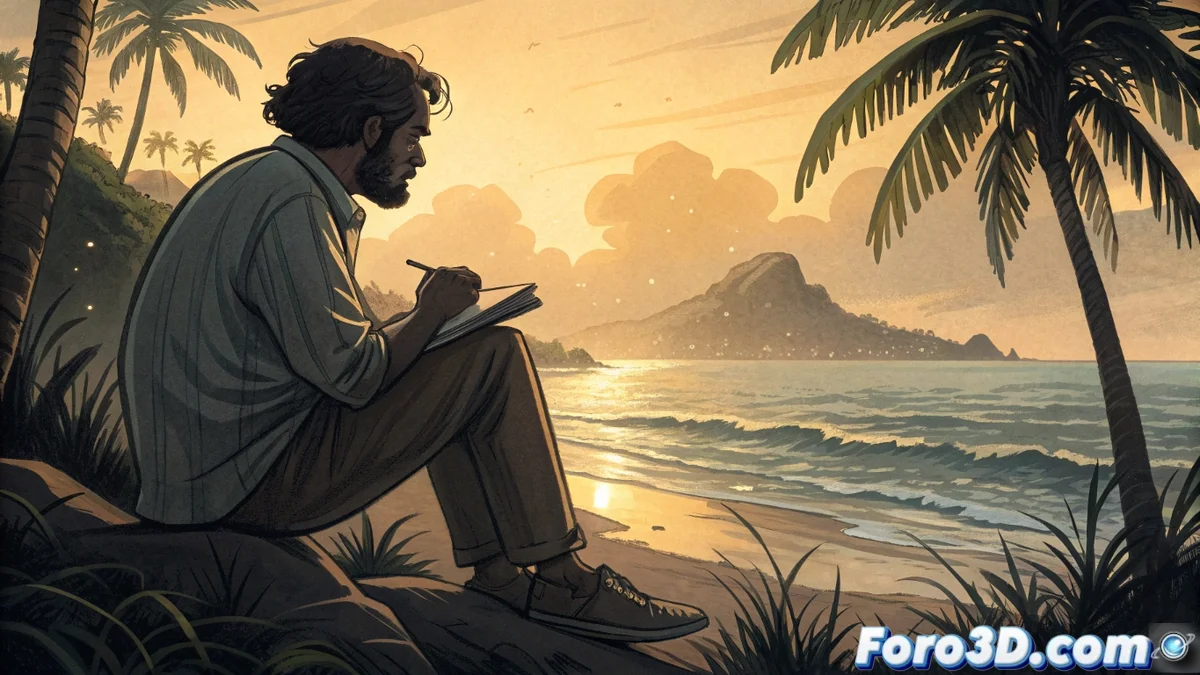
Daytripper: a graphic reflection on life and death
In the landscape of the ninth art, few works achieve such a perfect fusion between form and content as Daytripper (Daytripper). Created by the talented Brazilian brothers Fábio Moon and Gabriel Bá, this graphic novel stands as a profound existential meditation that challenges traditional narrative conventions. Its protagonist, Brás de Oliva Domingos, an obituary writer in search of meaning in his own existence, guides us through a unique introspective journey. 🎭
The revolutionary structure: every ending is a new beginning
The most distinctive element of Daytripper is, without a doubt, its bold narrative structure. The story is not presented as a linear biography, but as a series of crucial moments drawn from different stages of Brás's life. What makes this resource extraordinary is that each chapter concludes with the protagonist's death at that specific point in his timeline. This approach, far from seeking a morbid effect, functions as a powerful philosophical device. It forces us to ask: what value would this instant have if it were the last? The work thus explores the inherent weight and beauty of every experience, no matter how mundane it may seem.
Pillars of Daytripper's narrative:- Chapters as alternative lives: Each episode represents a possibility, a version of life that could have been, emphasizing the fragile and precious nature of our path.
- Death as a lens: By presenting multiple endings, the story shifts the focus from "how it ends" to "how it is lived," redefining the concept of narrative climax.
- Universality in the particular: Through Brás's specific experiences (love, fatherhood, friendship, doubt), universal themes are addressed that resonate with any reader.
"Daytripper reminds us that life is not the search for a great final moment, but the collection of all the small instants that make it up."
Art that breathes and feels: the visual soul of Brazil
The emotional power of the work would be inconceivable without the masterful artistic work of Moon and Bá. Their style is characterized by an organic and fluid line that captures with incredible expressiveness from the subtlest gesture to the immensity of a landscape. The coloring, reminiscent of watercolors, is another character in the story. It bathes the pages with a warm and vibrant palette, dominated by ochres, fiery oranges, and deep blues, directly conveying the light, warmth, and melancholy characteristic of Brazil. This art does not decorate, but narrates emotions: the warmth of a hug, the peace of a sunset, or the tension in a gaze.
Key elements of the visual language:- Organic expressiveness: The strokes and compositions avoid rigidity, creating a sensation of constant life and movement that reflects the flow of existence.
- Light as narrator: The handling of light and shadow is fundamental to establishing the emotional tone of each scene, from overflowing joy to the deepest introspection.
- Cinematic atmosphere: The framing and visual rhythm give the reading a cinematic quality, fully immersing the reader in Brás's sensory world.
The human legacy: beyond the pages
The true triumph of Daytripper lies in its ability to leave a lasting imprint on those who read it. At the end of the journey, the work transcends its comic format to become a tool for personal reflection. It invites us to examine our own mosaic of instants, to value the decisions made and the paths not taken. In a world that often prioritizes