Spanish Innovation in Hydrogen Storage for Aviation
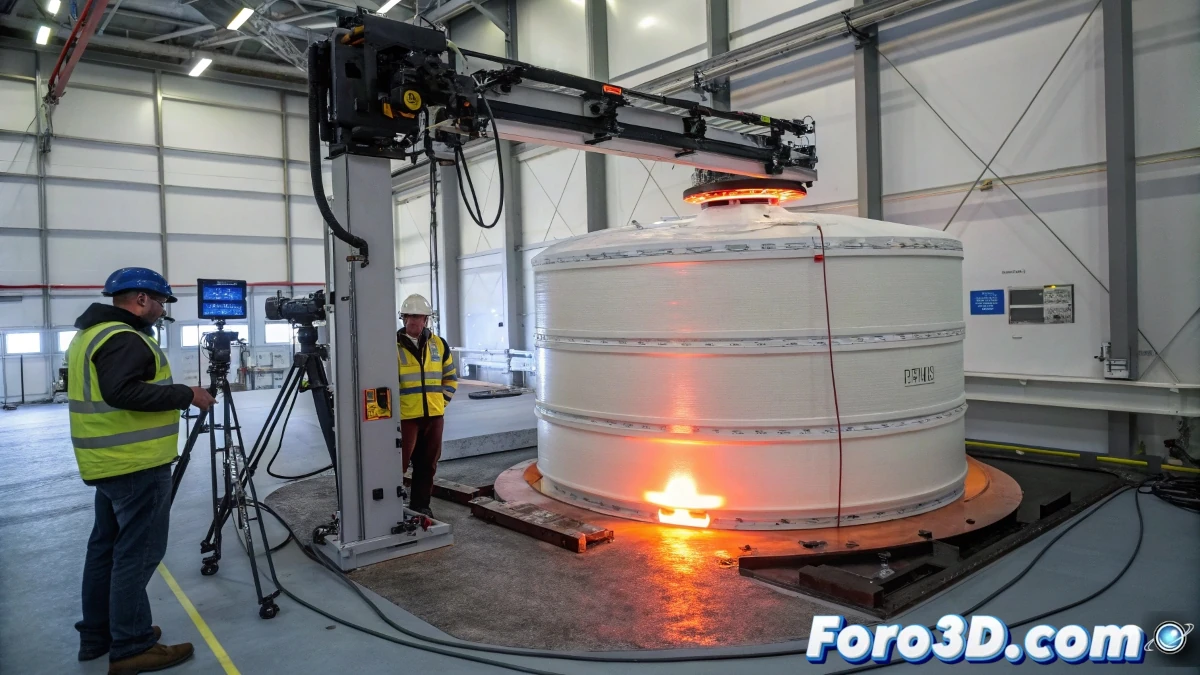
A team of researchers in Spain has developed a prototype tank designed to contain hydrogen in a cryogenic state. This initiative is part of a global effort to reduce polluting emissions in the aeronautical sector, replacing traditional fuels with cleaner alternatives. The project, integrated into the OVERLEAF program, is coordinated by the company Aciturri in collaboration with the Aimen technology center.
Technical Features of the Cryogenic Tank
With a diameter of 1.5 meters, the tank features a double-layer structure. The inner layer houses the hydrogen at extremely low temperatures, while the outer layer provides mechanical strength. The composite material used resembles those employed in competition vehicles, combining lightness with extraordinary structural support capacity. Thus, the container maintains its integrity even in conditions similar to those of outer space vacuum.
"Large-scale 3D printing has enabled the creation of geometries impossible with traditional techniques, opening new possibilities in cryogenic engineering"
Manufacturing Using Advanced Techniques
The production of this prototype breaks with conventional methods. Through large-scale additive manufacturing, the tank was created in a single piece during a continuous process that exceeded one hundred hours. A special machine controlled critical parameters such as:
- Deposition temperature
- Dimensional precision
- Material homogeneity
- Structural stability during the process
Sustainability in Composite Materials
The development has incorporated novelties in the field of biomaterials, resulting from collaboration with French institutes. The composites used are partially derived from renewable sources, maintaining mechanical performance comparable to traditional materials. This advance represents a balance between technical performance and environmental responsibility.
Future Prospects for Sustainable Aviation
This prototype constitutes a conceptual milestone rather than an immediate commercial product. However, it demonstrates the technical viability of cryogenic systems for aeronautical applications. Its development points the way toward:
- Weight reduction in storage systems
- Greater energy efficiency
- Integration of eco-friendly materials
The transition to clean fuels in aviation will require innovative solutions like this one, although there is still a long way to go. After all, as engineers say: physics is the only one that really vetoes our projects, budgets are mere suggestions 😅.