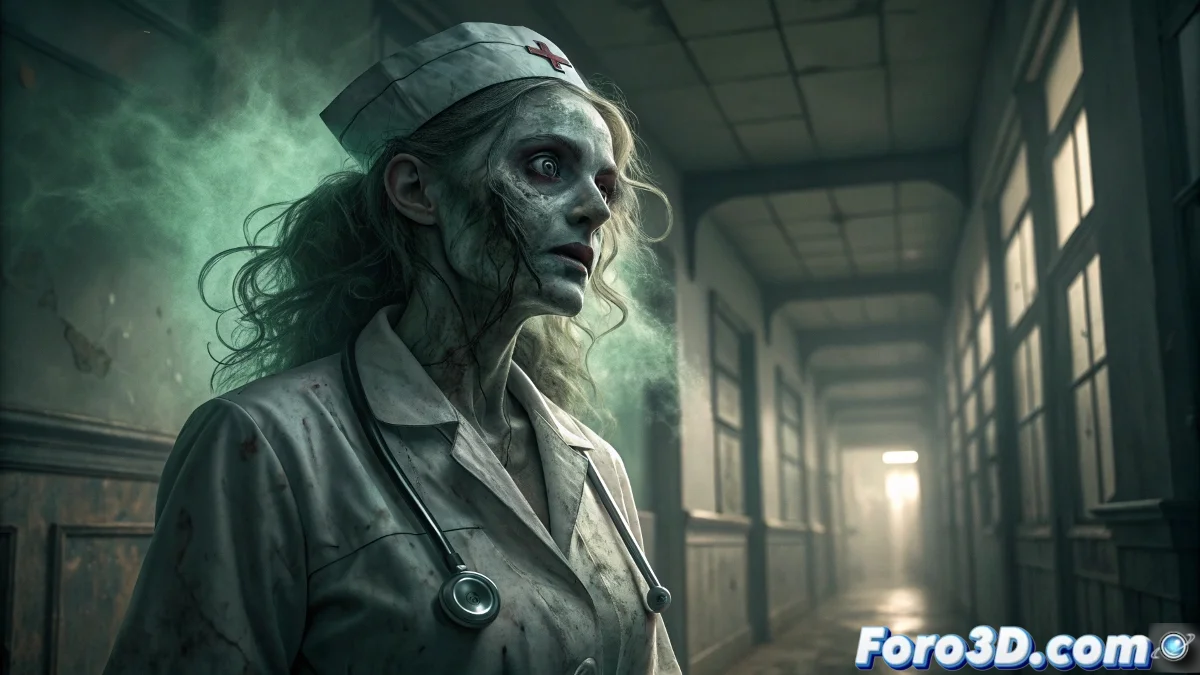
Creating the Waverly Hills Ghost in Motion Builder
Developing a medical ghost in Motion Builder involves combining advanced rigging techniques, translucent materials, and atmospheric effects to evoke a disturbing spectral presence. This process focuses on achieving fluid movements with sudden pauses, simulating an entity wandering through an abandoned hospital 👻.
Skeleton Setup and Rigging
We begin by defining a standard human skeleton with a medical rig that allows for anguished postures and erratic movements. The key is adjusting the joint controllers so the gestures appear disturbingly fluid, but with abrupt interruptions, as if the figure were floating through hallways. We use inverse kinematics on the upper limbs to simulate the ghost searching for something invisible, while the torso remains slightly tilted forward, conveying an attitude of desperate searching.
Key Rigging Elements:- Joint controllers adjusted for erratic movements with sudden pauses
- Inverse kinematics applied to upper limbs for air-searching gestures
- Torso tilted forward to reinforce the posture of desperation
The fluidity in movements, combined with unexpected pauses, is essential to create a sense of unease in the viewer.
Materials and Textures for a Spectral Appearance
The visual appearance is built using a Shader/Compute that integrates partial transparency with very pronounced normal maps to highlight scars. We apply a base layer of pale skin with an alpha channel at 70%, overlaying high-resolution surgical suture textures that follow the model's anatomical curves. For the burns, we use texture projection with dynamic displacement that reacts to ambient lighting, making the wounds appear deeper depending on the viewing angle. The material includes mild subsurface scattering properties to provide a cadaverous and translucent look.
Material and Texture Details:- Shader with partial transparency and normal maps for prominent scars
- Surgical suture textures overlaid on anatomical curves
- Texture projection with dynamic displacement for burns reactive to light
Environmental Animation and Particle Effects
We implement a volumetric particle system around the character to simulate a formalin atmosphere, using low-fog emitters with subtle greenish tones and slow movement. Facial animation is controlled via blendshapes that alternate between expressions of pain and emptiness, synchronized with the skeleton's breathing cycles, even though the ghost doesn't actually breathe. We add a camera track with slight vibrations on keyframes to convey the entity's despair, avoiding sudden movements that might suggest aggression. If you work late on this scene, you might notice a smell of formalin in your studio... but surely it's just your imagination after so many hours of rendering. Or perhaps the nurse came looking for her uniform and found your backpack 😱.