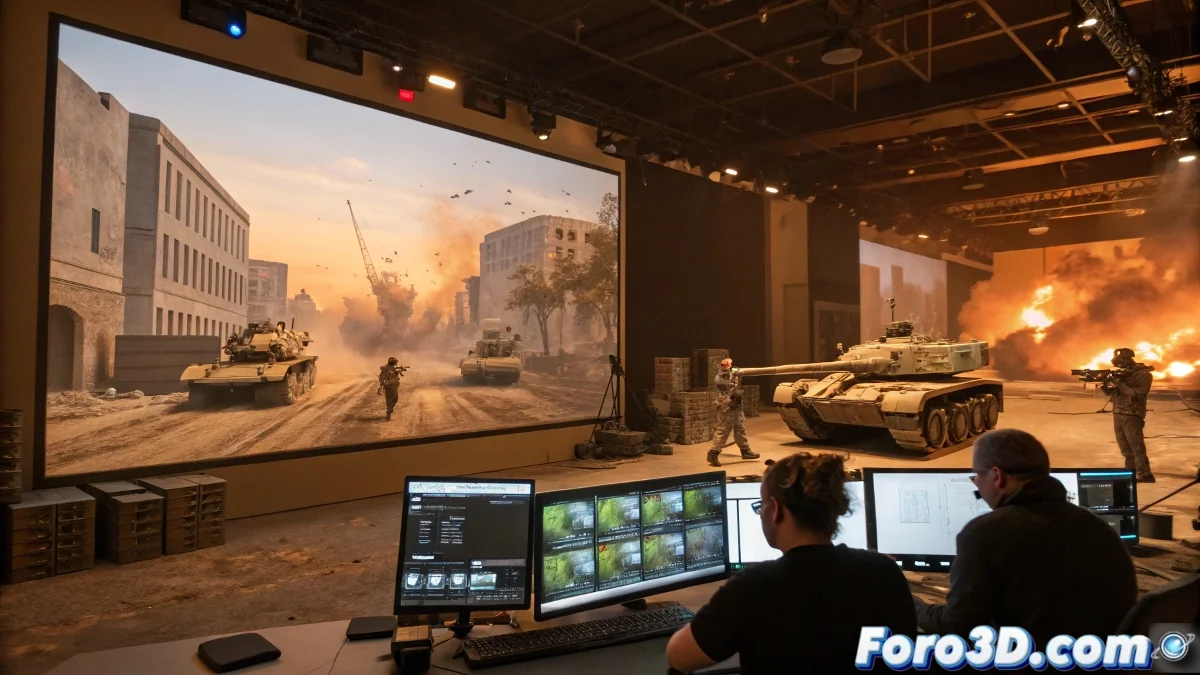
Cinesite and the Art of Making War Without Leaving the Studio 🎥
When the Cinesite team received the script for Warfare, they quickly understood the challenge: to create a war conflict so realistic that viewers would check their boots for Afghan sand. Without cinematic drones or Instagram filters, the studio got to work crafting an illusion so convincing that even military personnel would doubt it. 😅
Filming in England, Feeling Afghanistan
The former Bovingdon airfield was transformed into an Afghan village with three key ingredients: blue screens (the digital canvas), papier-mâché houses (the set), and actors running between controlled explosions (the organized chaos). The camera, always in motion, followed the soldiers like another comrade, avoiding those epic shots that scream "this is cinema!". The result: a realism that made you wonder, where do I sign to *not* be an extra in this war?
"In Warfare, if the camera doesn't end up dusty and with tachycardia, we're not doing it right" - Anonymous cinematographer after sprinting between squibs
Special Effects: Where Practical and Digital Shake Hands
The studio blended analog and digital with surgical precision:
- Traditional squibs that spat dirt like warlike sprinklers
- Pyrotechnic explosions capable of waking the neighborhood
- Digital bullets that corrected the actors' missed shots (nobody's perfect)
Meanwhile, in post-production, Cinesite's artists worked in silence like digital ninjas, removing modern cameras from the frame and extending the village as far as the eye could see... and the budget allowed. 💻
The F-16 That Almost Brought Down the Servers
The digital star was a military jet created in Houdini, whose flyby generated sandstorms so realistic even the technicians coughed. Each dust simulation:
- Used LIDAR scans of the real set
- Required more rendering hours than the team's sleep
- Followed the laws of physics better than many engineering students
Favorite tools included Maya for animation, Substance Painter for aging vehicles, and Blender as a lifesaver for emergencies. Because in visual effects, as in war, you always need a plan B (and coffee). ☕
In the end, they proved that realism isn't about budget, but about details: from the shake of a camera to the dust settling on a uniform. Although it all almost went down the drain when the server decided 23 hours of rendering was enough... right before delivery. Because in film, as on the battlefield, the enemy is always the clock. ⏳