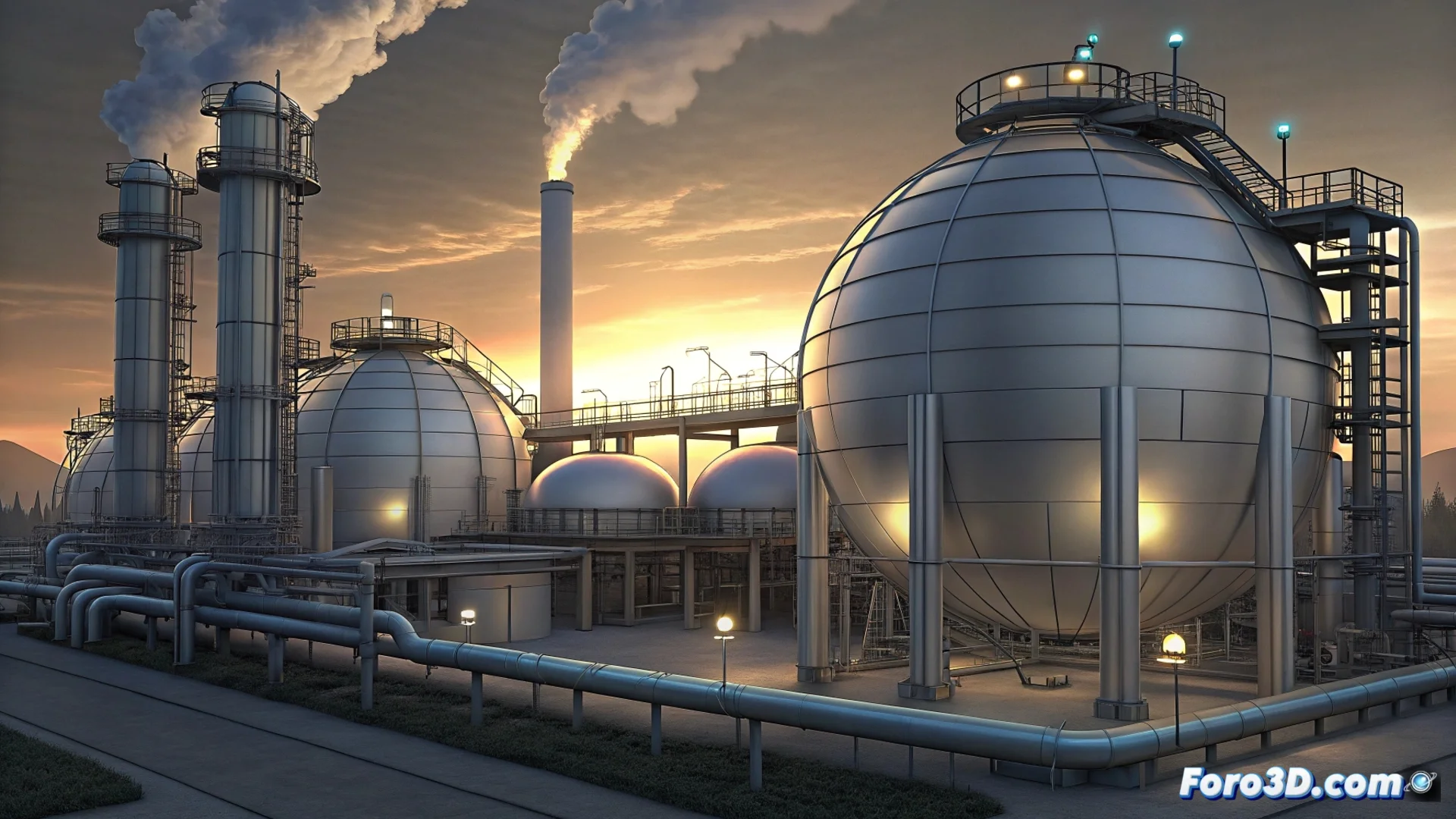
China Operates the World's First Liquefied Air Storage System
In Hebei province, China, the first global-scale facility that stores renewable energy using liquefied air is already operational. This pilot project directly addresses the challenge of intermittency presented by sources such as solar and wind, acting as a giant battery for the national electricity grid. 🔋
Cryogenic Technology Mechanism
The process begins when the grid has a surplus of electricity. The system uses that energy to cool atmospheric air until it liquefies at -196 °C, then storing it in insulated tanks. To recover the energy, the liquid air is evaporated and rapidly expanded, driving a turbine that generates electricity again. This method enables storing large volumes of energy for extended periods.
Key Phases of the Cycle:- Liquefy: Use surplus electricity to cool and compress air to its liquid state.
- Store: Preserve the liquefied air in cryogenic tanks at very low temperatures.
- Recover: Heat the liquid to expand it and drive a generating turbine.
This technology could transform how we manage peak demand and support greater penetration of renewable energies.
Validating the System at Large Scale
The facility has a storage capacity of 100 megawatt-hours and can inject up to 40 megawatts of power into the grid. The developers aim to test the system's efficiency, durability, and cost-effectiveness under real conditions. If the data is positive, this solution could be integrated more extensively to optimize the electricity grid.
Pilot Project Objectives:- Measure the overall efficiency of the complete storage and recovery cycle.
- Determine the lifespan of the main components in continuous operation.
- Evaluate its cost-effectiveness compared to other existing storage technologies.
Challenges and Future Outlook
Although it promises to be a robust solution, experts point out that the air liquefaction process consumes a significant portion of the electricity that is later recovered. The cycle's efficiency is therefore a critical parameter that the project must analyze and improve to compete with alternatives like lithium-ion batteries or pumped hydro storage. Success here could define a new standard for stabilizing grids with high renewable participation. ⚡