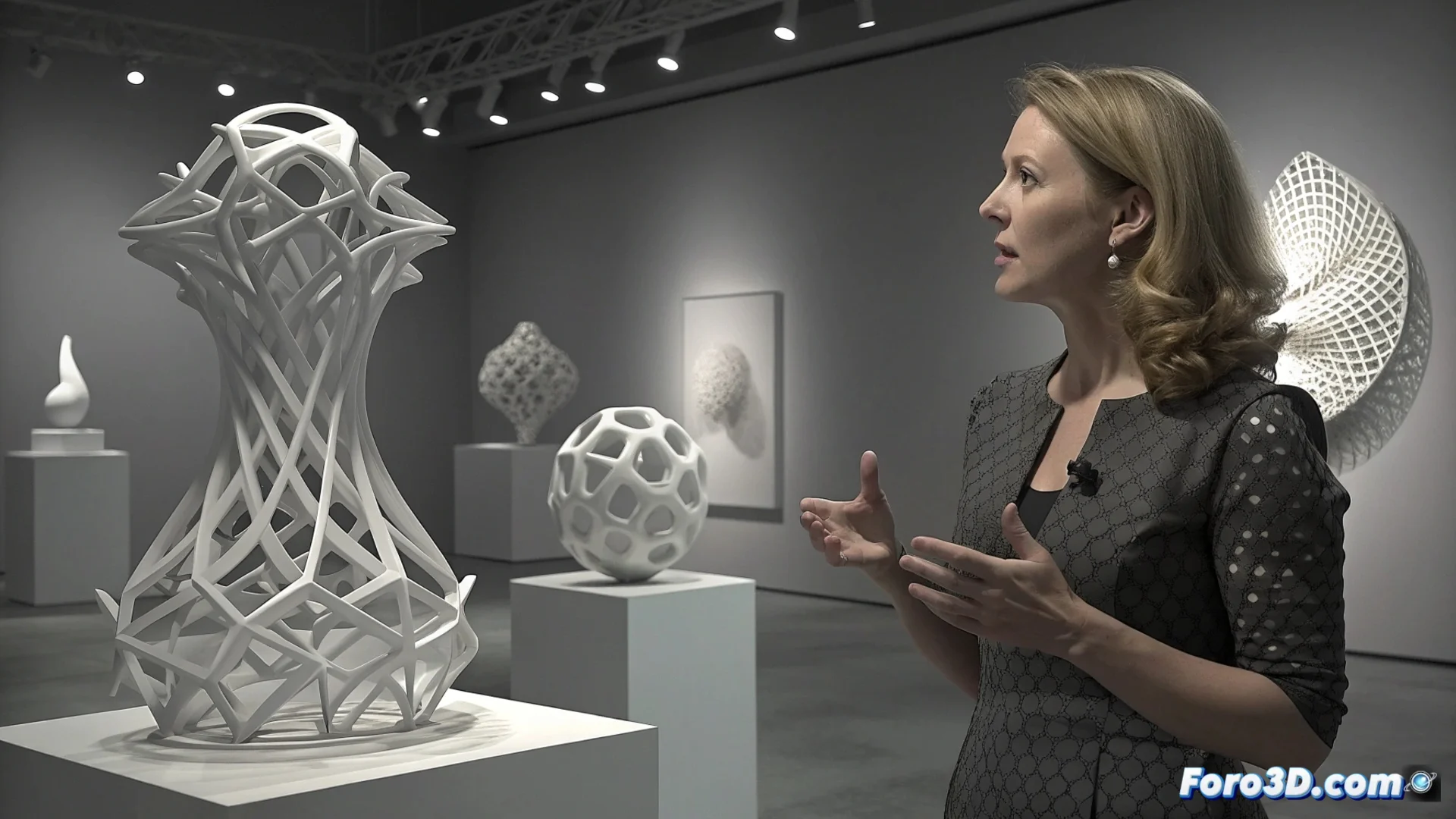
Artist Michelle Larsen Points Out that 3D Printed Sculptural Art Will Be a Key Trend in 2026
Designer and artist Michelle Larsen projects that sculptural art made with 3D printing will define the creative landscape by 2026. This evolution transcends the realm of technical prototyping to infiltrate spaces where visual design and sensory experience prevail. Larsen emphasizes that current technology frees creators, allowing them to materialize concepts of a complexity and formal freedom previously unattainable. 🎨
A Revolution for Customizing Commercial and Domestic Spaces
This movement deeply influences interior design and the retail sector. 3D printed sculptures serve to personalize environments and establish unique focal points. Designers can commission specific works for a space that interact with the existing architecture or produce limited and exclusive decorative elements in series.
Key Advantages in Retail and Interior Spaces:- Immersive Brand Experiences: In retail, sculptural art helps build powerful visual narratives that anchor the brand's identity.
- Rapid Iteration: The ability to adjust and modify pieces to perfectly adapt them to a physical space is a decisive operational advantage.
- Site-Specific: It allows creating works that directly dialogue with the site's architecture, something highly valued in high-end interior design.
A purist of traditional carving might argue that a printer doesn't sweat while sculpting, but they probably also rejected the metal chisel when it was invented.
Essential Tool for Building Worlds in Film and Visual Effects
The film industry and visual environments adopt this technology to produce props, models, and scenic elements with exceptional detail. It facilitates manufacturing prototypes of fantastical creatures, replicas of historical objects, or scenography pieces that need to be lightweight, durable, and faithful to the original digital design.
Applications in Audiovisual Production:- Bridge Between Departments: It streamlines the workflow between the concept art team and the practical effects team, making the process more efficient.
- Tangible Worlds: It enables creating detailed physical scenographies that are then complemented and expanded with digital effects.
- Precision and Repeatability: The accuracy of the printing process is a critical factor for this sector, where multiple identical copies of an element are needed.
The Future Materialized
Michelle Larsen's perspective is grounded in observing how materials and 3D printing techniques evolve, offering artists and designers an unprecedented set of tools to materialize intricate ideas. This trend does not replace traditional methods but expands the horizon of the possible, redefining how we perceive and create artistic objects in the digital age. The boundary between bit and atom blurs to shape new aesthetic experiences. ✨