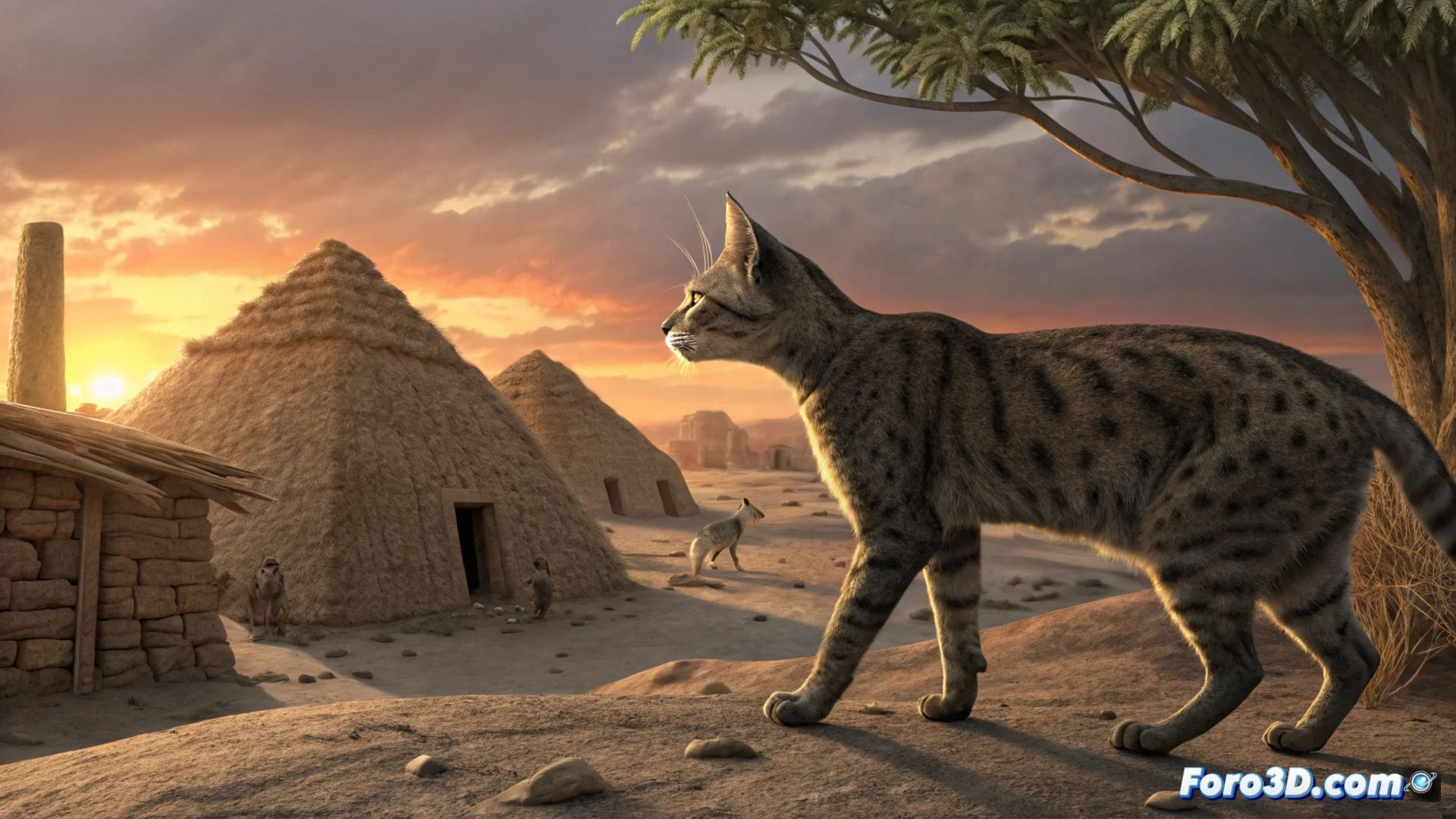
Ancient DNA Rewrites the History of Cat Domestication
Genetic science is transforming what we know about our feline companions. 🧬 Analyzing ancient DNA from bone remains has allowed researchers to trace the origins of domestic cats with precision, unveiling a more complex narrative than previously thought. The data indicate that the process of domestication of these animals began when the first agricultural societies settled. 🐈
Two Key Foci for Feline Domestication
Contrary to the idea of a single point of origin, genetic evidence points to the fact that current domestic cats mainly descend from the African wildcat (Felis silvestris lybica). This ancestor was domesticated in two crucial regions: the Fertile Crescent and, more significantly than estimated, in North Africa. This bond began about 10,000 years ago, when rodents infesting granaries attracted felines, creating a beneficial alliance for both species.
Key Findings from Ancient Genetics:- The main lineage of domestic cats comes from the African wildcat.
- The domestication process occurred in the Fertile Crescent and North Africa in parallel.
- The relationship began out of a practical need: pest control in human settlements.
Cats from North Africa made a substantial contribution to the genetic pool of the cats that eventually populated Europe.
A Slow Feline Conquest of Europe
Despite being domesticated early, cats did not spread quickly across the European continent. Analyses of ancient DNA show that their presence became common in Europe only about 2,000 years ago, millennia after the first domestication events. This late migration is directly associated with the rise of maritime trade in the Mediterranean, where cats traveled on ships to protect provisions from mice. ⚓
Factors of the Slow Expansion:- The spread to Europe was a gradual process, not a rapid conquest.
- Mediterranean trade acted as the main vector of migration.
- Their utility as hunters on ships facilitated their journey with humans.
Tracing Routes with Genetics
Scientists now compare sequences of ancient DNA extracted from feline remains found at sites in Europe, Africa, and Asia. This method allows tracing lineages and migration routes with unprecedented detail. The data confirm a substantial genetic flow from North Africa to Europe, rewriting the narrative that attributed an exclusive role to the Fertile Crescent. It seems that cats, true to their independent nature, decided to take their time exploring new territories. 🗺️