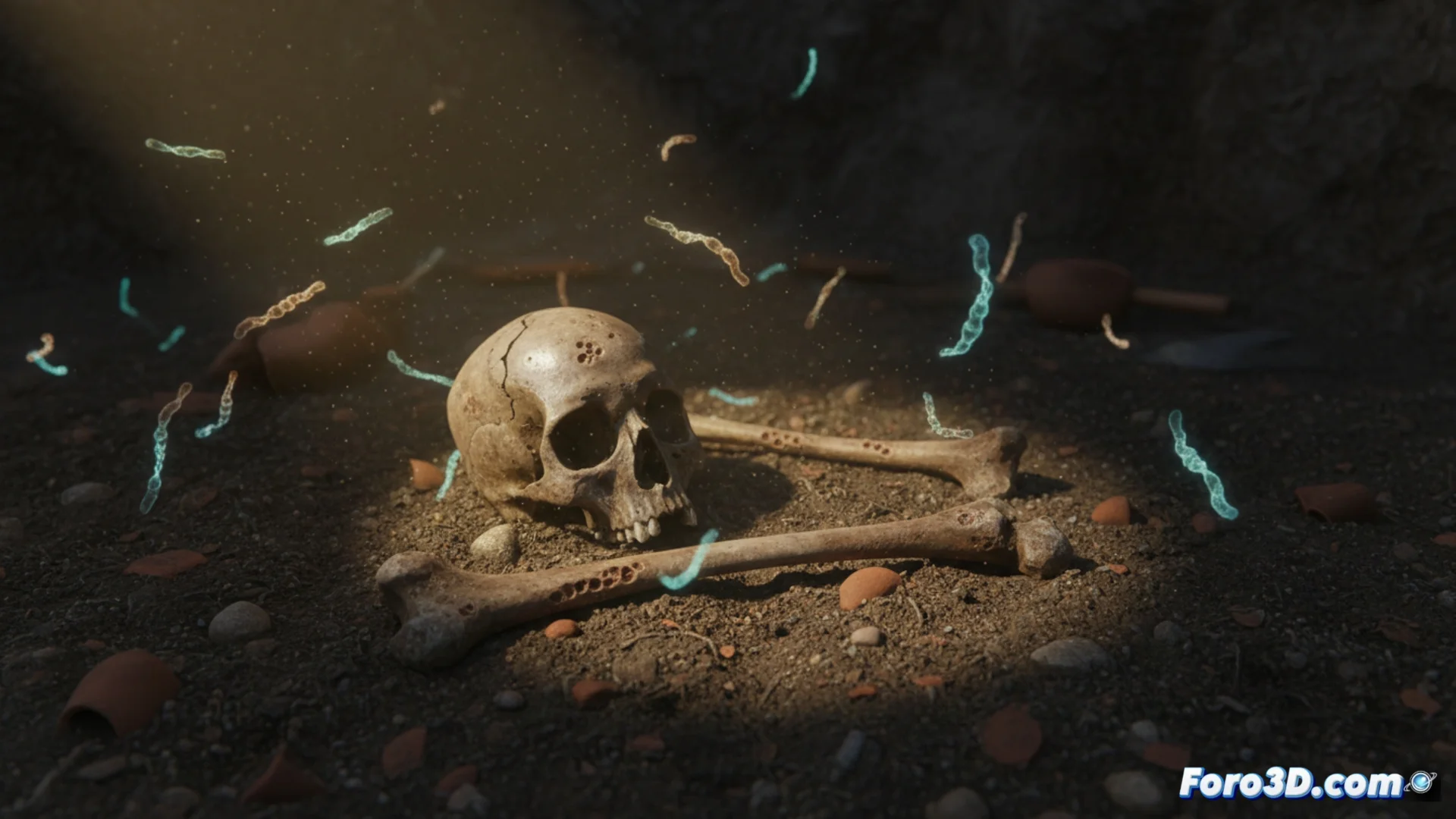
An Ancient Bacterial Finding Rewrites the Origins of Syphilis
A recent investigation examines human bone material dating back two millennia, located in Brazil, and detects the presence of the microorganism responsible for causing syphilis. This discovery challenges the predominant historical narrative that placed the origin of this disease in Europe after Columbus returned. Genetic data now point to this pathogen already circulating in the American continent long before the first transatlantic contact. 🔍
Science Analyzes Millennial Genetic Material
The scientific team managed to extract and sequence DNA from bones showing characteristic marks of infection, discovered at the Laguna archaeological site. They assembled nearly complete genomes of the subspecies Treponema pallidum endemicum, associated with yaws, and also identified primitive lineages of the variant that causes venereal syphilis. This confirms that these harmful bacteria were already infecting human groups in the New World thousands of years ago.
Key Findings from the Genetic Study:- Successful sequencing of ancient DNA from bone lesions.
- Reconstruction of complete genomes of Treponema pallidum endemicum.
- Identification of early lineages of the subspecies causing venereal syphilis.
The results demonstrate a millennial circulation of pathogenic treponemes in pre-Columbian American populations.
Rethinking the History of a Pathogen
The study's conclusions indicate that syphilis did not appear in Europe at the end of the 15th century as an accelerated mutation of other treponematoses. On the contrary, the bacterium was already following its evolutionary course in the Americas, and Columbus's voyages may have brought a more aggressive strain back to the Old Continent, where it spread due to the lack of prior immunological defenses. The research posits a more intricate and ancient origin for this infectious agent.
Implications of the New Paradigm:- Refutes the theory of rapid European origin post-Columbian.
- Suggests a prior evolution of the pathogen on the American continent.
- Proposes that the "Columbian exchange" included pathogenic agents.
An Unexpected Biological Legacy
Consequently, the next time the "Columbian exchange" is mentioned, it can be remembered that not only were foods like tomatoes or potatoes shared, but also some biological gifts much less appetizing. This finding underscores the complexity of tracing the past of diseases and how genetic science can rewrite chapters of our shared history. 🧬