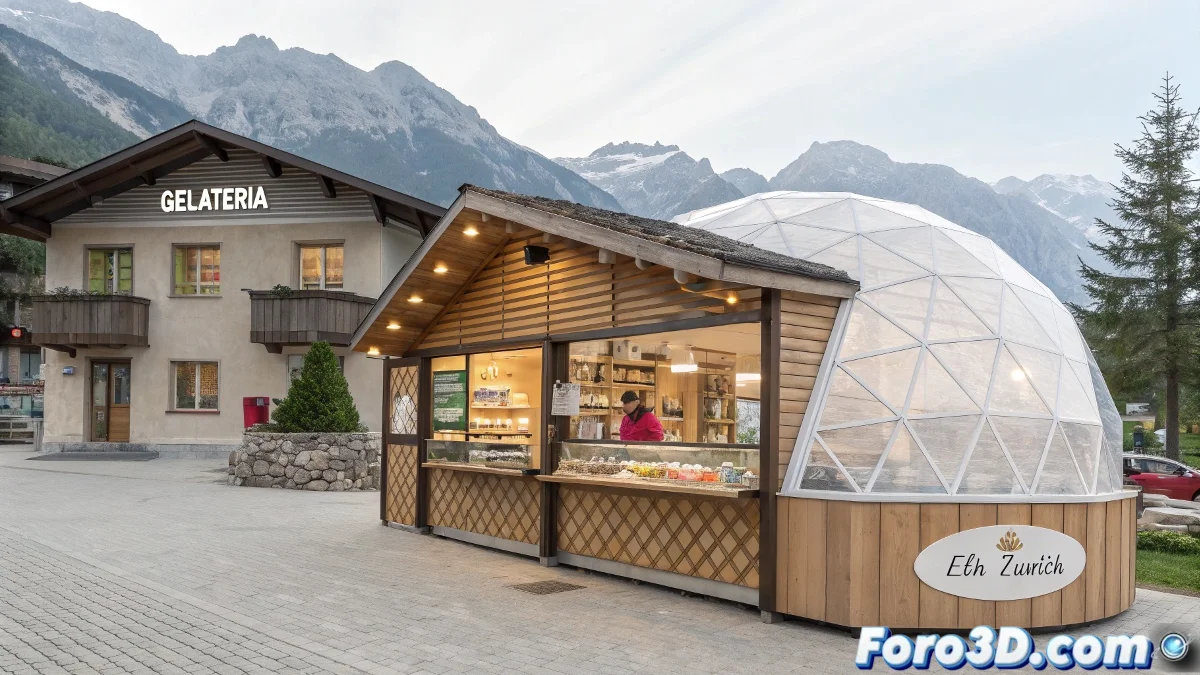
Alpine Gelateria: When 3D Printing Becomes Deliciously Sustainable
In the idyllic Swiss village of Mulegns, architecture students have shown that the future of construction can be as sweet as ice cream. 🍦 Their project, a Gelateria built with 3D printing and recycled materials, combines alpine tradition with digital innovation. The structure, part of ETH Zurich's Master's in Architecture and Digital Fabrication, uses reclaimed wood and recycled plastic (yes, like that from your food packaging) to create a space that is both ice cream shop and ecological statement.
Technology that Imitates Nature (and Ice Cream)
The design is a visual feast:
- Exterior: faceted wooden structure reminiscent of origami, covered by a translucent membrane
- Interior: 3D-printed dome using Hollow-Core extrusion technique covering 250m² and weighing less than a small car
- Materials: recycled PETG (the same as food packaging) and local wood
Architecture That's Finger-Licking Good
The most innovative aspect is its commitment to the circular economy: the entire structure can be disassembled and its materials reused. The project is part of the Nova Fundaziun Origen initiative to revitalize the Swiss region, following the success of its nearby White Tower. 🏔️ It demonstrates that 3D printing is not just for prototypes, but for real constructions with minimal ecological footprint.
"In this ice cream shop, even the 3D printing errors are recycled... though they're not edible"
The Architectural Dessert of the Future
When a customer orders ice cream "in a cup" here, they'll literally be eating from a container whose raw material could be in the shop's own structure. ♻️ It's ironic to think that the same plastics that pollute could build sustainable spaces... though, of course, better not let the ice cream melt on the printed parts. 😅 A project that shows that in architecture, like in ice cream, the best creations mix unexpected ingredients.