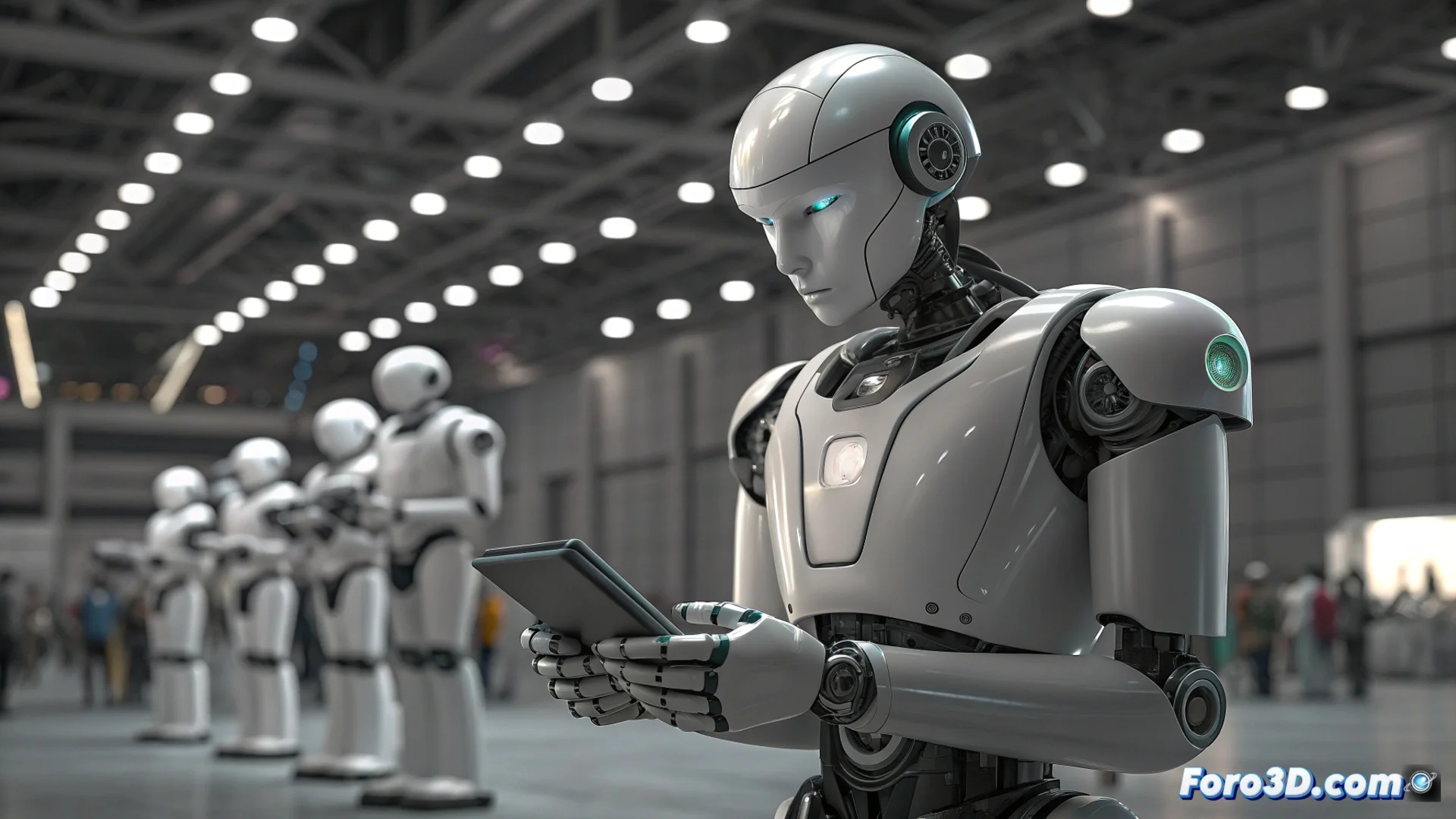
AI Humanoids at CES 2026 Seek Their Practical Function
The CES 2026 trade show has served as a stage to showcase a new wave of humanoid robots powered by artificial intelligence. These prototypes exhibit surprising motor skills, but their reason for being in the real world remains nebulous. The technical spectacle clashes with the fundamental question: what are they really for? 🤖
Physical Skills vs. Concrete Utility
Engineers have managed to make these machines walk steadily and manipulate objects with remarkable precision. They can perform actions like waving or holding a tool without stumbling. This progress in bipedal locomotion and coordination is undeniable. However, this advancement does not translate into a clear advantage over simpler and cheaper robotic solutions for specific tasks. The great challenge is to find a niche where their complexity provides tangible returns.
Highlighted Technical Advances:- Improved bipedal locomotion allowing fluid and natural movements.
- Refined hand-eye coordination for grasping and manipulating various objects.
- Ability to execute preprogrammed action sequences, such as serving a drink.
"Technology advances, but its true job is yet to be assigned."
The Spectacle Dominates Over Application
Many demonstrations at the fair focus on impressing rather than solving problems. It is common to see robots dancing or holding very basic dialogues, reflecting a phase of experimentation and capturing investors' attention. Companies are exploring sectors such as logistics, customer service, or personal assistance, but without a compelling and widespread use case emerging. The priority seems to be showing what they could do, not what they should do efficiently.
Current Areas of Exploration:- Warehouse and supply chain operations.
- Basic interaction at receptions or information points.
- Assistance in domestic or care environments.
A Future Yet to Be Defined
While prototypes shine under the booth lights, the industry must resolve how to integrate them in a useful and economical way. The joke among some attendees about whether these humanoids could set up next year's booths underscores the current disconnect between demonstrated capability and real need. The path now is to move from technical demonstration to practical implementation. CES 202