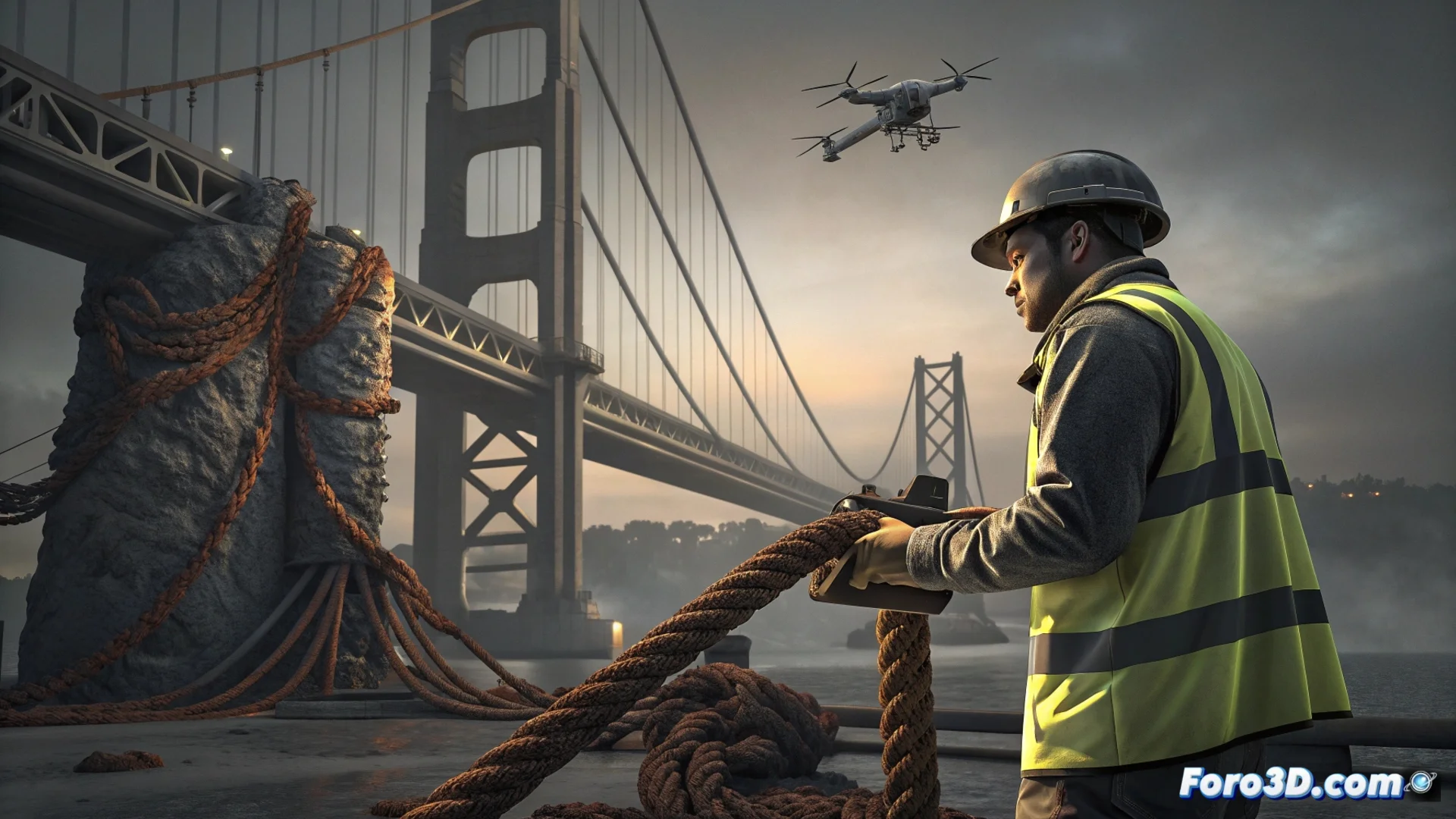
Advanced Methods for Investigating the Collapse of a Suspension Bridge
When a suspension bridge collapses, determining the root cause is a complex process that demands cutting-edge technology. Forensic engineers cannot rely solely on visual observations; they need non-destructive diagnostic tools that reveal the internal condition and exact geometry of the structure. This analysis is fundamental to prevent future disasters and establish responsibilities. 🔍
The Fusion of Laser and Ultrasound Data
The modern strategy combines two main techniques. On one hand, 3D laser scanners capture the entire surface of the bridge, including towers and deck, with millimeter precision. Simultaneously, ultrasound teams focus on the main cables, sending sound waves to explore their interior. This combination allows contrasting the external shape with the internal material integrity.
Key advantages of combined technology:- Geometric precision: The laser generates a massive point cloud that documents every deformation, displacement, or settlement.
- Internal diagnosis: Ultrasounds identify fractures in steel wires and material loss due to corrosion, without damaging the protective sheath.
- Reference model: By processing this data, a precise digital twin is built that serves as an objective basis for the entire forensic analysis.
A bridge can silently hold the creak that no one heard in time. Current technology gives us the ears and eyes to interpret that hidden message.
The Crucial Role of LiDAR Scanning
Whether from a tripod on the ground or mounted on a drone, the LiDAR system is indispensable. This method measures millions of points per second, creating an extremely dense three-dimensional map of the collapsed structure. The power of this technique lies in comparison: by overlaying the scanned model with the original design plans, experts can quantify deviations that would be imperceptible to the naked eye.
What can be identified with LiDAR?- Permanent deformations in the support towers.
- Anomalous settlements or displacements in the piers and abutments.
- The actual geometry of the deck after the collapse, key for simulating the failure.
Inspecting Cables with Sound Waves
Cables are the most critical and vulnerable element. The