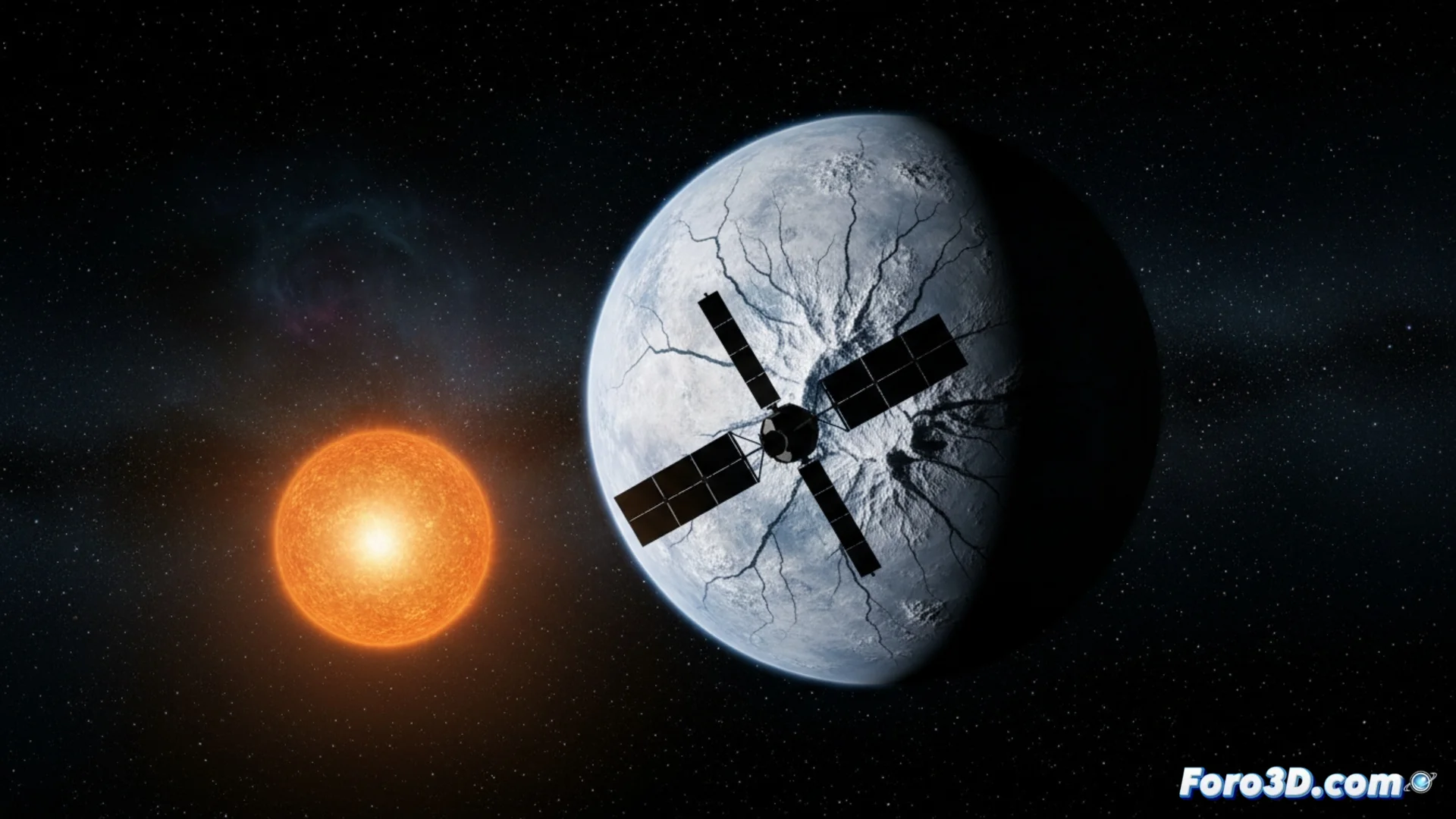
A team of astronomers identifies an icy Earth-like exoplanet candidate
An international consortium of astronomers has announced the discovery of a possible exoplanet with characteristics reminiscent of our world. They have named it planet-snezhok, a name that evokes a cosmic snowball. This object orbits the star HD 137010 b, located about 146 light-years from the Sun. The key information comes from the observation archive of the Kepler space telescope, captured during its K2 mission phase. 🔭
The detection method and orbital properties
The scientists identified the candidate using the astronomical transit technique. This approach records the subtle and periodic reductions in a star's light that occur when a planet crosses in front of its disk. In this case, Kepler detected these events in the host star at an interval of about 365 days, similar to a year on Earth. This orbital period suggests that the planet moves in a region that, in theory, could allow for the existence of liquid water, known as the habitable zone. However, preliminary estimates indicate that its surface would be icy, even colder than Mars. ❄️
Key data from the discovery:- Candidate name: Planet-snezhok (snowball).
- Host star: HD 137010 b, 146 light-years away.
- Detection instrument: Kepler space telescope (K2 mission).
- Estimated orbital period: Approximately 1 Earth year.
- Surface temperature: Extremely low, lower than Martian.
- Current status: Exoplanet candidate, pending confirmation.
Definitive confirmation depends on other telescopes or detection methods like radial velocity being able to verify the signal.
Next steps to validate the discovery
Despite the promising data, the scientific community catalogs this object only as an exoplanet candidate. This means astronomers must process more observations to rule out false alarms, such as intrinsic variations in the star's brightness or binary systems in the field of view. Future missions, such as the powerful James Webb space telescope, could analyze its atmosphere's composition if its existence is ultimately confirmed. In the meantime, planet-snezhok joins the long list of candidates awaiting validation, a meticulous process that defines the search for other worlds. 🪐
Next actions to confirm:- Conduct follow-up observations with other instruments.
- Apply the radial velocity method to measure mass.
- Rule out false positives like eclipsing binary stars.
- Wait for telescopes like James Webb to characterize it.
Reflections on an icy world in the habitable zone
This discovery underscores the complexity of defining planetary habitability. Although planet-snezhok orbits at a theoretically temperate distance from its sun, estimates point to an inhospitable and glacial world. Perhaps we should start imagining space suits with reinforced heating to visit these icy worlds that, technically, reside in the considered temperate zone. Its eventual confirmation will help us better understand the diversity of planets populating our galaxy. 🌌