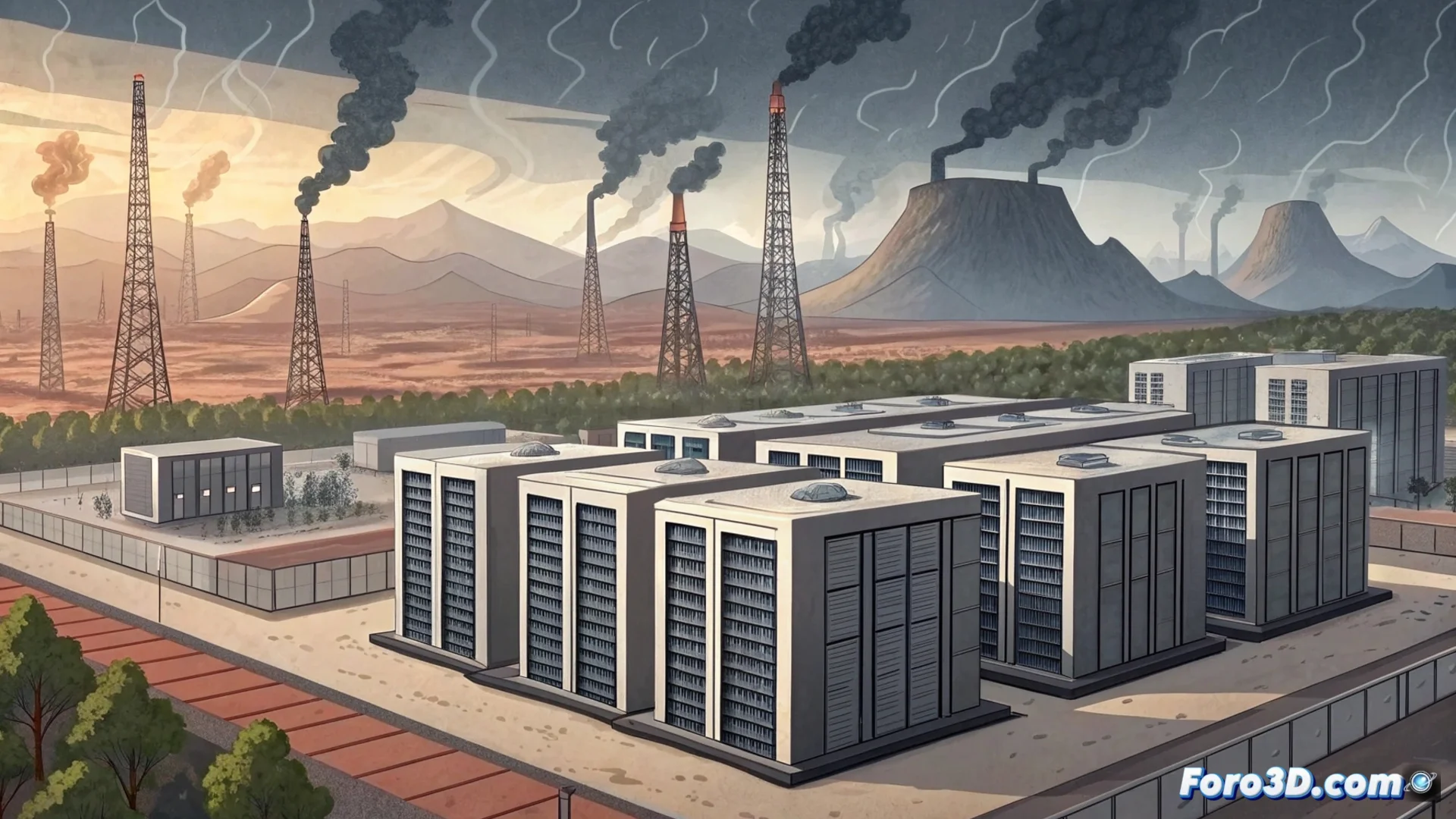
A study reveals that most data centers are in non-ideal climates
The global digital infrastructure is growing at a rapid pace, but not always under the most optimal conditions. 🔍 A recent analysis by Rest of World exposes a worrying reality: out of the 8808 data centers identified worldwide, nearly seven thousand were built in climatic zones that do not meet the thermal parameters suggested by the ASHRAE association for maximum efficiency operation.
The disconnect between the standard and real geography
Experts cross-referenced the location data of these facilities with historical temperature records. The ASHRAE guide indicates that equipment performs best when the outdoor air temperature is maintained between 18 and 27 degrees Celsius. However, the comparison shows that the vast majority of centers outside this range are located in regions with an annual average below 18°C. In these cold environments, managing humidity and airflow becomes critical. Even more complex is the case of about six hundred centers operating where the average exceeds 27°C, facing excessive heat as a daily challenge. 🌡️
Key data on the thermal mismatch:- Nearly 7000 centers (out of 8808 total) are in non-recommended climates.
- Most in cold zones (average < 18°C), where controlling humidity is vital.
- About 600 centers operate in hot zones (average > 27°C), with constant cooling challenges.
In the race to process data, sometimes more thought is given to making the decision than to cooling the servers themselves.
What drives these location decisions?
The logic behind this apparent contradiction is not technical, but economic and political. For those who build and operate these centers, factors such as energy costs, land prices, favorable political agreements, or the quality of network connectivity usually outweigh seeking perfect environmental efficiency. The explosion in demand for computing power to develop artificial intelligence accelerates this trend, prioritizing rapid deployment of capacity over long-term thermal consumption optimization. ⚡
Factors that take priority when choosing location:- Low operational costs (energy, land).
- Existence of infrastructure for networks and favorable policies.
- Need to expand quickly to meet AI demand.
The dilemma of digital sustainability
This practice raises fundamental questions about future energy consumption and to what extent digital growth can be sustainable. Compensating for higher cooling or heating costs with cheap land may be a short-term solution, but in the long term, it increases the sector's environmental footprint. The study suggests that if these priorities are not reconsidered, the overall efficiency of the digital network could suffer. 🤔