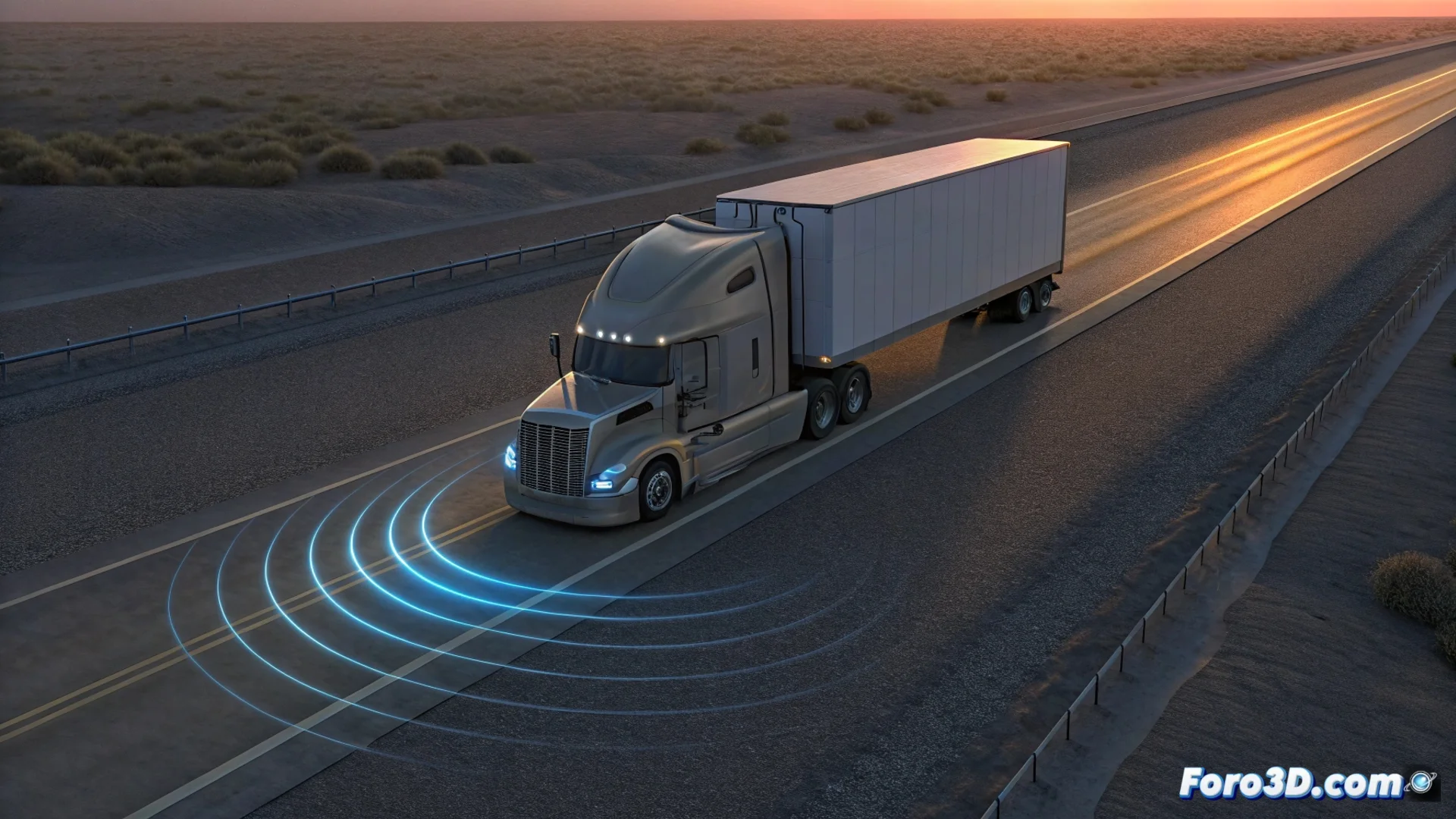
A Roadway in Michigan Charges Electric Trucks While They Drive
In the United States, a stretch of roadway in Michigan has begun operating with a revolutionary feature: wirelessly recharging batteries for electric trucks traveling at highway speeds. This advancement directly addresses two major obstacles to electrifying heavy transport: range and the need to stop for refueling. 🚛⚡
How Dynamic Inductive Charging Works
The system is based on the principle of inductive energy transfer, similar to charging a mobile phone wirelessly, but amplified to an industrial scale. Segments of copper coils are installed under the surface of the right lane. When a truck equipped with the appropriate receiver passes over them, an electromagnetic field is generated that transfers energy. A key detail is that the system only activates when it detects an authorized vehicle, optimizing energy use and ensuring safety.
Main features of the technology:- Charging on the move: Vehicles can replenish energy while driving at 105 kilometers per hour.
- Selective activation: It only works for authorized vehicles, avoiding electricity waste.
- Embedded infrastructure: The coils are buried under the asphalt, without interfering with normal traffic.
The long-term goal is to install these charging lanes on high-traffic truck routes, creating a network that allows long-distance trips without stopping.
The eRoad Project and Its Purpose
This initiative, called eRoad, is a collaboration between the public sector and private companies. Its main goal is to demonstrate that electrifying major roadways is viable both technically and economically. The current pilot test collects essential data to evaluate costs, system durability, and its impact on the overall electrical grid.
Project phases and evaluations:- Technical validation: Confirm that the system transfers energy efficiently and safely at high speeds.
- Economic analysis: Study the costs of installing and maintaining the infrastructure over long distances.
- Grid impact: Understand how to manage the electrical demand from multiple vehicles charging simultaneously.
Future of Electric Freight Transport
This development brings closer the vision of a fully electric and emission-free freight transport. Although for now the system operates on a specific stretch and for commercial fleets, it sets a crucial precedent. The data obtained here will guide decisions to expand the technology, making it possible that, in the future, a driver only needs to change lanes to refuel on intercity trips. 🔋🛣️