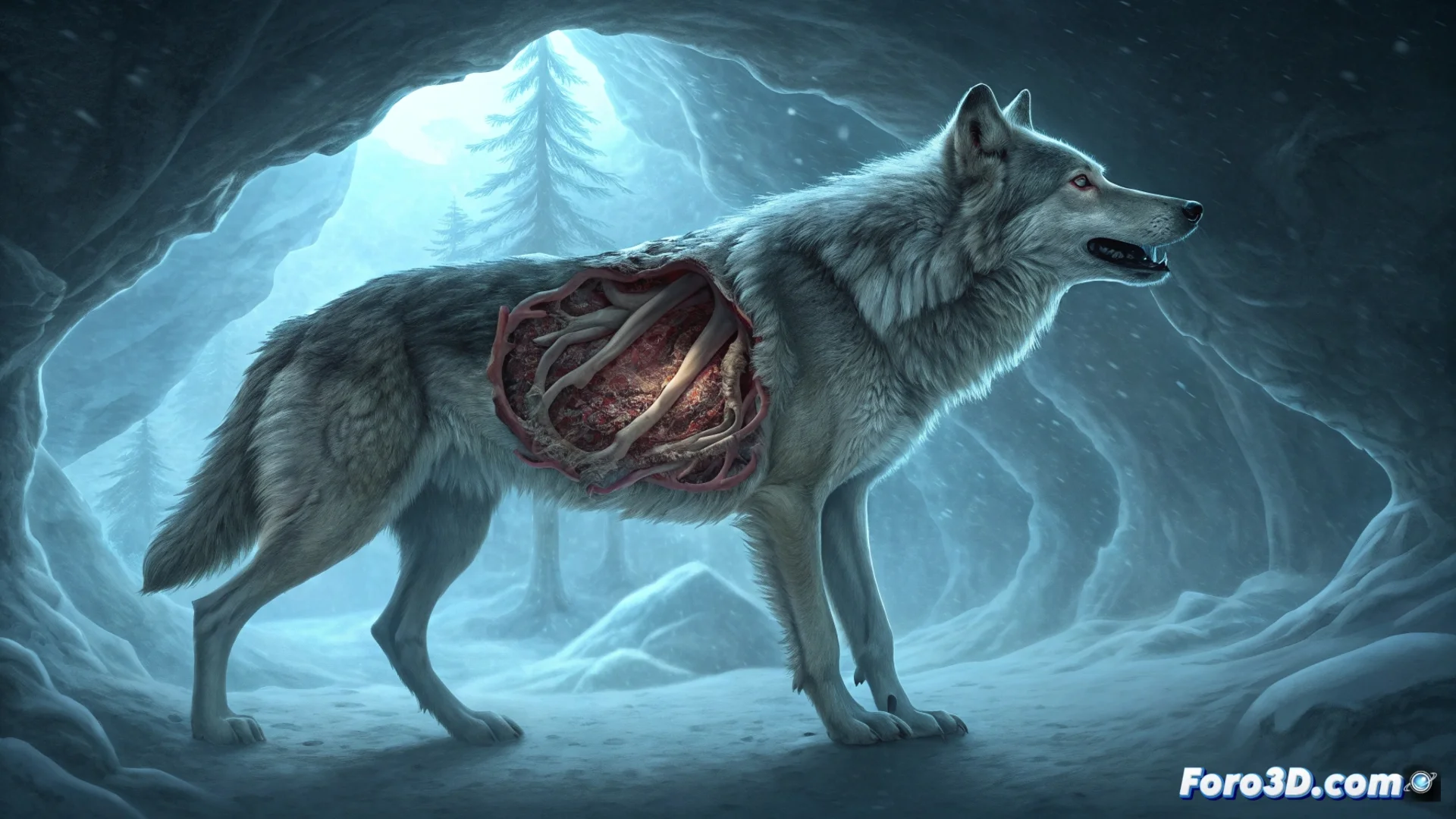
A Genetic Finding in an Ancient Wolf Clarifies the Extinction of the Woolly Rhinoceros
A scientific team has managed to extract genetic material from a piece of woolly rhinoceros meat found in the stomach of a wolf that died 14,400 years ago. This discovery, published in Current Biology, opens a unique window to analyze the DNA of extinct megafauna from a completely new angle. The predator's last meal was preserved as a genetic time capsule 🧬.
Genetics Reveals a Diverse Population Before Disappearing
The researchers processed the nearly complete mitochondrial genome they recovered and compared it with other known sequences. The data indicate that the woolly rhinoceros population in Siberia maintained stable genetic diversity for millennia, right up until their extinction about 14,000 years ago. This pattern contradicts the hypothesis of a prolonged genetic decay that weakened the species.
Key Findings from the Genetic Analysis:- The recovered mitochondrial DNA is exceptionally well preserved.
- The genetic diversity of the population remained high, it did not decline.
- The final cause of their disappearance was not a slow degeneration of the gene pool.
The genome tells a story of resilience until an abrupt environmental breaking point.
Rapid Climate Change Emerges as a Key Factor
The study reinforces the idea that an abrupt climate change, specifically the warming of the Bølling-Allerød period, was the main trigger. The mammoth steppe ecosystem, on which the woolly rhinoceros totally depended, transformed rapidly. The combination of this extreme change with pressure from human hunters may have been insurmountable.
Factors that Converged in the Extinction:- Rapid climate warming that altered the steppe habitat.
- Radical transformation of the ecosystem and food resources.
- Additional pressure from humans who hunted.
A Prehistoric Menu with Answers
It seems that the wolf's last supper was so substantial that it has provided a frozen clue to solve a 14,000-year-old mystery. A