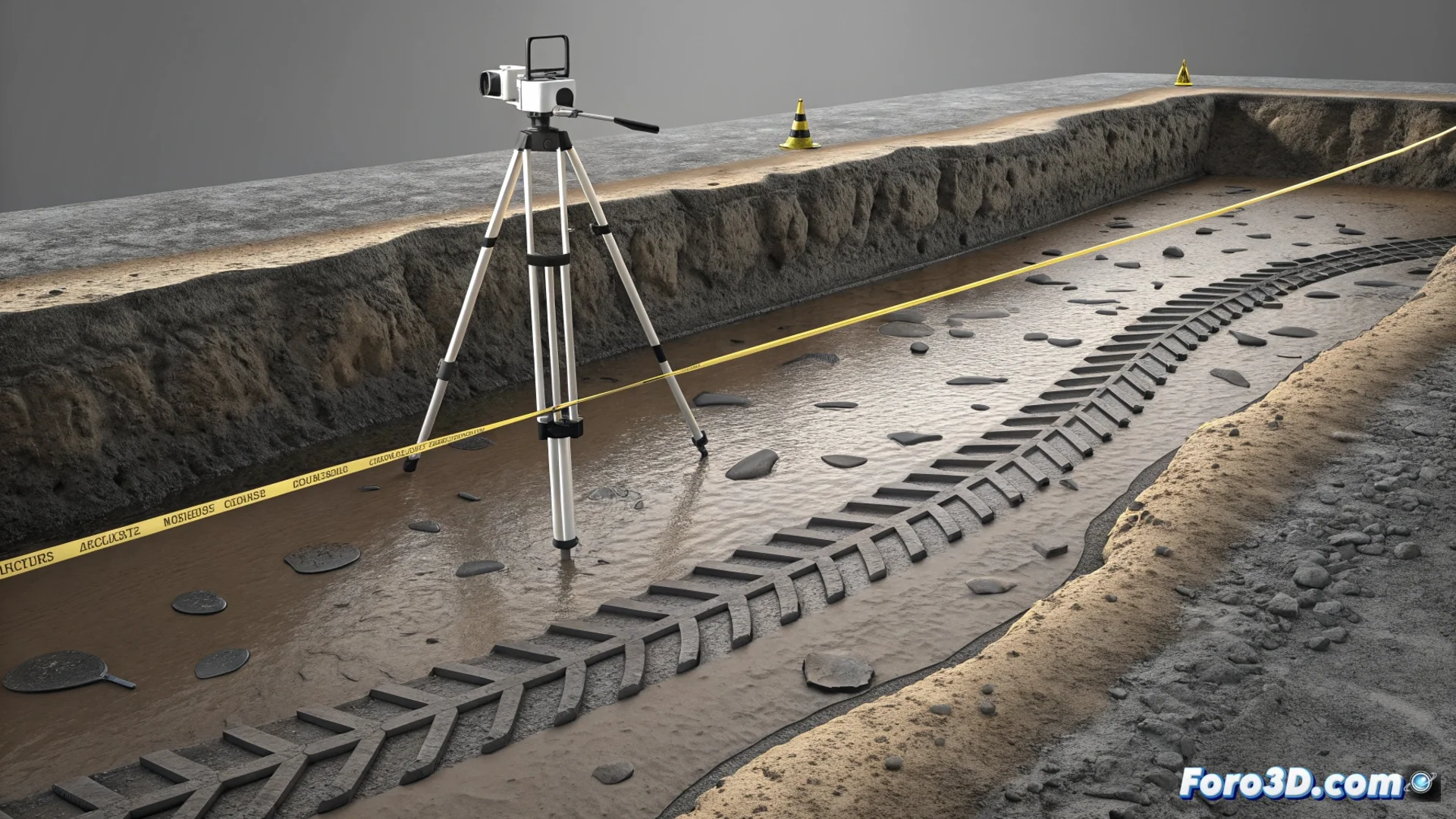
3D Scanning Revolutionizes Tire Track Forensic Analysis
Forensic investigation takes a technological leap by adopting 3D scanning to document tracks left on soft surfaces like mud. This technique goes beyond registering the surface pattern, as it generates a precise digital model of the entire cavity. 🔍
Capturing the Full Volume of the Track
When scanning the impression, exact metric data is obtained on the total width, the shoulder curvature, and the channel depth. These details are vital for distinguishing between tire versions from the same manufacturer that may share a similar visual pattern but differ in their hidden dimensions.
Key Advantages Over Classical Methods:- Eliminate physical contact that can damage fragile evidence.
- Preserve fine information from the side walls, which plaster casts often distort.
- Measure inclination angles and individual lug morphology with precision.
The resulting 3D model is a comprehensive digital profile that is compared with catalogs of new and worn tires.
Processing and Comparing Digital Data
Once captured, the point cloud is cleaned and aligned using specialized software. Algorithms examine multiple parameters that the human eye overlooks.
Parameters Analyzed by the Software:- The precise distance between repeating design elements.
- The particular wear pattern of each tread block.
- The geometric relationship between different areas of the track.
Precision and Practical Limitations
This set of metrics is compared with manufacturers' technical specifications, drastically reducing the list of possible models and potentially identifying a specific reference. Although mud helps preserve detail, it also poses a risk if it rains before scanning, proving that technology advances faster than weather cooperation. 🌧️