In Livigno 2026, the Japanese Yuto Totsuka marked a turning point in the halfpipe final. His execution of triple flips, maneuvers with three rotations, consolidates a technical trend that redefines the limits of the discipline. This evolutionary leap is not an isolated event, but the consequence of a constant pursuit of flight and aerial complexity that has characterized snowboarding since its origins, long before its Olympic entry.
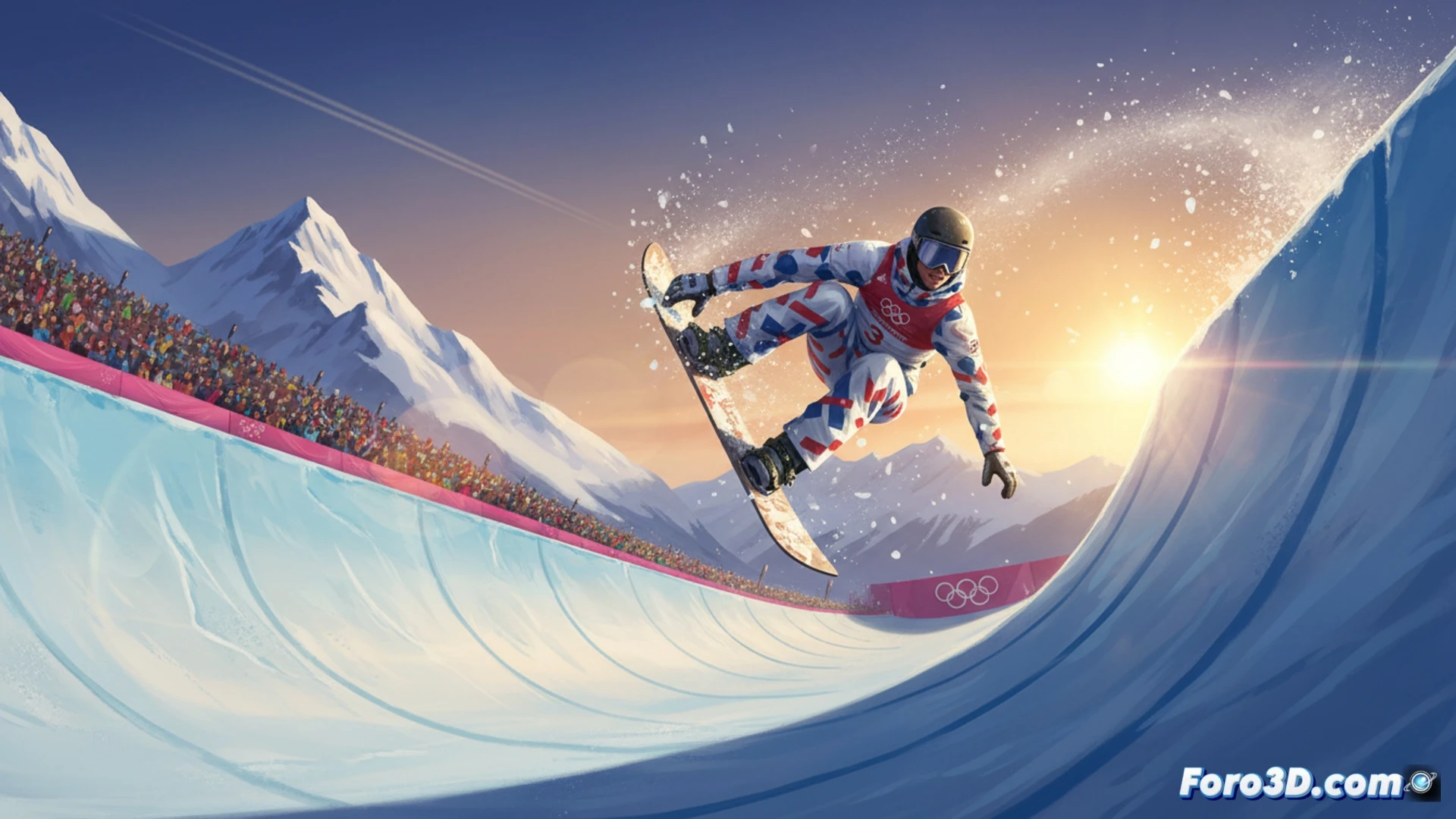
The Physics Behind the Triple Flip: Amplitude, Speed, and Precision ⚛️
Executing a triple flip in a halfpipe requires a combination of very specific technical factors. First, a taller snow wall and a wider radius allow for a longer and more vertical flight trajectory. Second, entry speed is crucial to generate the necessary height that provides rotation time in the air. Finally, the rider's kinesthesia must be precise to control three complete rotations on the transverse axis, maintaining spatial orientation for a stable landing.
When Your Board Looks Like a Blender in the Air 🌀
Watching these spins from the stands produces a peculiar sensation. While the athlete calculates angles and G-forces, the average spectator can only think that someone has pressed the blend button in mid-air. The technical feat translates into a human-shaped blur that, against all logic, lands on a board. One almost expects a snow and adrenaline smoothie to come out of the pipe. It's the kind of maneuver that makes a simple ollie look like a parking maneuver.