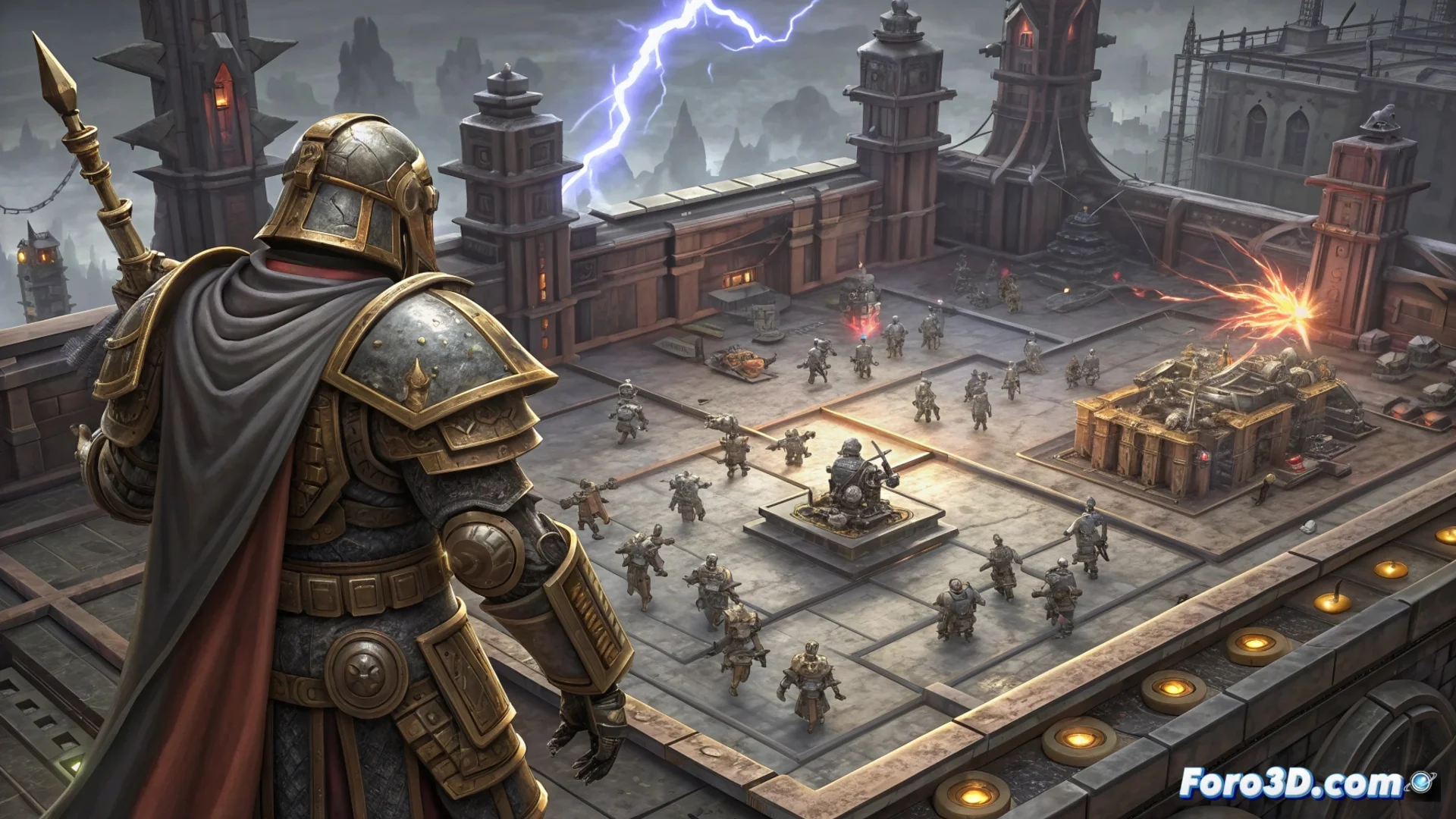
Warhammer 40,000: Rogue Trader is Developed with Unity and 3D Tools
The studio Owlcat Games is behind the upcoming CRPG based on the popular science fiction universe. To build it, they choose the Unity engine, a platform with which the team is already very familiar from their past projects 🎮.
Building the Dark Future of the 41st Millennium
The game adopts an isometric and aerial perspective, which requires all on-screen elements, from scenarios to characters, to be displayed with great sharpness and detail. To achieve this, artists and modelers use specialized software.
Artistic and Technical Workflow:- 3D Modeling: Assets are created with programs like Blender or 3ds Max.
- Texturing and 2D Art: Surfaces and portraits are painted with tools like Photoshop.
- Immersive Audio: The soundtrack and characteristic 40k sound effects are integrated using middleware like FMOD.
In the grim darkness of the far future, there is only war... and a few very busy particle shaders.
A Grimdark Aesthetic Faithful to the Universe
The art direction strives to convey the dark and gothic essence inherent to Warhammer 40,000. Even though the camera is elevated, the environments and models are filled with elements that evoke this unique setting. Visual effects are fundamental, with intensive use of particle systems to simulate the fire of advanced weapons and psychic powers, adding spectacle and chaos to tactical encounters 💥.
Technical Advantages of Using a Known Engine
Choosing Unity allows Owlcat's team to leverage the knowledge and code they already have. This helps optimize how the game works and implement complex mechanics more efficiently.
Key Benefits of This Approach:- Managing an extensive dialogue tree and numerous character interactions.
- Keeping turn-based battles stable, which define the CRPG genre.
- Ensuring smooth performance despite the large number of elements and calculations on screen.
Conclusion: Experience Translates into Quality
The development of Warhammer 40,000: Rogue Trader demonstrates how using known tools, like Unity, along with a consolidated artistic workflow, allows creating a deep video game that honors its original license both visually and mechanically. The combination of detailed 3D modeling, flashy effects, and a solid technical base is crucial to bring this grimdark future to life ⚙️.