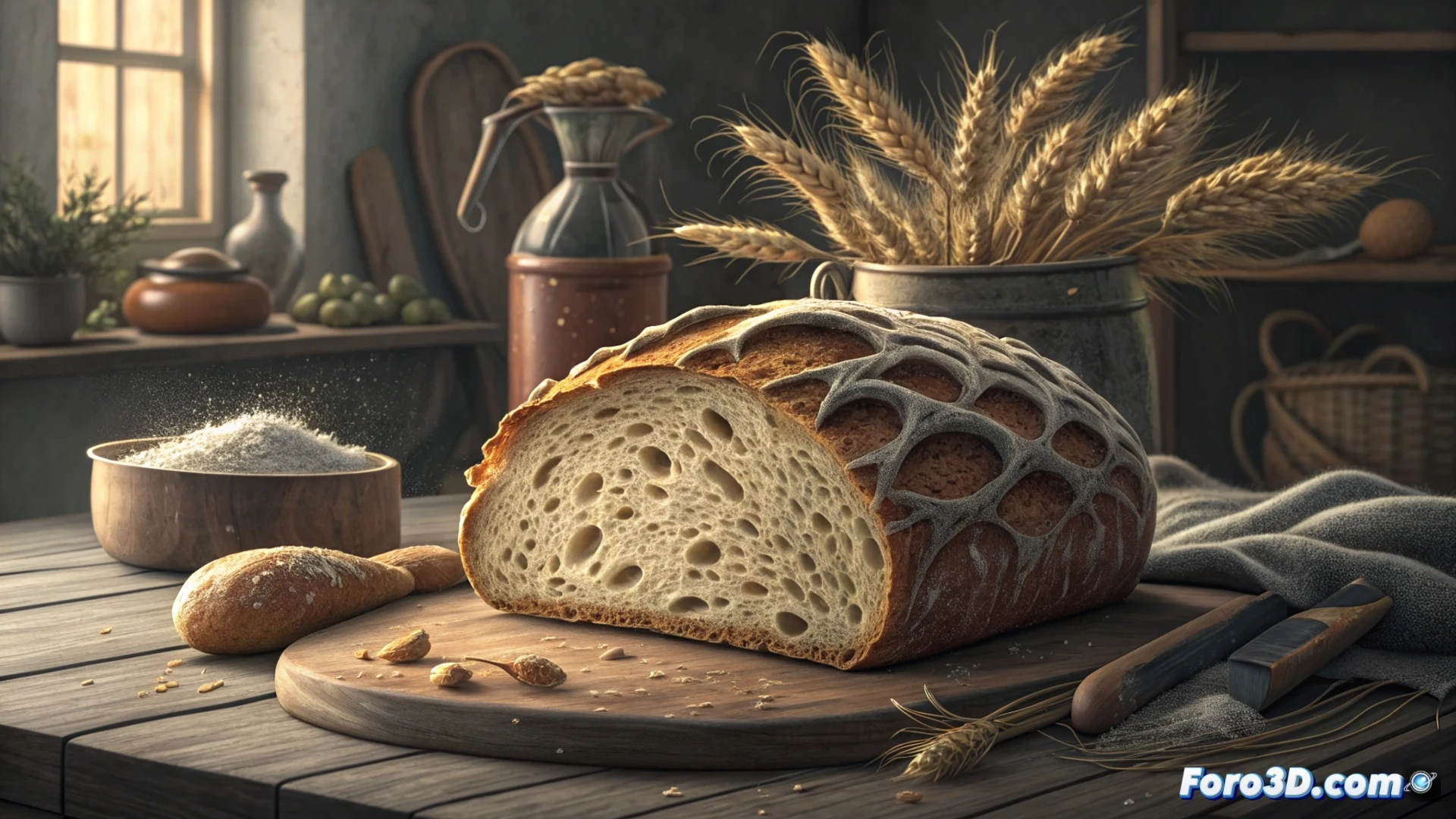
High-hydration bread, recognizable by its alveolated crumb and thin crust, is gaining ground. It is no longer an exclusive product of specialized workshops; its presence is becoming normalized in stores. This interest is transferring to the domestic sphere, where enthusiasts seek techniques to replicate its elastic and juicy texture, a challenge that blends tradition and precision.
The Science Behind the Dough: Hydration and Gluten 🔬
The success lies in handling doughs with hydration above 75%. Water weakens the gluten network, making the dough fragile and sticky. The key technique is autolysis: mixing flour and water before adding yeast and salt. This rest activates enzymes that strengthen the gluten passively, allowing more water to be incorporated afterward. Kneading is replaced by block folds to give structure without breaking the network.
The Impossible Mission: Kneading Without Everything Sticking 🥊
Entering this world has an initiation rite: fighting with a dough that clings to everything like a child on a leg. The countertop, the hands, the scraper... everything gets soaked. One discovers that kneading here is a euphemism for performing strategic movements with claw-like fingers. The final result usually justifies the battle, but the kitchen looks like the scene of a floury crime.