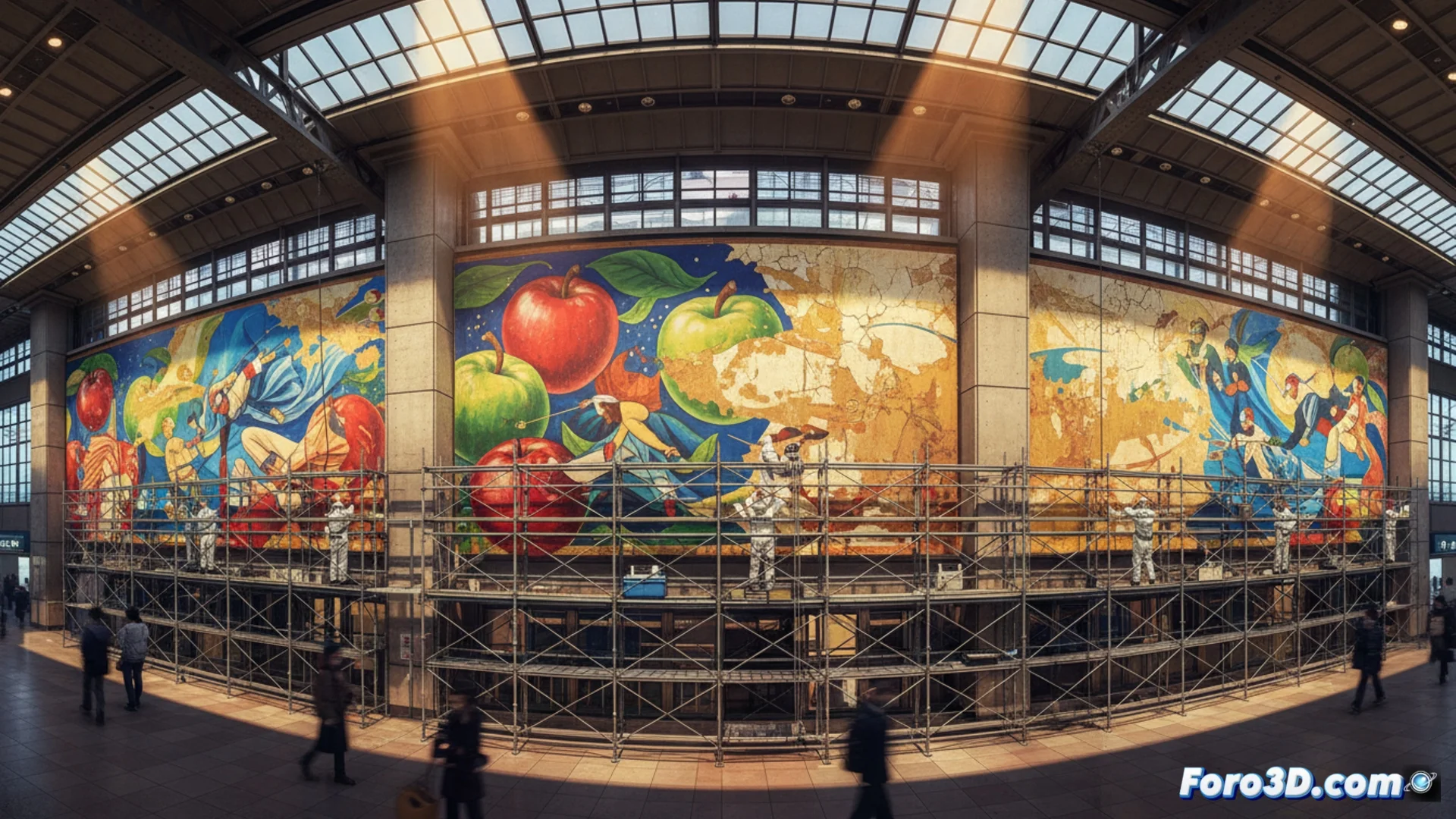
Restoration of the Jiyu Mural at Ueno Station Progresses as Planned
The colossal mural titled Jiyu (meaning Freedom), created by the renowned artist Genichiro Inokuma in 1951, is undergoing meticulous conservation work inside JR Ueno train station in Tokyo. 🎨 This monumental piece, measuring approximately 27 meters wide by 5 meters high, was conceived to radiate optimism and joy in the post-World War II period. Its iconography includes apples and human figures skiing, referencing the northern regions of Japan, as Ueno has historically served as the main access from the north of the country. The restoration project is progressing without setbacks and is planned to conclude before the end of March.
The Impact of Time and Humidity on the Work
Over the decades, environmental factors such as direct sunlight and persistent humidity have caused the pigments to fade and the support to deteriorate. In the 1980s, there was an initiative to remove the mural entirely, but a strong citizen mobilization managed to reverse that decision and ensure its permanence. This popular support drove previous repair efforts in 1984 and again in 2002. The third and current intervention, which began in June 2025, involves a team of around twenty people, including specialists from the Tokyo University of the Arts. 🧑🎨
Key Actions in the Restoration Process:- Repair areas where the paint layer has detached or lifted from the support.
- Seal and fill cracks that have appeared on the mural's surface.
- Adjust and retouch colors to recover the artist's original visual intention, ensuring that future generations can appreciate the work.
The community's pressure proved more effective than any product for removing the stain of forgetting a historical heritage.
The Current Approach: Conserve, Not Renew
The group of restorers does not seek to make the mural look newly painted. Their main goal is to stabilize its current condition and halt the effects of accumulated wear. This method ensures that the historical and artistic integrity of the piece is fully preserved. The intervention scrupulously respects the original materials and techniques used by Inokuma, allowing the mural to remain a physical and emotional testament to Japan's postwar era in its original location. 🔧
Principles Guiding the Work:- Consolidate the paint layer to prevent new detachments.
- Recover the chromatic range that the artist initially planned.
- Mitigate deterioration caused by the environment, without altering the patina of time.
A Lasting Legacy
The restoration of the Jiyu mural is a clear example of how cultural value and community attachment can safeguard public art. By keeping the work in its original site, not only is an important artistic asset protected, but the collective memory of a crucial period for Japan is also kept alive. The commitment of experts and citizens ensures that this symbol of hope continues to inspire travelers passing through Ueno station. ✨