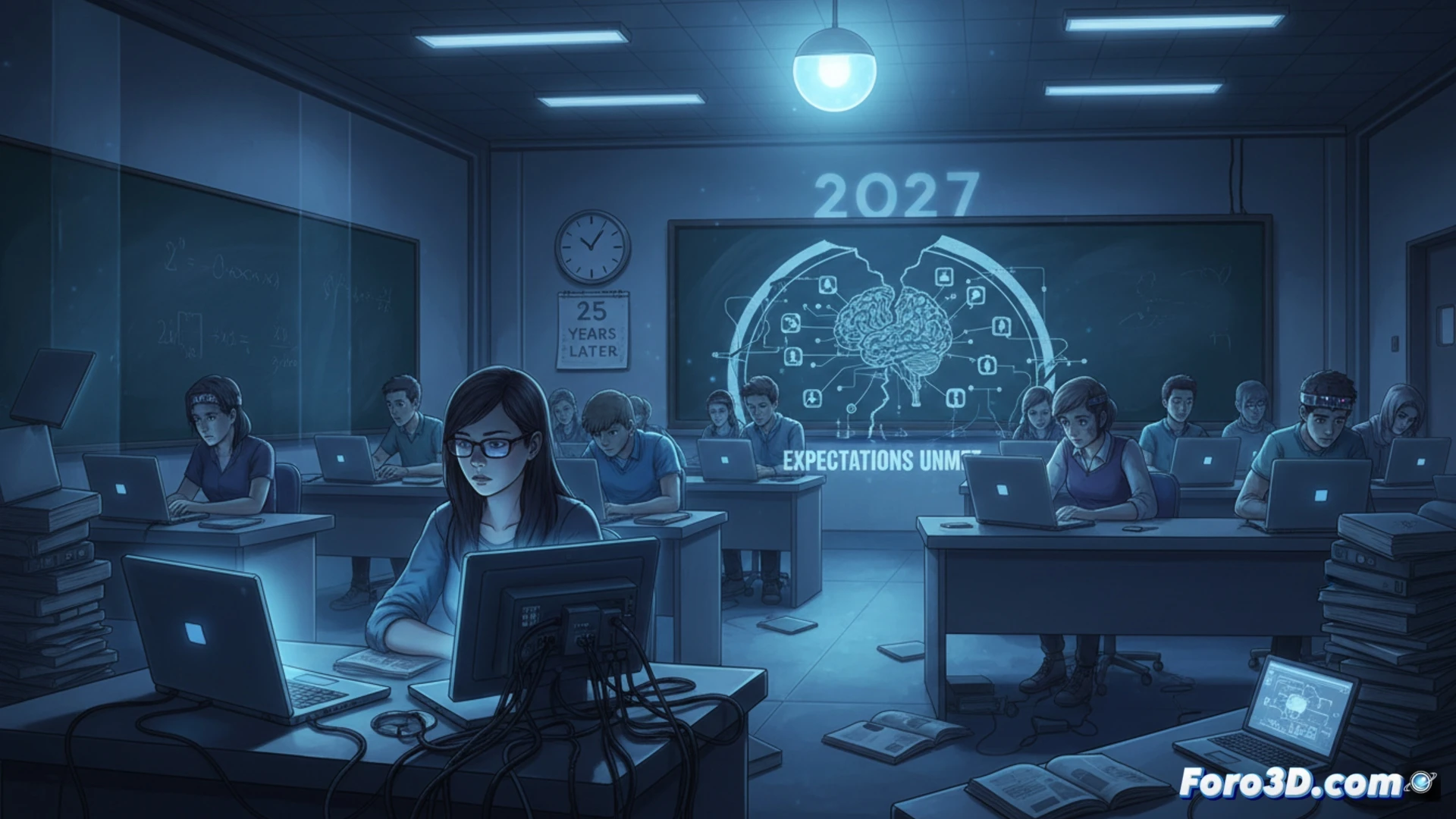
In 2002, Maine launched a pioneering program to replace textbooks with laptops in schools. Nearly a quarter of a century and billions of dollars later, the results fall far short of expectations. Experts indicate that massive access to information did not translate into improved learning. Neuroscientists like Jared Cooney Horvath have even warned of a negative effect on students' cognitive abilities.
The Technological Paradox: Unlimited Access, Limited Depth 🤔
The initial hypothesis was that technology, by facilitating access to resources and personalizing the pace, would enhance understanding. However, cognitive studies indicate the opposite. Constant multitasking, notifications, and superficial browsing fragment attention and impair long-term memory. The brain does not process the same on paper as on screen, where quick scanning predominates over deep reading. The tool designed to amplify knowledge may be diminishing the capacity to build it.
From Maine to Meme: When the click Replaced Thinking 😬
So the grand plan to create a generation of superstudents has left us with students who can find a YouTube tutorial in seconds, but struggle to follow a linear argument for three pages. Ironies of progress: we have equipped classrooms with more processing power than NASA used to reach the Moon, only for that power to be mainly used to watch TikTok between exercises. The future they promised us had critical thinking; the one we got has a refresh button and the attention span of a piece of chewing gum.