Artur Ganszyniec, lead story designer for the first The Witcher, has pointed out a narrative error that conditioned the saga. In a statement, he explained that the original cinematic epilogue, which showed Geralt being arrested, was a problematic success. This ending forced The Witcher 2 to start from a strained premise: a story about witchers who are kingslayers.
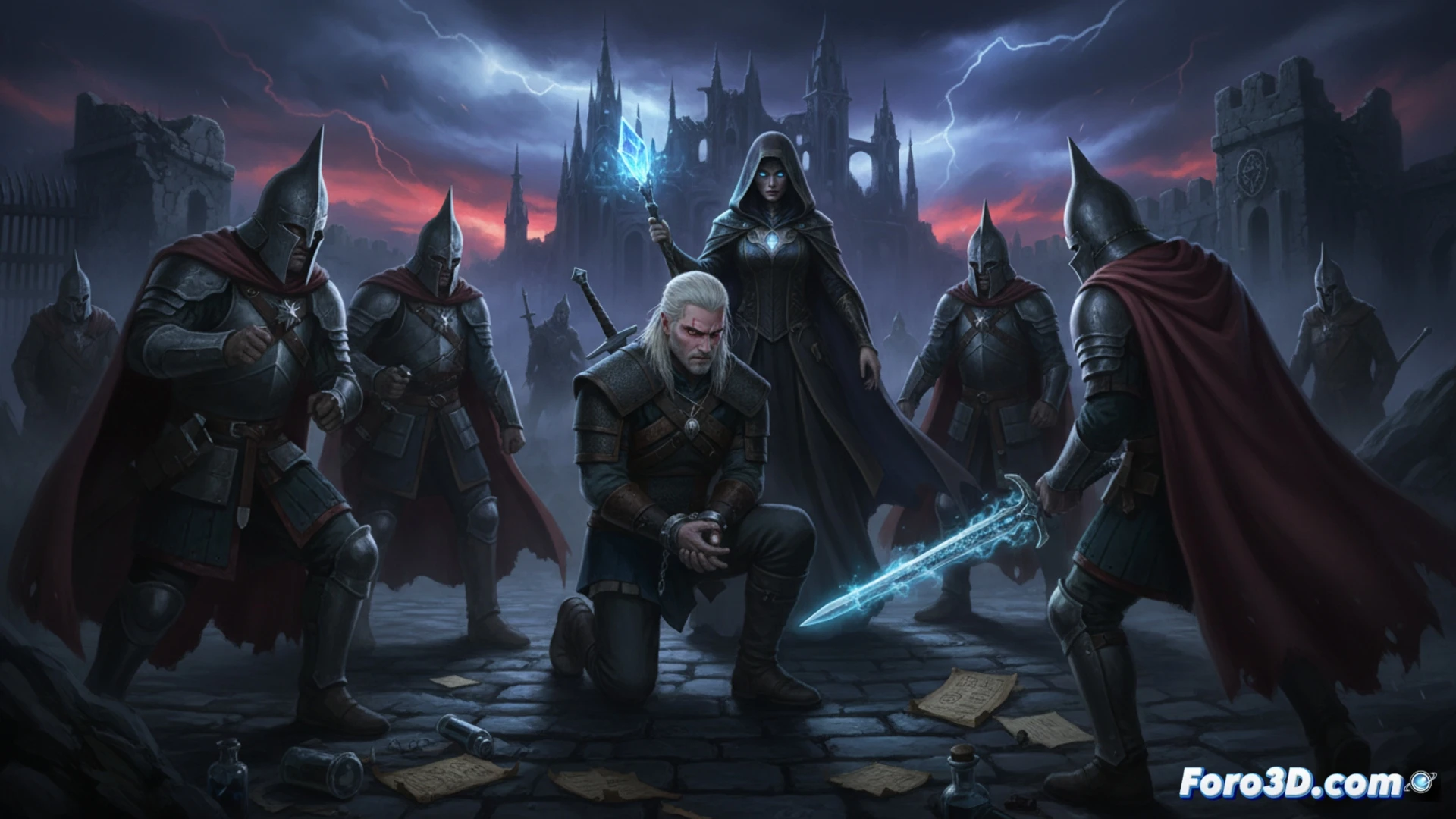
How a Narrative Production Decision Chained Mission Design ⛓️
The choice of the epilogue was not an independent script, but a production resource that fixed variables. By closing the first game with Geralt arrested for the death of Foltest, the developers of the sequel saw their design space reduced. The plot of The Witcher 2 then needed to build its first act around that established premise, dedicating narrative resources to justify a situation that did not start from zero. This shows how a closure solution can limit freedom in the development of a sequel.
The Heavy Burden of Being the Perfect Scapegoat 🐐
So Geralt, the mutant who survives beasts and curses, is defeated by a few-minute short film. Of course, real justice is effective when it needs a culprit with striking scars. Poor Letho and his companions only had to follow the script: if the epilogue already presents you as a regicide, you'd better find some witchers who really did it. At least they provided the coherence.