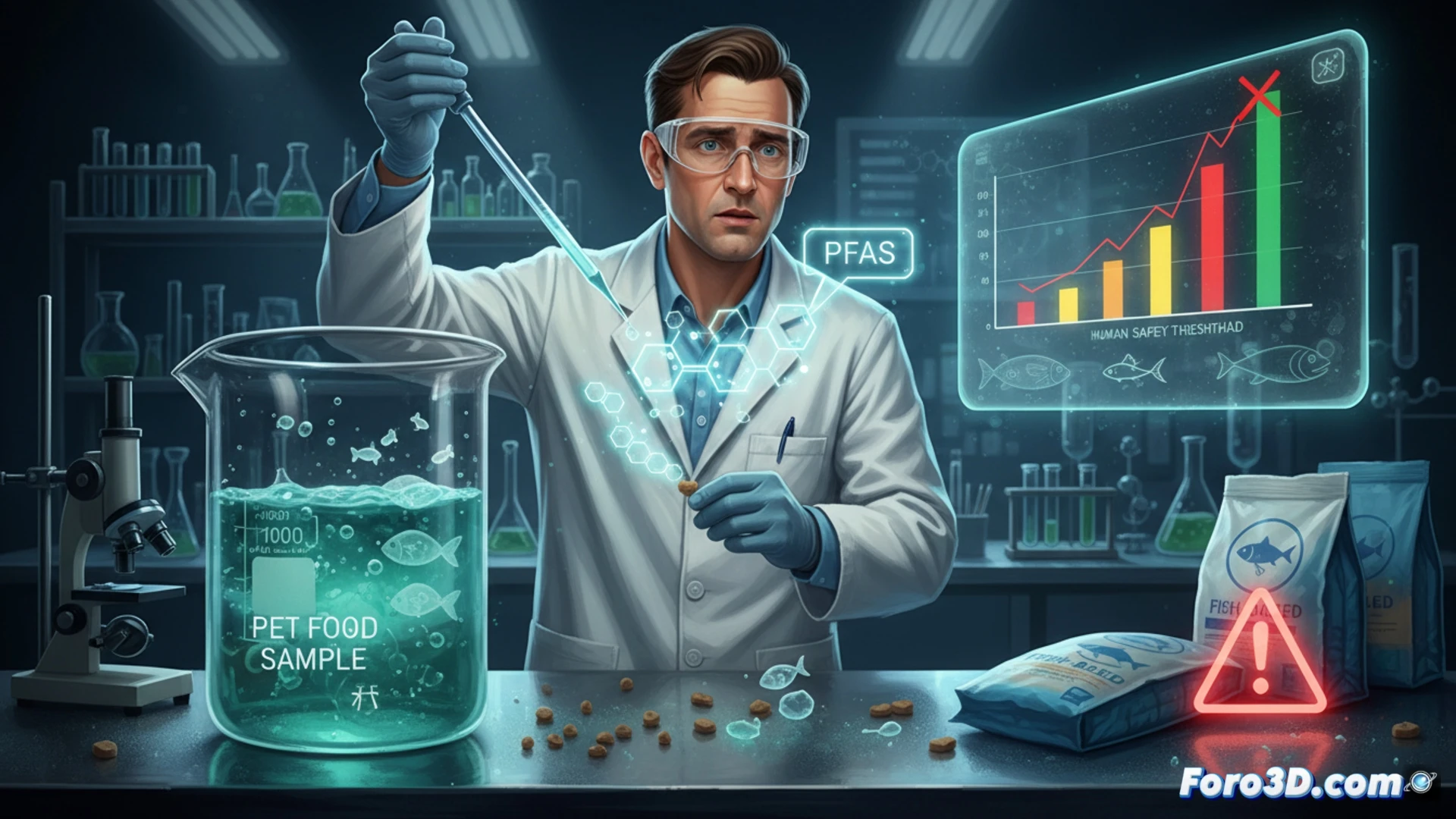
A recent investigation has found levels of perfluoroalkyl substances (PFAS) in dog and cat foods that exceed the safety thresholds established for humans in Europe. The study, conducted in Japan, points to fish-based products as the most affected, regardless of their geographic origin. Experts indicate that there is no immediate health alert, but they highlight a lack of data on long-term effects in animals.
The Footprint of Industrial Pollution in the Production Chain 🏭
The technical problem lies in the environmental persistence of PFAS. These molecules, used in industrial processes, do not degrade and contaminate the oceans. Fish accumulate them in their tissues, becoming the main entry route into the pet food manufacturing chain. The analysis used liquid chromatography and mass spectrometry to identify specific compounds like PFOS, confirming that the contamination is global and transfers directly from the marine environment to the raw materials.
Does Your Cat Want Sushi? It Might Already Have It, with an Extra Chemical 🐱
It seems that the gourmet trend of giving fish to pets has a dark side. While we check the labels on our salmon, they might be ingesting a cocktail of forever chemicals without knowing it. The next time your dog looks at you longingly while you eat tuna, think that maybe its can has already provided its dose of industrial pollution. One more reason to diversify its menu: fish with PFAS today, chicken tomorrow, the day after... who knows.