Spain's national basketball team's victory over Ukraine in Riga, led by Chus Mateo, showcased remarkable tactical coordination. This type of collective execution, where passing and off-ball movement are precise, serves as analysis material for 3D artists. In forums like this, we can break down these plays to understand kinematics applied to groups, a useful knowledge for sports visualization projects or cinematics in graphics engines.
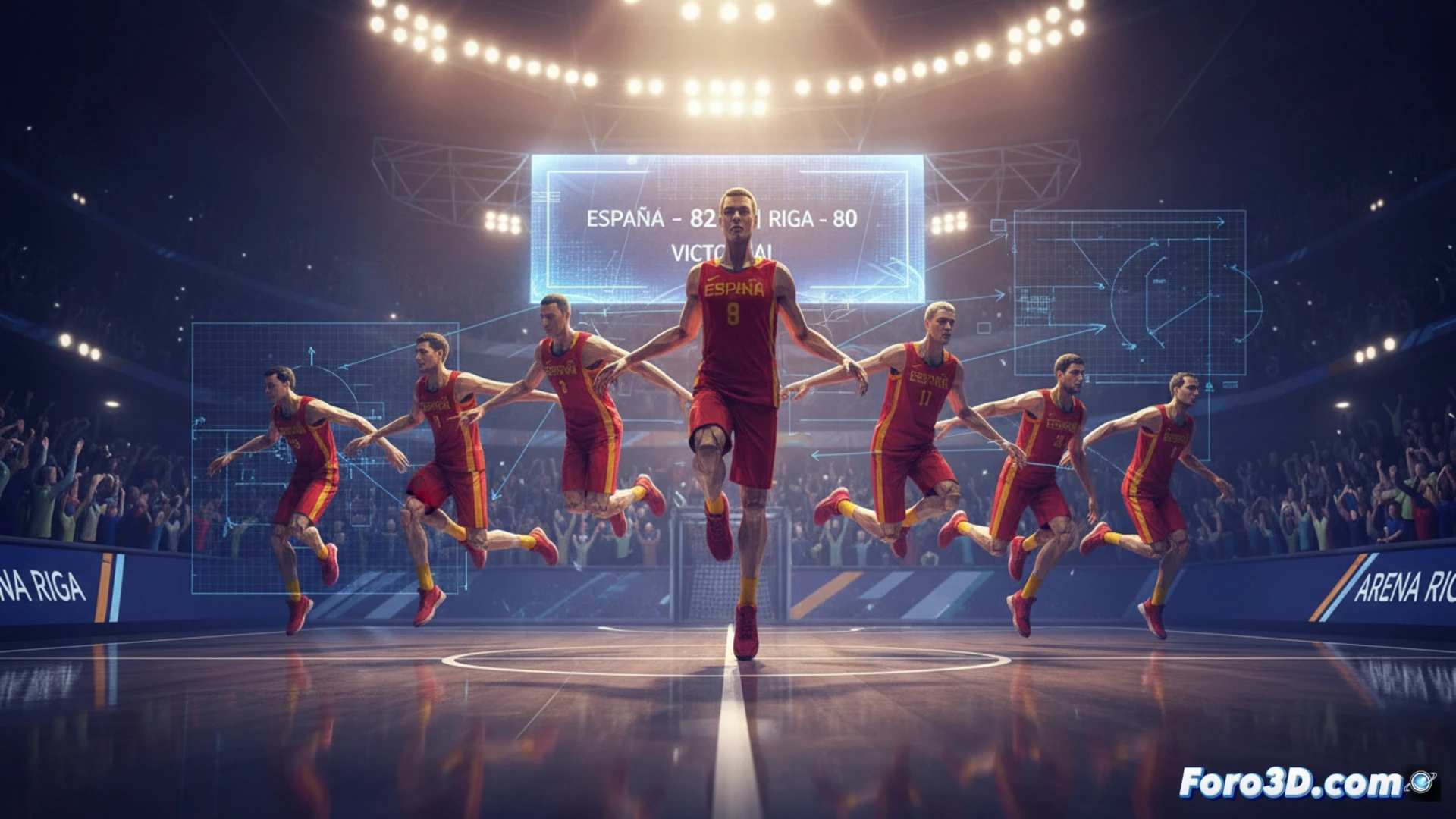
From the Court to the Viewport: Physics and Kinematics in Group Animation 🎬
Sequences like those shown by Spain allow studying weight transfer, reaction times, and the spatial composition of a team. An animator can extract data on the fluidity of passes or defensive displacements to apply those principles to their rigs. The interaction between characters in a sports simulation requires that level of detail in movement physics, where anticipation and action-reaction are key elements to replicate digitally.
When Your Rig Has Less Coordination Than the Spanish Defense 😅
It's time to admit it: after seeing Spain's ball circulation, our character rig seems to have its feet glued to the ground and the IK logic of its arms behaves with the elegance of a drunk octopus. While they execute a screen and roll with clockwork synchronicity, our digital characters sometimes greet each other by bumping heads when trying a simple pass. Maybe we should ask Chus Mateo to direct our next animation sessions too.