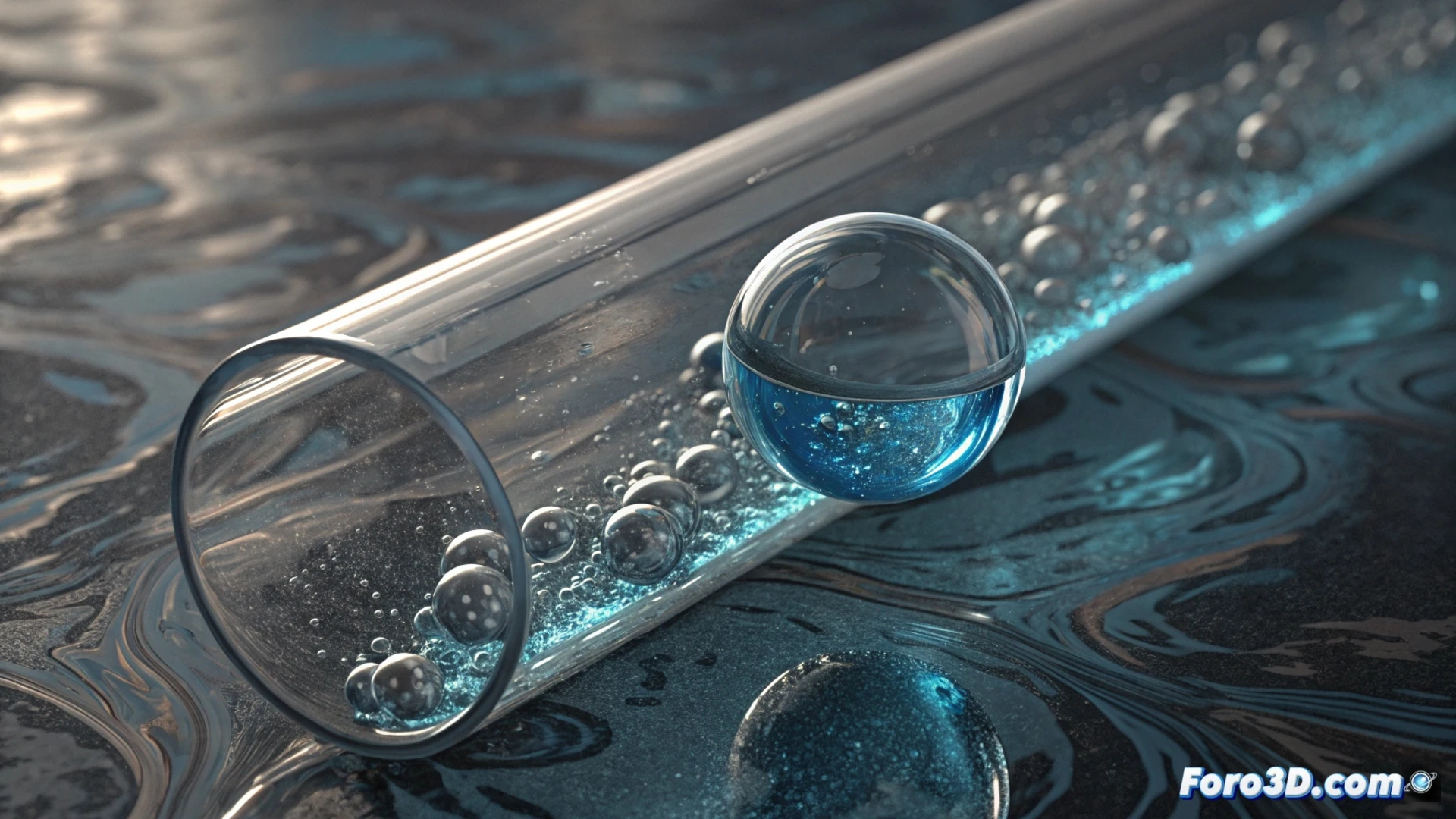
Simulate an Air Bubble in a Tube with Cinema 4D
Creating the illusion of an air bubble trapped in a fluid is an excellent exercise for mastering the optical properties of materials. In Cinema 4D, you can achieve this by combining basic geometries and precisely adjusting transparency and refraction. 🧪
Prepare the Base Geometry
The first step is to build the scene. You need a hollow cylinder that will act as the containing tube. Inside it, place a sphere that will represent the air bubble. Make sure the sphere is slightly smaller than the inner diameter of the cylinder so it can move freely.
Key Geometric Elements:- Cylinder: Main object that defines the shape of the tube. It must have faces at the ends to contain the virtual liquid.
- Sphere: Secondary object that simulates the bubble. Its scale and position are crucial for realism.
- Scene: Set up appropriate lighting that allows appreciating the transparencies and refractions later.
The key to the effect is not only in the animation, but in how light passes through the materials and distorts.
Adjust Materials and Refraction
This is where the illusion is defined. Assign a liquid-like material to the cylinder. In its properties, activate transparency and set a refraction index (IOR) of approximately 1.33, which is the value to simulate water. For the sphere, create a transparent material as well, but with an IOR close to 1.0, mimicking air properties. Activate transparency shadows in both channels so that light interacts physically and the correct distortions are generated at the air-liquid interface. 💎
Critical Material Properties:- Transparency: Must be activated in both materials at a high level.
- Liquid IOR: Use a value like 1.33 (water) or 1.5 (glass) for the cylinder.
- Air IOR: Use a value of 1.0 for the bubble sphere material.
- Transparency Shadows: Essential for calculating how light passes and shadows are projected through transparent media.
Animate and Bring the Bubble to Life
You can animate the sphere manually using keyframes along the tube's longitudinal axis for total control. For a more natural movement, consider using a basic particle system or cloner, restricting the path to the inside of the cylinder. Adding a deformer like Stretch or Flatten when the bubble touches the ends of the tube adds extra physical realism. A subtle touch of internal glow in the bubble's material helps define its presence within the dense medium. Remember that the final result should be perceived as a vacuum within the liquid, not as a solid object. Adjust the refraction values patiently until the effect is convincing and avoids the appearance of a marble floating in broth. 🚀