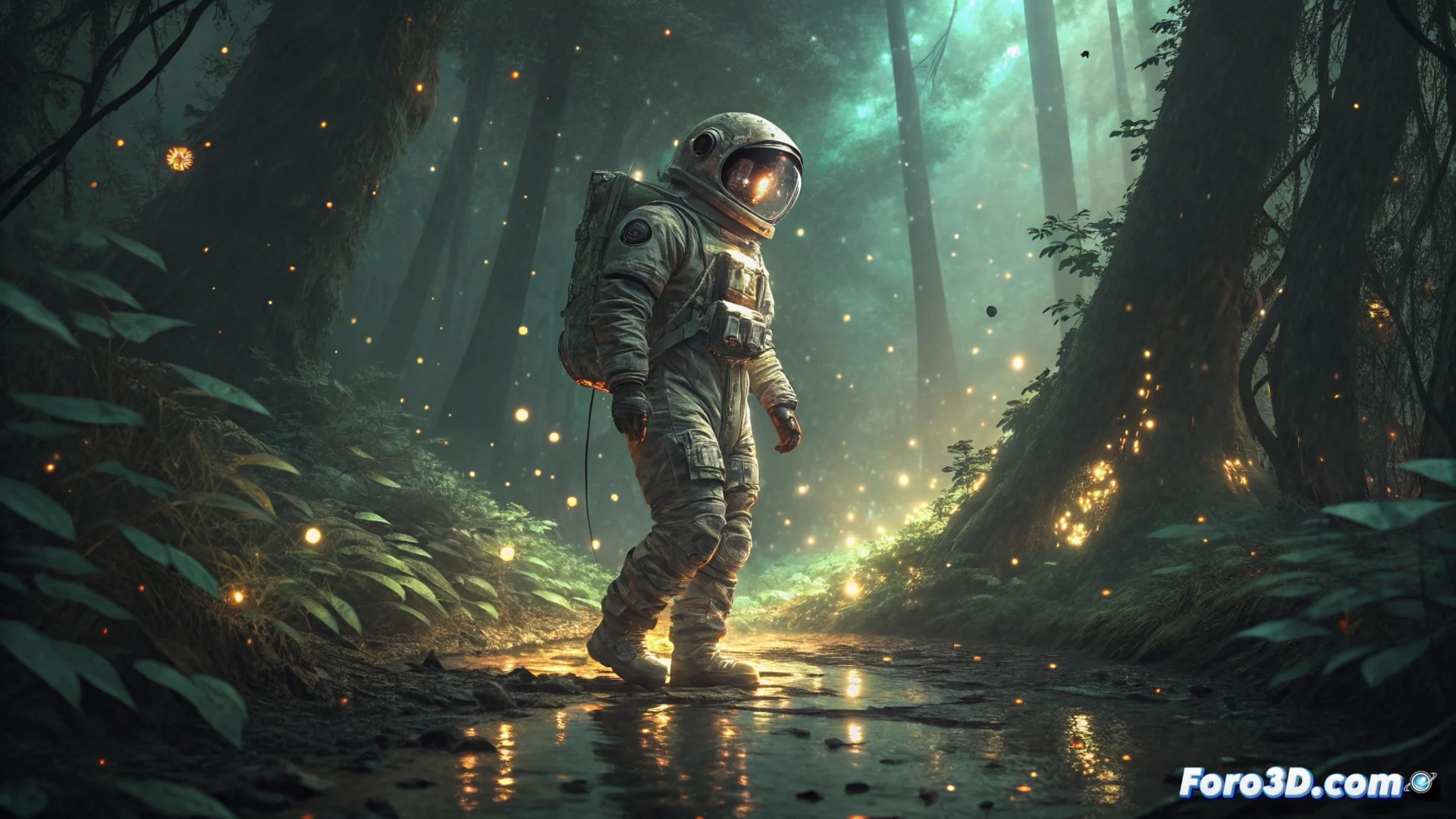
Returnal Runs on Housemarque's Own Engine
The Finnish studio Housemarque decided to create and use its own development engine to produce Returnal, a third-person action title with rogue-like elements. This technology did not come out of nowhere, but rather expanded significantly from the base used in the team's previous games, such as Resogun and Nex Machina, adapting it for a large-scale 3D project. 🎮
The Technological Base of the Internal Engine
The core of the system was designed with a main objective: process a huge amount of graphical elements on screen efficiently without compromising smoothness. This was crucial to build the alien and chaotic environments that define the gaming experience. The architecture allows handling the complexity of a persistent and highly detailed world.
Key Features of the Engine:- Evolves from engines used in 2D arcade projects to a full three-dimensional environment.
- Its design prioritizes efficiency to display many objects and effects simultaneously.
- It is optimized for next-generation consoles, exploiting their hardware.
Sometimes, the true rogue-like is restarting the console after a particle effect makes it doubt its own existence.
Graphics and Massive Particle Handling
The most recognizable visual hallmark of Returnal is its particle effects and VFX system, a direct homage to the bullet hell genre. The technology is capable of rendering millions of projectiles, flashes, and destructive elements on screen with high fidelity, maintaining stable performance. To achieve this, it implements techniques like dynamic resolution that aims to maintain 4K, a rate of sixty frames per second, along with dynamic lighting and high-quality reflections. 💥
Graphical Technical Achievements:- Render millions of particles without significant frame rate drops.
- Combine dynamic lighting and complex post-processing effects.
- Maintain high visual definition and constant smoothness during on-screen chaos.
Development Tools Used
To materialize their vision, the Housemarque team employed a set of specialized software, although the heart of the project remained their suite of internal tools. For modeling and animating both characters and environments, they used Autodesk Maya. The most intricate procedural visual effects and simulation systems were generated with SideFX Houdini. The integration of adaptive audio, which reacts in real time to the player's actions, was managed using Audiokinetic Wwise. This strategic combination of software was fundamental to define the game's unique technical identity. 🛠️