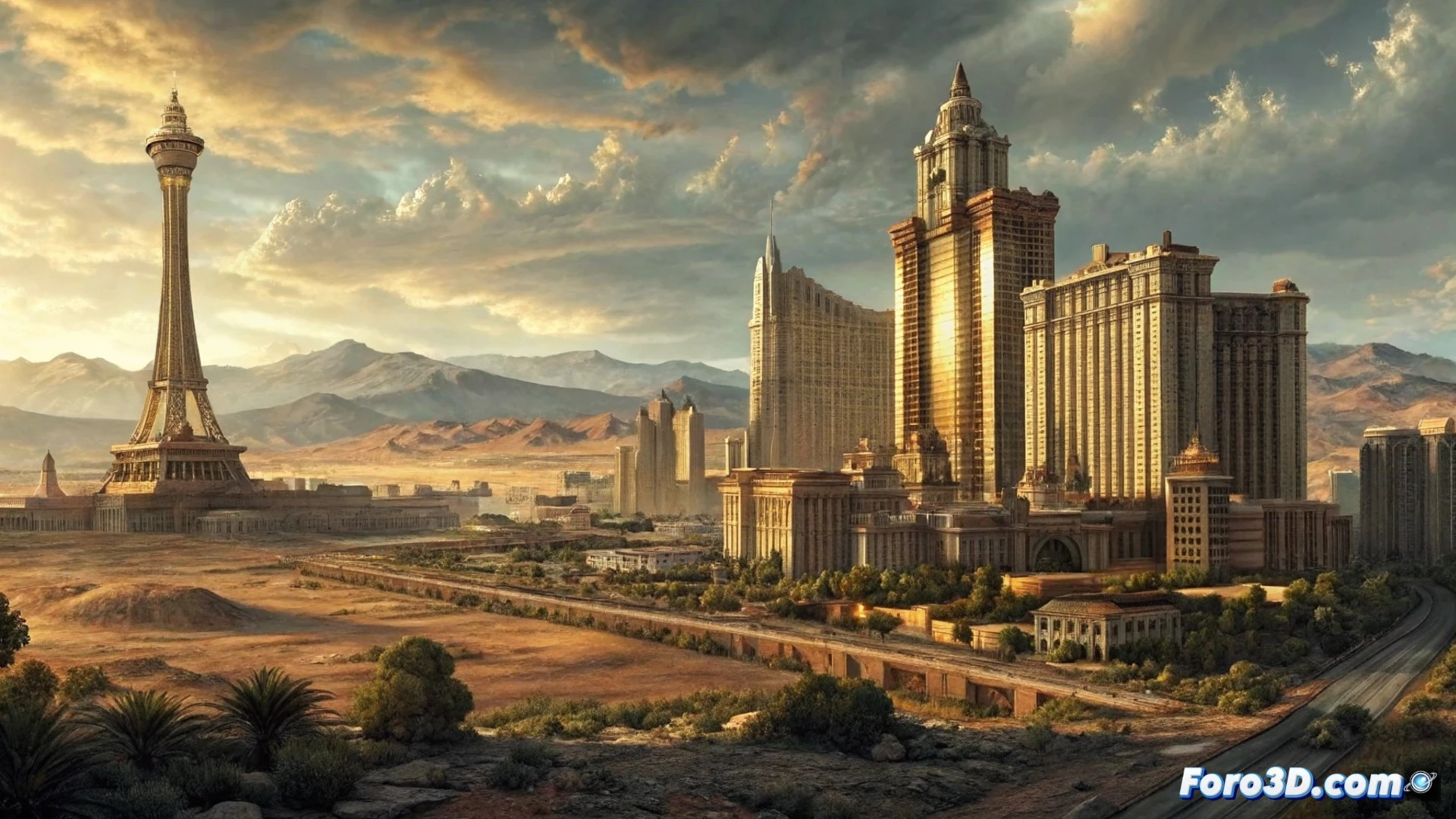
In the second season of Fallout, the Raynault VFX studio, under the supervision of Vincent Poitras, took on the task of expanding the post-apocalyptic universe. Their work focused on creating establishing shots of the New Vegas skyline and expanding the practical Freeside environments through digital extensions. This process started from solid physical sets, demonstrating how a well-planned practical base is fundamental for a photorealistic integration of visual effects.
Invisible Integration from Preproduction 🧩
The technical approach was based on making the VFX an organic extension of the physical world. Starting from photographs of practical sets and real props, the team built 3D models, lighting, and compositions that respected the visual identity of the video game. In less defined areas of the lore, they introduced their own interpretations, collaborating with the production design department. This pipeline ensures that the digital work does not stand out, but rather completes the image coherently.
When Your Set Is So Good That Even the VFX Relax 😌
There's something reassuring for a VFX artist when they arrive on set and see that the set decorators haven't used plasterboard and washable paint. Working over real structures, with authentic textures and dirt, is like having half the work done. One can almost feel how the 3D models settle onto the practical geometry with a sigh of relief, without having to invent every shadow or chip from scratch. It's proof that, sometimes, the best visual effect is the one that doesn't have to strive to look real.