Five years ago, the focus was on the pure electric, but now manufacturers are doubling down on plug-in hybrids. They present them as the ideal intermediate solution: practical, with electric range for daily use and a thermal engine for trips. However, a recent study casts doubt on this narrative, indicating that the official consumption figures are far from what drivers experience in normal usage conditions.
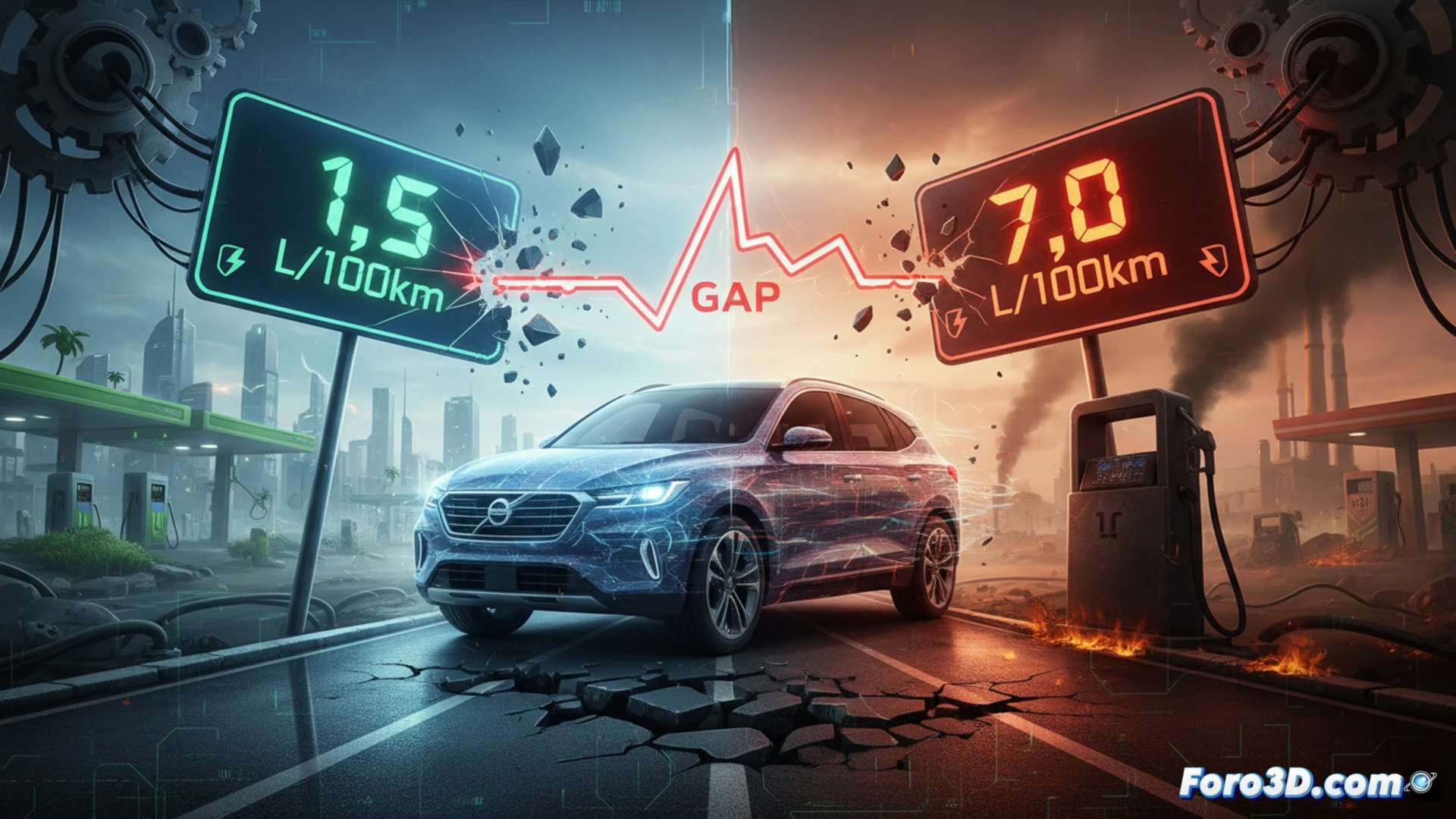
PHEV Technology Under Scrutiny: Where Is the Efficiency? ⚙️
The central problem lies in how WLTP homologation tests are conducted. These measure consumption with a fully charged battery, prioritizing electric mode. In real life, many users do not recharge daily, so the vehicle runs with a low battery, dragging a heavy battery pack with the combustion engine. This hybrid mode is less efficient than a conventional hybrid, generating consumptions that can double the homologated figure.
"Eco" Mode: For When Plugging In Is Just a Memory 😅
It's as if the engineers designed these vehicles thinking of a user who lives at a gas station with power outlets. For the rest, the car includes a special driving mode not described in the manual: the portable generator mode. It consists of using a normal-sized gasoline engine to move, along the way, a couple of extra tons of green technology that travels like dead weight. Efficiency then shines by its absence, but at least you can say you have a hybrid.