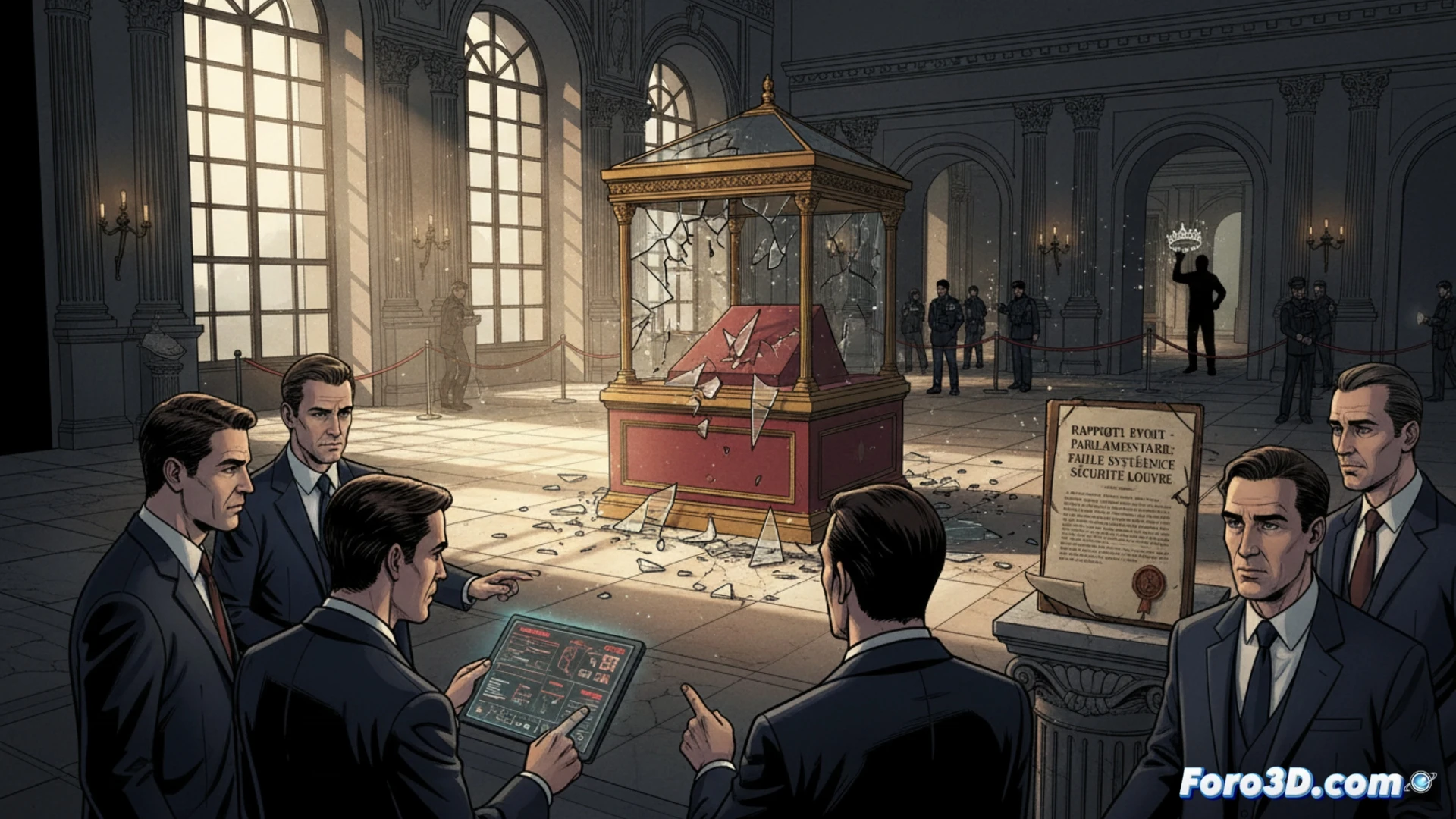
A French parliamentary commission has determined that the theft of Crown jewels in October 2025 was possible due to serious and prolonged deficiencies in the security of the Louvre Museum. The preliminary report indicates that the museum's management, led by Laurence des Cars, ignored known risks and failed to act on previous audits. This has generated political pressure and hearings, while the jewels remain missing and some suspects are detained.
The gap between available technology and its implementation in heritage security ⚠️
The case highlights a recurring problem: the disconnection between existing technical solutions and their effective application. Audits prior to the theft had already recommended more advanced intruder detection systems, next-generation motion sensors, and encryption protocols for the collection's digital records. However, implementation was fragmentary or nonexistent, leaving blind spots that the thieves exploited. Risk management was not updated in line with current technical capabilities.
The Louvre implements new security system: Trust in the good faith of the public 🤔
Unconfirmed sources suggest that, following the incident, the museum might adopt a revolutionary approach based on the intrinsic honesty of visitors. The pilot plan Oeil de la Confiance would replace bulletproof display cases with open shelves and substitute laser sensors with sticky notes that say Please do not touch. The director defended the measure by arguing that it reduces costs and creates a more authentic and uninhibited museum experience.