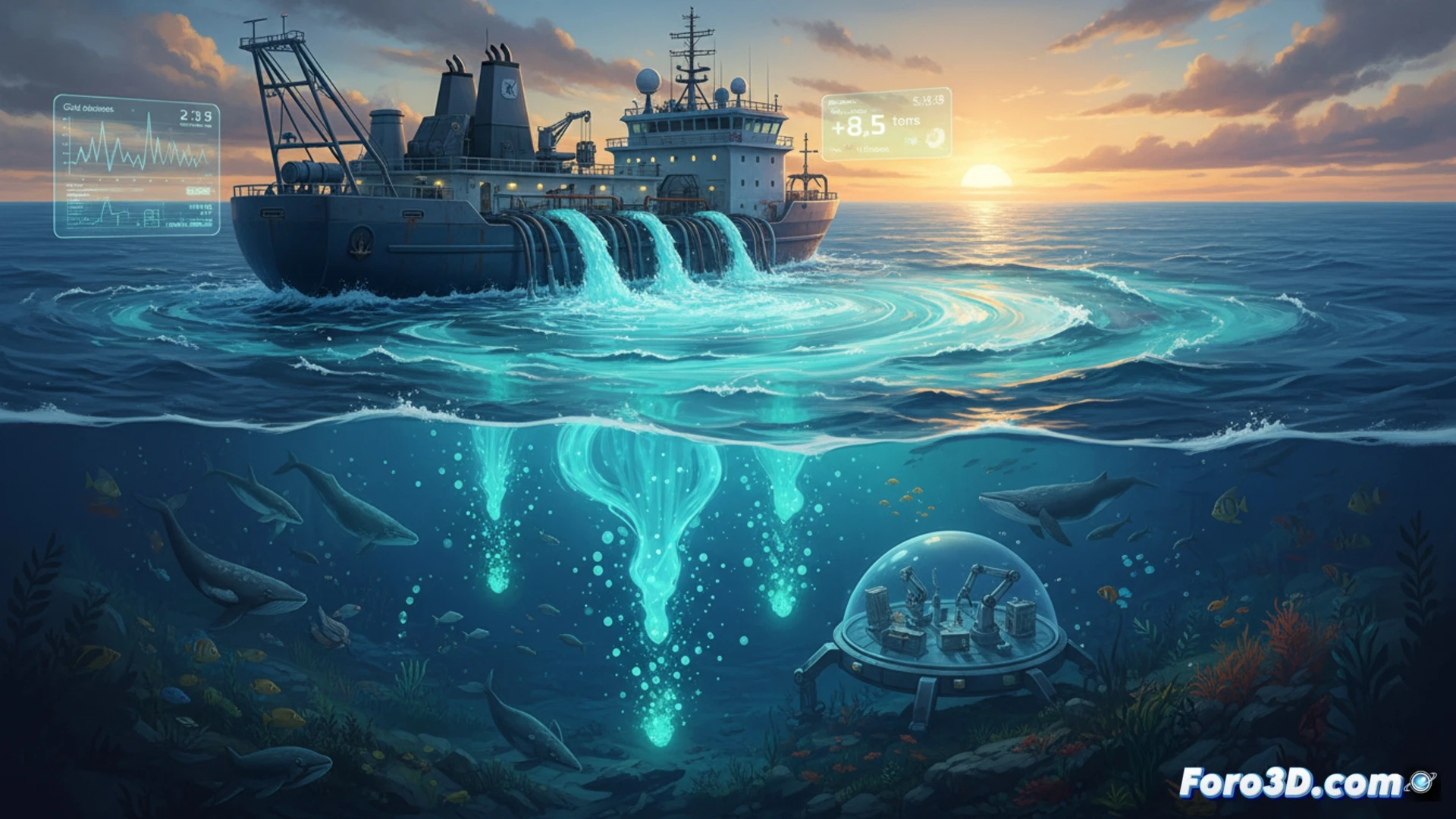
A recent experiment poured 65,000 liters of an alkaline solution into the Gulf of Maine to test CO₂ capture. Preliminary data indicate an extra absorption of between 2 and 10 tons in four days, with no visible damage to the ecosystem. For the Foro3D community, these trials provide valuable references for creating realistic scientific visualizations about climate intervention in the oceans.
Data for Simulation and the Debate on Total Footprint 📊
The process, called ocean alkalization, seeks to reduce water acidity so it absorbs more atmospheric CO₂. The measured parameters, such as scale, reaction time, and biological response, are useful for modeling scenarios in infographics or VFX sequences. A critical unresolved point is the full-cycle carbon balance, including the manufacturing and transportation of sodium hydroxide, an aspect that rendering and analysis specialists will discuss in the forum.
What if Our Next Render Needs to Calculate Its Own CO₂? 🤔
Imagine the scene: after weeks rendering an animation about saving the oceans, the sustainability plugin alerts you: Your climate mitigation simulation has emitted 3 tons of CO₂. The irony would be worthy of a science fiction script. Meanwhile, in the real world, we continue waiting for that final calculation from the experiment, just in case the solution turns out to be a special effect that's too costly.