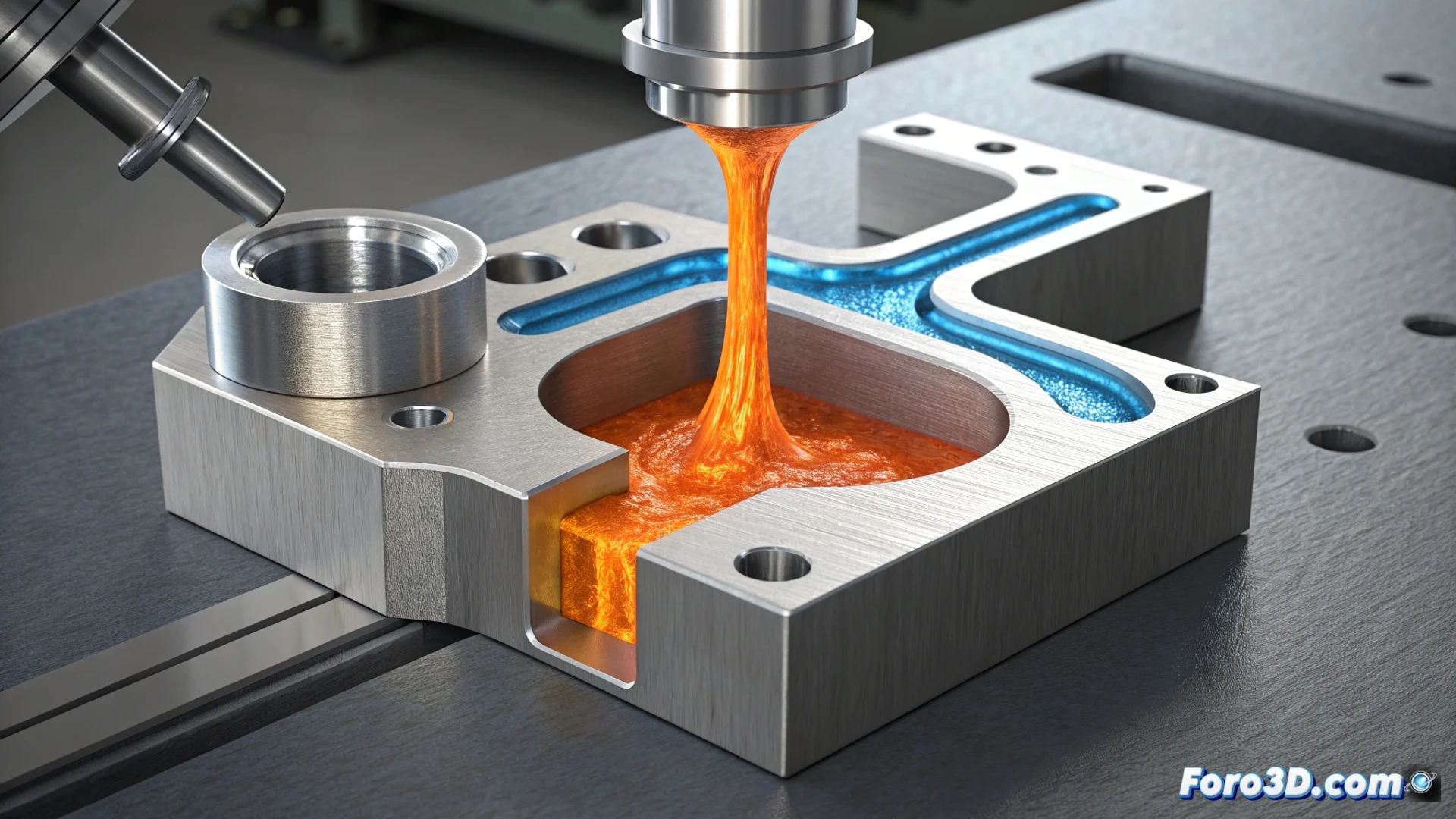
Oak Ridge National Laboratory Presents a Revolutionary Multi-Material 3D Printing System
The Oak Ridge National Laboratory (ORNL) has unveiled a game-changing innovation in additive manufacturing. It is a system capable of depositing multiple materials simultaneously in a single printing operation, eliminating pauses for hardware changes. This advancement promises to accelerate and enrich the way complex components are manufactured. 🚀
The heart of the system: convergent nozzle blocks
The technology is based on a patented design of Y-configured nozzles. These specialized devices allow two independent streams of molten material to merge into a single output flow. This approach not only far surpasses the flow rates of traditional large extruders but also achieves minimizing internal porosity in the final parts. The key lies in fusing the materials just before deposition.
Main advantages of the technology:- High productivity: Maintains a constant printing speed by avoiding nozzle or material changes.
- Improved precision: Allows precise control of material composition along a single printed strand.
- New design possibilities: Facilitates integrating composite structures with different mechanical or thermal properties within the same component.
This ability to process multiple materials at high speed could radically transform how industrial components are conceived and produced.
Potential impact on industry
This system is projected to have extensive use in various high-performance fields. Its capacity to create multifunctional parts in a single step is particularly valuable for sectors demanding efficiency and complexity.
Sectors that will benefit:- Aerospace and Defense: For manufacturing parts that integrate different functionalities, such as structural strength and thermal management.
- Energy: In the development of components for turbines or energy conversion systems with optimized materials.
- Civil Construction: Potential to create construction elements with zones of different strength or insulation.
A new paradigm for manufacturers
This innovation elevates the debate in part design to a higher level. Instead of being limited to selecting a single material or color for a component, engineers and designers can now discuss and plan which specific material to place in each millimeter of a part to optimize its performance. This represents a qualitative leap toward truly hybrid and highly efficient component manufacturing. The future of 3D printing lies in multi-materiality without compromising speed. ⚙️