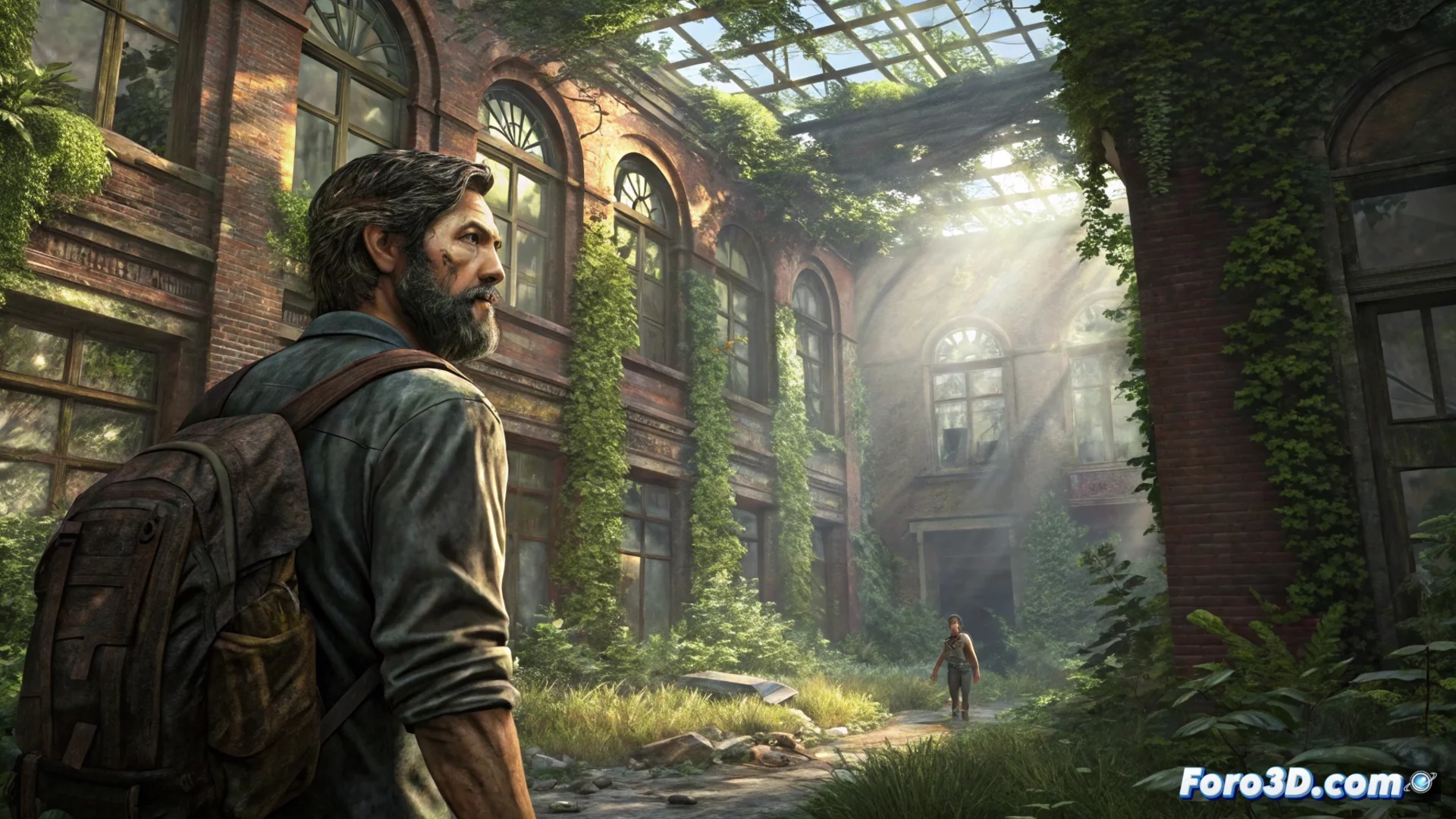
Naughty Dog's Engine Powers The Last of Us Part I Remake
The new version of The Last of Us Part I runs thanks to a significant evolution of Naughty Dog's internal graphics engine. This software, refined since the PlayStation 3 era, has been modified to squeeze the most out of PlayStation 5's capabilities. Later, the team adapted the title for PCs, facilitating the integration of image scaling technologies native to that platform. 🎮
A Comprehensive Visual Reconstruction
For this project, the developers recreated every visual aspect from the ground up. They deployed a completely new physically based rendering (PBR) lighting and rendering system. Characters feature a much higher polygon count and enriched facial detail, drawing from the work done for The Last of Us Part II. The game's environments use 4K quality textures to increase realism. ✨
Main Technical Advancements:- A PBR rendering system was implemented to achieve more realistic and consistent lighting.
- Character models were redesigned with high-density meshes to capture complex facial expressions.
- All environment textures were renewed in 4K resolution, offering an unprecedented level of detail in the saga.
Recreating such an iconic game involves enormous risk, where the greatest threat is not the infected creatures, but the high expectations of the gaming community.
The Development Arsenal Behind the Remake
Naughty Dog used its suite of internal development tools to create the game. For modeling and animation, they relied on Autodesk Maya, while fine detail sculpting was done with ZBrush. The texturing process was managed with Adobe Substance 3D Painter, and for audio integration, they used the Wwise middleware. In the PC edition, the title incorporates support for NVIDIA DLSS 3 and AMD FSR 2, technologies that scale resolution and generate frames to optimize performance. 🛠️
Key Software Used:- Autodesk Maya: For 3D modeling and animation of characters and objects.
- ZBrush: For sculpting high-frequency details on models.
- Adobe Substance 3D Painter: For creating and applying realistic textures efficiently.
A Technological Legacy That Evolves
This project demonstrates how a proprietary engine, maintained and improved over years, can serve as the foundation for a complete visual reimagining. The transition to PC not only expands the game's reach but also allows the incorporation of the latest innovations in intelligent upscaling. The result is an experience that honors the original while setting a new technical benchmark, challenging developers to overcome the weight of nostalgia with pure production quality. 🚀