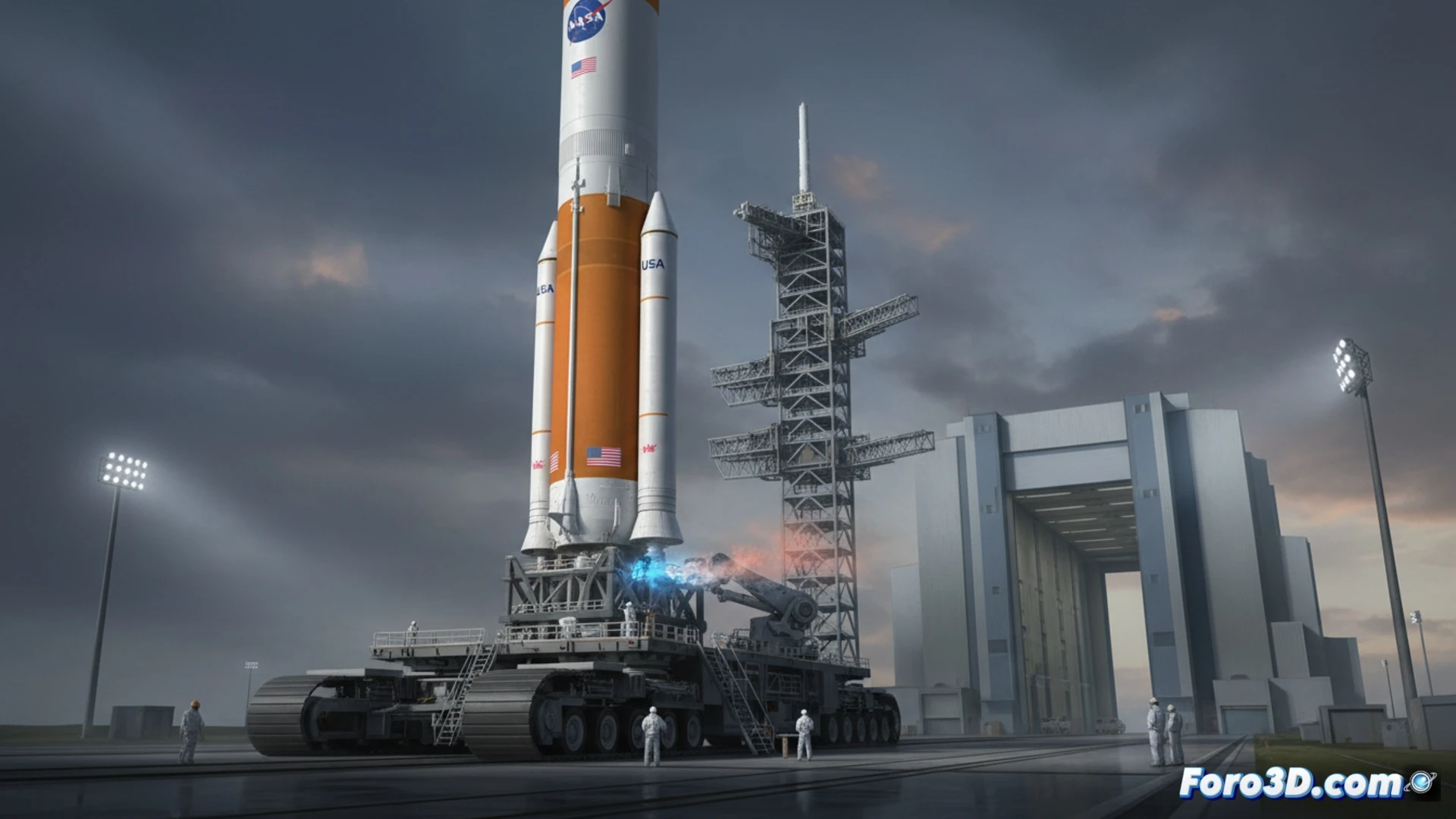
The Artemis II mission, which was supposed to launch in March, is postponed again. NASA detected an interruption in the helium flow during a test on the cryogenic stage of the SLS rocket. This gas is necessary to purge engines and pressurize tanks. The rocket must return to the Assembly Building for repairs, as they cannot be done on the pad. Although an April window is being evaluated, the continuous delays make it unpredictable to set a date.
The Technical Problem and the Complexity of the Cryogenic System 🔧
The helium interruption was located in a check valve of the Interim Cryogenic Propulsion Stage (ICPS). This system handles liquid hydrogen and oxygen at extreme temperatures, where helium acts as purge and pressurization gas. A failure here can affect the RL10 engine ignition sequence in space. The need to move the rocket to the hangar indicates that access to the component is complex and requires a controlled environment, extending the schedule.
The SLS and its Tradition of Broken Dates with the Pad ⏳
It seems that the SLS rocket has a complicated relationship with launch dates. Every time the moment approaches, a technical reason arises to postpone the encounter. Now it's the helium acting as a faulty matchmaker. These recurrent delays are starting to seem like a necessary ritual, as if the rocket needed to accumulate a little more drama before deciding to take off. The launch pad must feel abandoned.