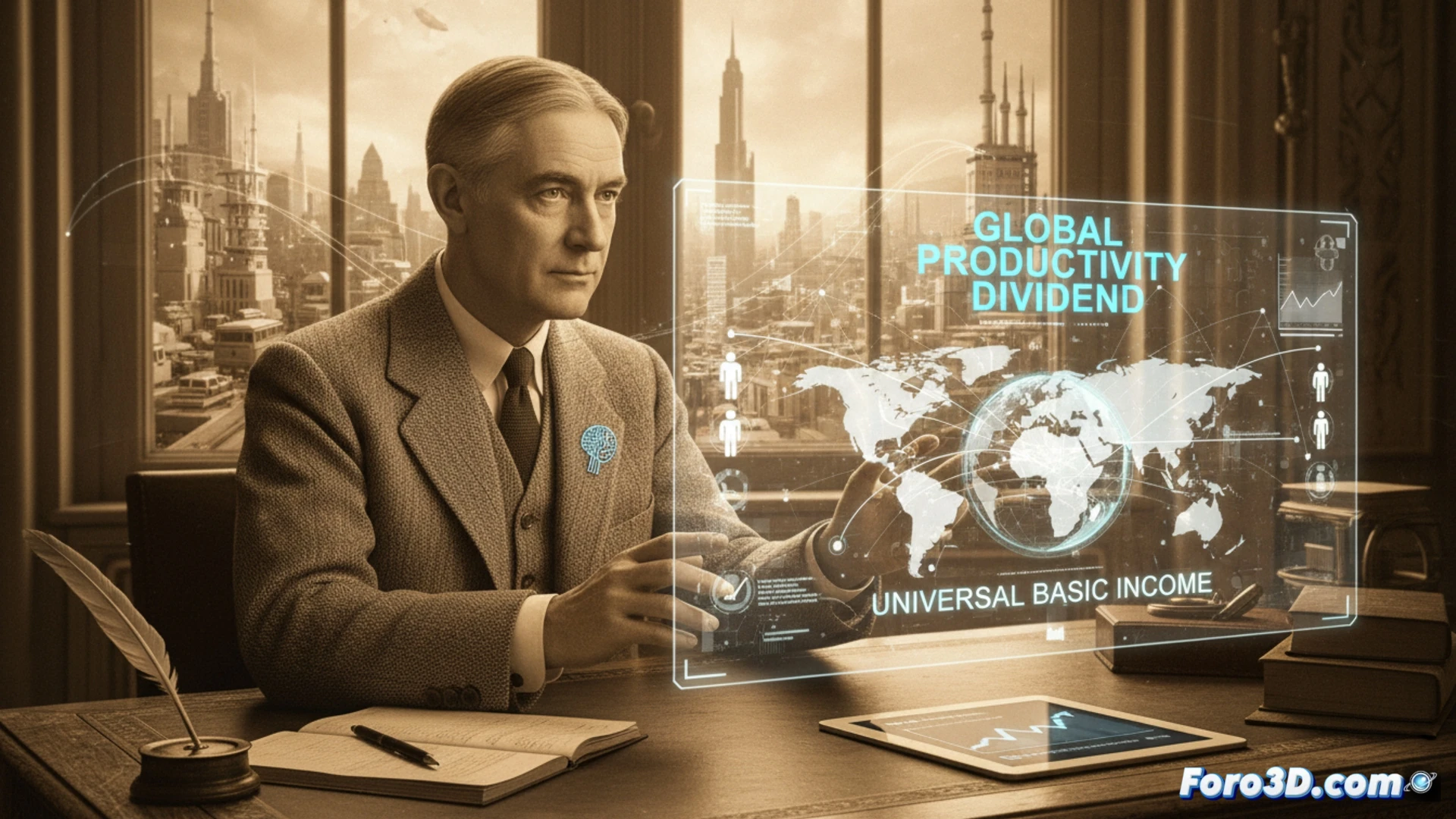
If John Maynard Keynes analyzed our era, he would see a paradox: unprecedented productivity growth alongside persistent economic inequality. His response to cyclical crises was state intervention. Facing the current challenge of automation, his logical proposal would be a mechanism for the direct distribution of its fruits: a Global Productivity Dividend funded by taxes on AI.
The technical mechanism: automated measurement and redistribution ⚙️
The proposal is based on two technical pillars. First, AI auditors systems would measure the productivity increase attributable to automation in key sectors. Second, a global tax, perhaps on AI license transactions or extraordinary profits from automation, would feed a fund. This fund would distribute a periodic dividend, a Universal Basic Income, to each citizen through digital identification and payment infrastructures, ensuring that growth benefits the base of the pyramid.
From steam engines to thinking machines: the common-sense tax 😏
Keynes already dealt with the technological unemployment of his time. Now, while an algorithm manages investments and a robot prepares coffees, his spirit would propose taxing those digital minds. The irony is clear: we would use artificial intelligence to calculate how much it takes from us, and then politely ask it to sign the check on our behalf. It would be the first tax that machines pay for leaving us without work, a Kafkaesque twist with a happy ending, or at least with a paycheck.