How a Post-Apocalyptic World is Created from Scratch
Building a wasteland that breathes danger and distorted life was the task of the Refuge VFX team for the second installment of Fallout. Their work is not limited to designing explosions; it focuses on infusing character and disorder into a scenario that, at its core, is empty. 🏜️
Shaping the Creatures of Decay
Take the Ghoul, an iconic figure. It is not a simple zombie. The artists worked with a multi-layered approach, similar to peeling a nightmare onion. They started with the actor's performance, then overlaid deteriorated digital skin and musculature, finishing with the touches that generate repulsion: sores, scabs, and an unhealthy glow in the gaze. This process of facial animation and simulating organic tissues is so meticulous that it feels almost tangible.
Key Phases in the Creation of the Ghoul:- Capture of the real performer's base performance.
- Digital modeling and texturing of damaged skin and muscles.
- Adding hyperrealistic details like wounds, dirt, and decomposition effects.
The greatest challenge in a destroyed world is not showing the ruin, but persuading the viewer that, in a twisted way, that place still has a pulse.
The Landscape as an Active Protagonist
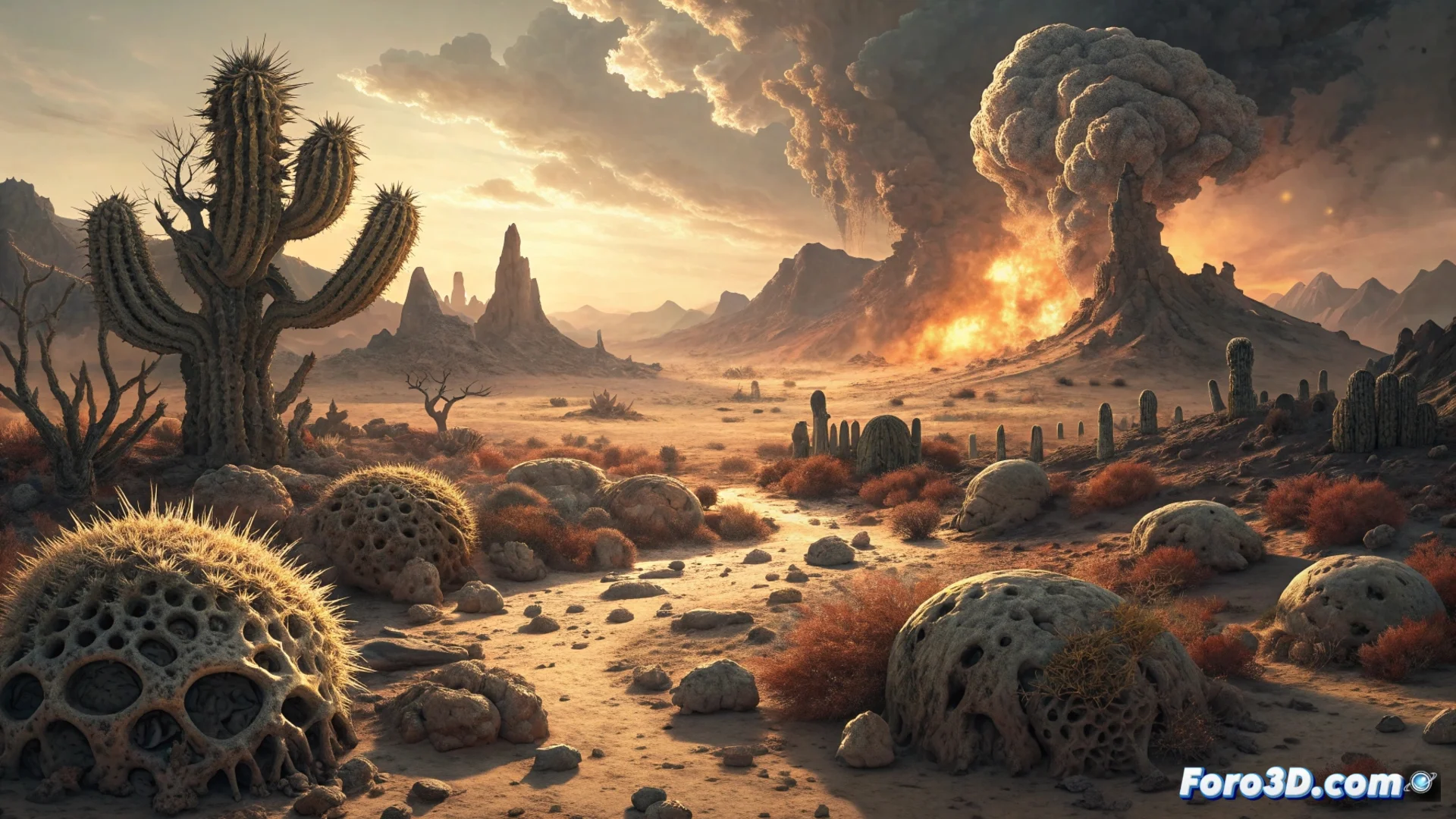
In this narrative, the true main character is often the environment. The desert is not a static backdrop. Using tools like World Machine and Houdini, the team generated vast territories procedurally, as if the software acted like a capricious geological force. Later, they injected the elements that define the atmosphere: dust, debris, and that radiation perceptible in the environment. Every shot exudes that toxic heaviness, making the audience feel the aridity. 💨
Tools and Techniques for the Environment:- Procedural terrain generation with World Machine to create unique and extensive geographies.
- Using Houdini to simulate and dynamically add dust, debris, and suspended particles.
- Integrating all elements so that the atmosphere feels dense, toxic, and coherent in every shot.
The Invisible Essence of VFX Art
It is revealing how the ultimate goal of this complex work is to blend completely with the story. When executed perfectly, the viewer does not notice the technical effort; they simply believe in that broken world and feel it pulsing with its own dangerous life. It is the art of making the invisible visible.