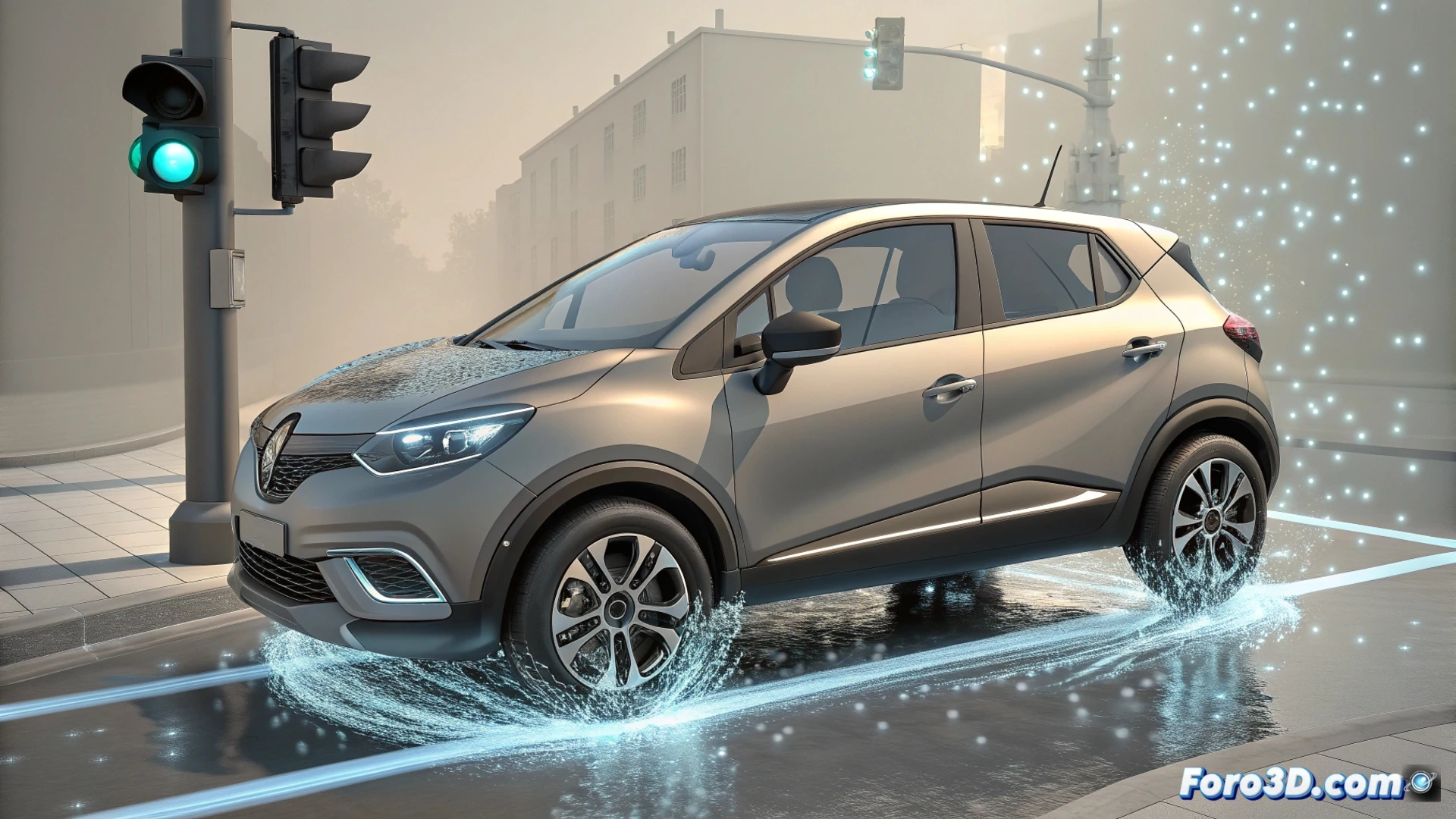
How Does a Car with a Small Electric Motor Save Fuel?
Have you ever wondered how some current vehicles reduce their gasoline consumption without being conventional hybrids? 🚗💡 Let's reveal the operation of micro-hybrid (MHEV) technology, which brands like Renault implement in their Captur model. It's about giving a electric boost to the traditional engine so that it consumes less.
The heart of the system: the reversible alternator
The key component is a reversible alternator. Its mission is to transform the energy that is normally dissipated as heat when braking. Instead of losing it, the car captures it, converts it into electricity, and stores it in a compact battery. Subsequently, that auxiliary electric motor assists the combustion engine at precise moments, such as when starting off or during gentle accelerations.
Main advantages of this equipment:- Recycles energy: Takes advantage of the kinetic energy from braking, which was previously wasted.
- Lightens the load: The thermal engine works less during moments of greatest effort.
- Is transparent: The driver does not perceive changes in their driving style, but the car is more efficient.
It's a two-man team: the gasoline engine does the main work and the electric one provides precise help at key moments.
The crucial difference with a full hybrid
It's essential to understand that an MHEV system cannot propel the vehicle using only electricity. Its battery has lower capacity and its goal is not to offer electric range, but to optimize fuel use. It acts as a smart saver that manages every drop of gasoline, being especially effective in urban traffic with its constant stops and starts. 🔄
What defines a micro-hybrid:- Small battery: 48V, much more compact than that of a plug-in hybrid.
- Assistance function: Its role is to support, not replace the main engine.
- City efficiency: Where braking and accelerating happen the most, that's where it saves the most.
An ingenious solution for the present
This technology represents an intelligent solution to make our trips consume less without drastically altering the driving experience. In the end, it's like having an invisible co-pilot that constantly looks for ways to spend less energy, making every journey more economical and with less impact. ✅