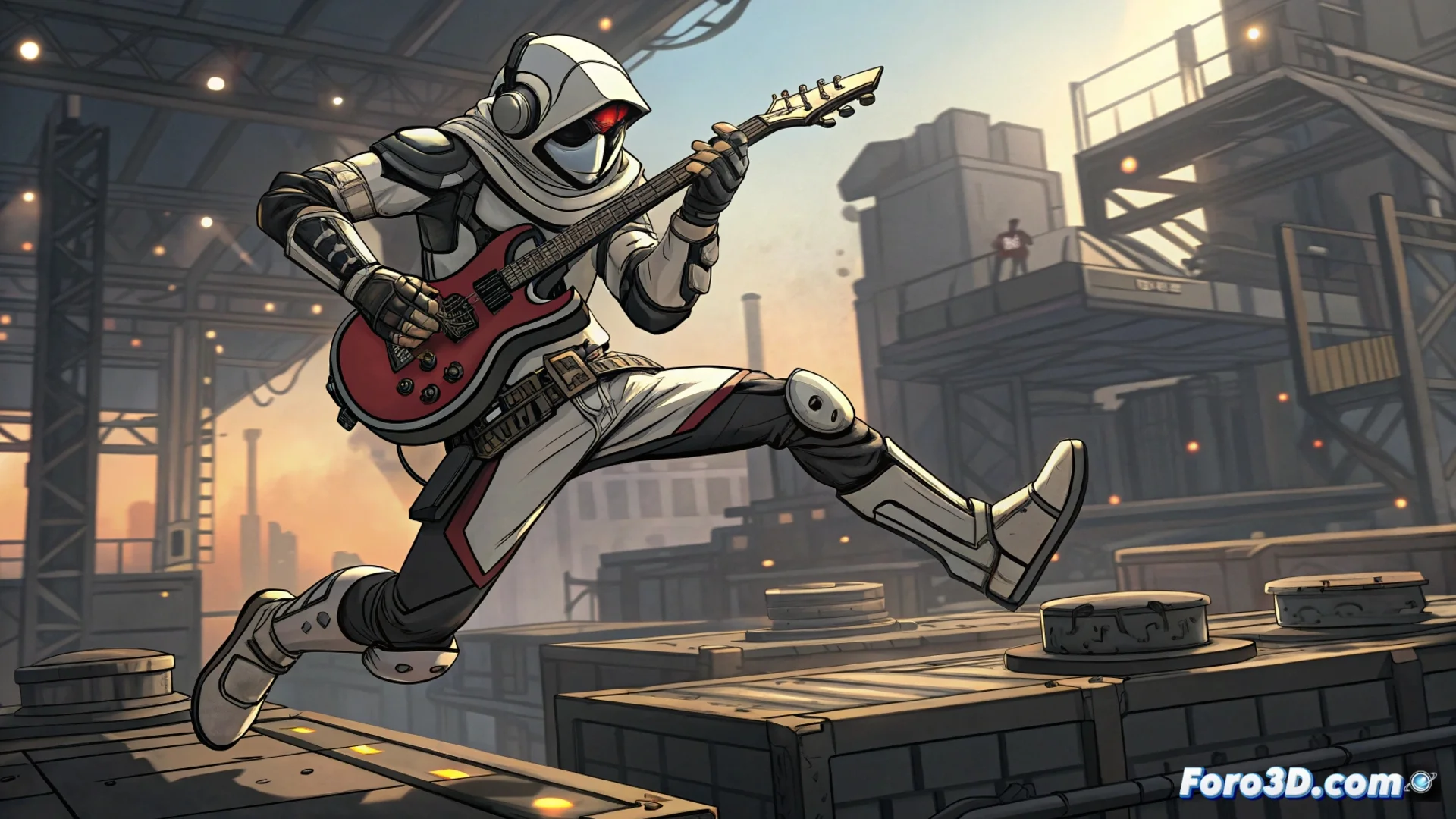
Hi-Fi Rush: Unreal Engine 4 Powers a Rhythm-Based Action Game
Tango Gameworks studio made an interesting technical decision by using Unreal Engine 4, an engine typically associated with realistic graphics, to create Hi-Fi Rush. Their goal was clear: design an action experience where absolutely everything, from walking to hitting, occurs in perfect harmony with the soundtrack. 🎮
A Visual Style that Emulates Traditional Animation
To achieve its distinctive cartoon aesthetic, the team did not use standard solutions. Instead, they built a very specific rendering pipeline within UE4. This high-end cel shading system generates the appearance of classic 2D animation. The animations, previously made in Maya, were then integrated into the engine with the aim of making each frame look like it was taken from an animated TV series.
Keys to the Visual Pipeline:- Implement a custom cel shading system within Unreal Engine 4.
- Create and stylize the main animations using Autodesk Maya.
- Integrate all elements so that each final image resembles a cartoon.
The challenge was not just to render, but to make the world pulse to the beat of the music.
The Big Challenge: Synchronizing the World with the Beat
The essence of Hi-Fi Rush lies in its rhythmic mechanics. Here, the environment, enemies, and protagonist respond to the music track in real time. Achieving this precision required building a robust audio architecture, possibly with tools like Wwise, and extremely detailed scripting within the engine. Programming to avoid any lag was meticulous work central to the project.
Elements of the Rhythmic System:- Develop an advanced audio system that governs gameplay.
- Write precise scripts in UE4 to link actions and sound.
- Ensure characters and scene elements react in real time to the rhythm.
Conclusion: A Technical and Artistic Fusion
Hi-Fi Rush demonstrates the versatility of Unreal Engine 4 beyond photorealism. The game's success is based on two pillars: a custom cel shading rendering that defines its look, and a complex programming layer that achieves perfect synchronization with the music. The result is a proposal where the player not only hears the rhythm, but plays it and feels it in every interaction. 🎵