Ghostwire Tokyo: How a Modified Unreal Engine 4 Brought a Spectral Shibuya to Life
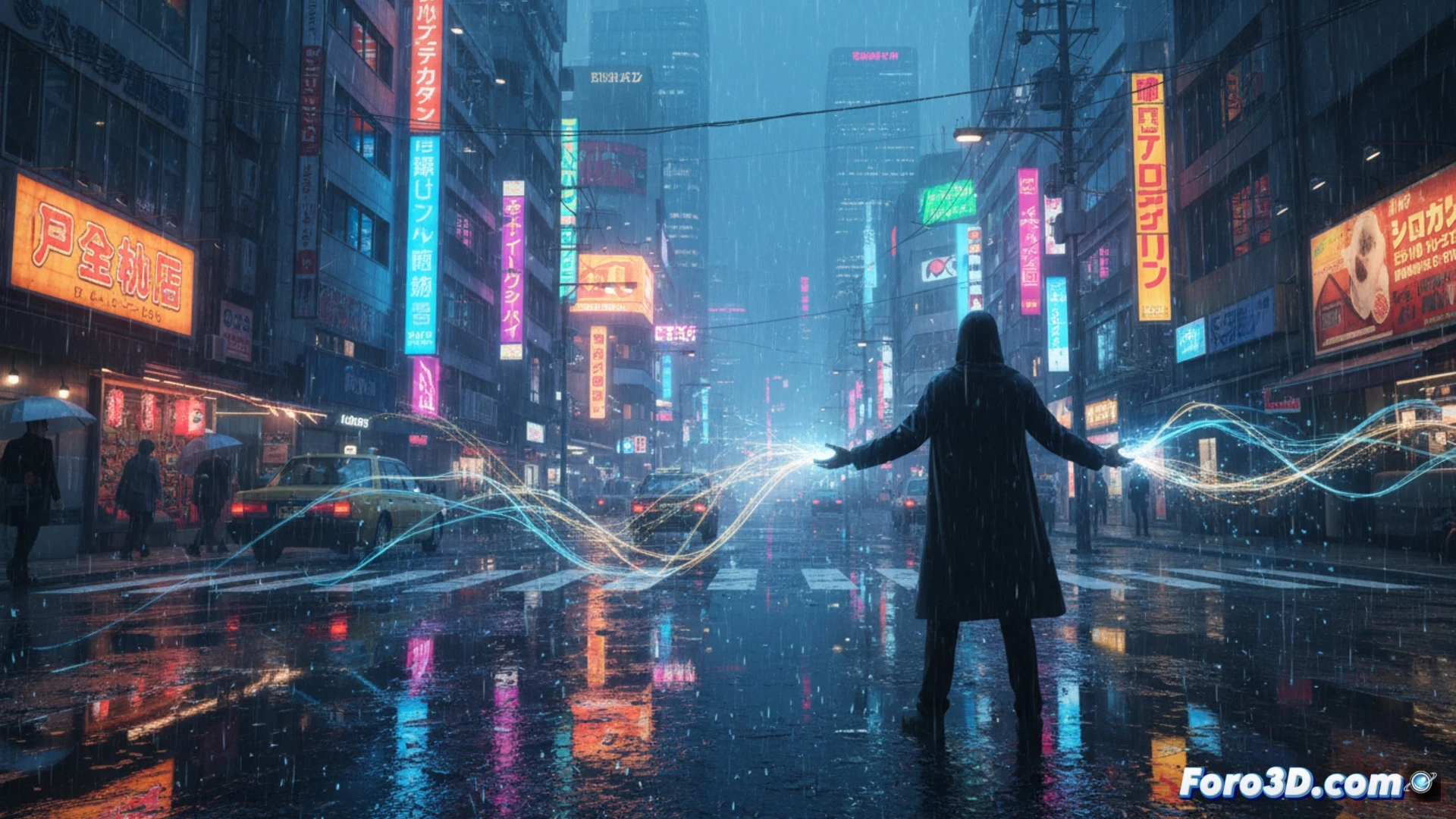
Tango Gameworks' title, Ghostwire Tokyo, builds its world on a very specific technical foundation: a customized version of Unreal Engine 4. This engine, significantly altered, was the key to digitizing the overwhelming density of the famous Shibuya district, with its perpetual rain and sea of neons. The result is an urban setting of astonishing fidelity that functions as the silent main character. 🌃
An Engine Adapted for a Complex City
The development team did not use the engine unchanged. It had to deeply adapt it to efficiently process such a dense urban environment full of atmospheric effects. One of the most notable improvements was the ability to integrate Ray Tracing for reflections. This was especially leveraged in wet streets and puddles, where luminous signs and city lights duplicate with striking realism, adding an extra layer of immersion to the exploration.
Key Engine Modifications:- Optimization of rendering to handle thousands of geometric elements and lights on screen simultaneously.
- Implementation of a ray tracing reflection system (Ray Tracing) prioritized for wet surfaces.
- Improvement in particle management and atmospheric effects for constant rain and supernatural fog.
Cleansing the city of spirits sometimes requires stopping to admire its perfect reflection in a neon-lit puddle.
The Visual Soul: Particle Effects and Post-Processing
The visual identity of Ghostwire Tokyo does not reside solely in its setting, but in the magic of its effects. The player's powers, called ethereal weaves, are essentially complex particle systems. These visual effects (VFX) were designed with meticulous care, using Houdini as the main tool. Their function goes beyond aesthetics: they clearly communicate the combat state and mechanics to the player. To polish their final appearance, additional post-processing was applied with software like Adobe After Effects, achieving that sharp and ethereal style that characterizes it. ✨
Essential Tools in Production:- 3ds Max and Maya: Used for modeling and creating most of the game's assets.
- ZBrush: Employed for sculpting high-resolution details on models and environment elements.
- Houdini: Fundamental for simulating particle effects, destructions, and procedurally generating content, speeding up the creation of a vast world.
A Workflow for a Ghostly Tokyo
The true technical feat was coherently integrating all these elements within the modified Unreal Engine 4. The established workflow allowed models, high-poly sculptures, Houdini simulations, and post-processing effects to become a unified visual experience. It was not just about making a pretty city, but about building a spectral Tokyo that feels like a living and cohesive organism, where every reflection, every rain particle, and every flash of supernatural energy contributes to an unforgettable atmosphere. Technology, in this case, was the perfect brush to paint an urban legend.