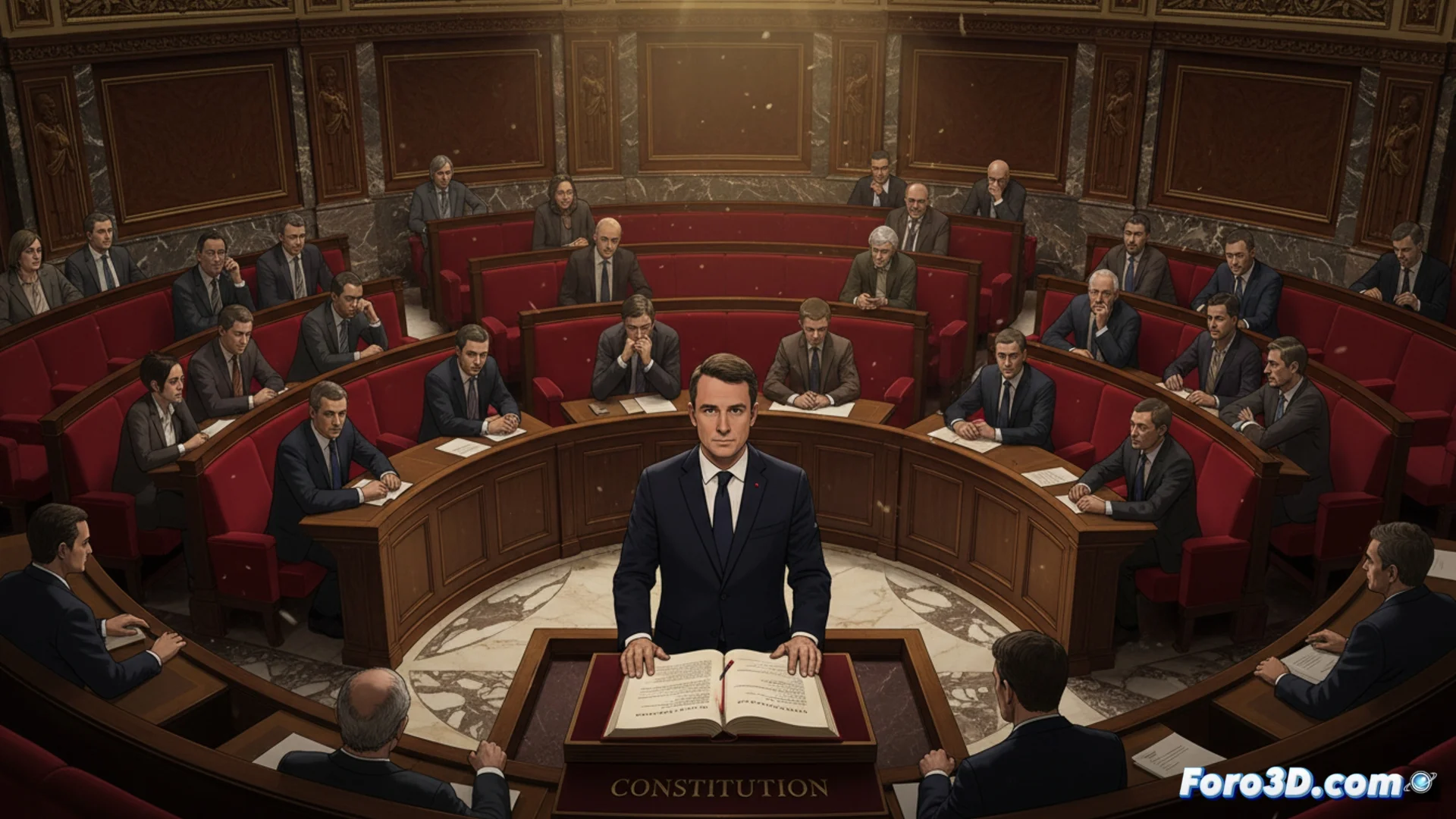
France Approves its 2026 Budget After a Long Political Blockade
The Gallic executive finally manages to pass its accounts for the year 2026, putting an end to nearly four months of institutional paralysis. A divided parliament, without a clear majority since the 2024 elections, had blocked any progress on financial matters. To unblock the situation, Prime Minister Sébastien Lecornu activated the controversial Article 49.3 of the Constitution, a mechanism that allows adopting a law without needing to vote on it. Although this action led to two motions of no confidence being presented against the government, both were rejected, thus confirming the budget and giving a temporary respite to a minority executive. 🏛️
The Details and Goals of the Economic Plan
The budget document sets as its main objective to reduce the deficit to 5% of Gross Domestic Product, starting from an estimated 5.4% for 2025. To achieve this goal, it proposes to raise the taxes paid by companies and increase defense spending by more than six billion euros. The cabinet maintains that these steps are essential to straighten out public finances and strengthen the army. However, several economic analysts and opposition groups question whether the deficit figure is achievable and warn that raising taxes could slow down growth in this key European power.
Key Points of the Budget Law:- Reduce the deficit: Lower to 5% of GDP from the 5.4% projected for the previous year.
- Financing: Increase the tax burden on companies and allocate more funds to the military sector.
- Criticisms: Doubts about the viability of the numbers and the possible negative impact on the economy.
“A constitutionally valid procedure, but one that leaves a bitter taste in a deeply fractured hemicycle.” – Political analysis.
A Constitutional Method that Generates Controversy
Using Article 49.3, a resource that avoids parliamentary debate and direct voting, has marked the entire process. Although fully legal, this instrument is often seen as a forced maneuver that bypasses seeking agreements in a fragmented chamber. The fact that the government overcame the subsequent motions of no confidence consolidates the accounts, but does not eliminate the uncertainties about the strength of its parliamentary support or its ability to carry out complex policies in this context.
Consequences of Using Article 49.3:- Forced Acceleration: Allows approving laws without submitting them to a vote, speeding up blocked processes.
- Political Risk: Automatically opens the door to motions of no confidence against the government.
- Democratic Wear: Perceived as a tool that limits debate and consensus in a parliamentary system.
A Paradox that Unblocks the Situation
In short, to validate the accounts that affect the entire country, the executive chose to skip the phase of counting supports in parliament. A contradiction within the democratic system that, however, has served to overcome a stage of stagnation that had been ongoing for months. The budget is approved, but the political malaise and questions about future governability remain. ⚖️