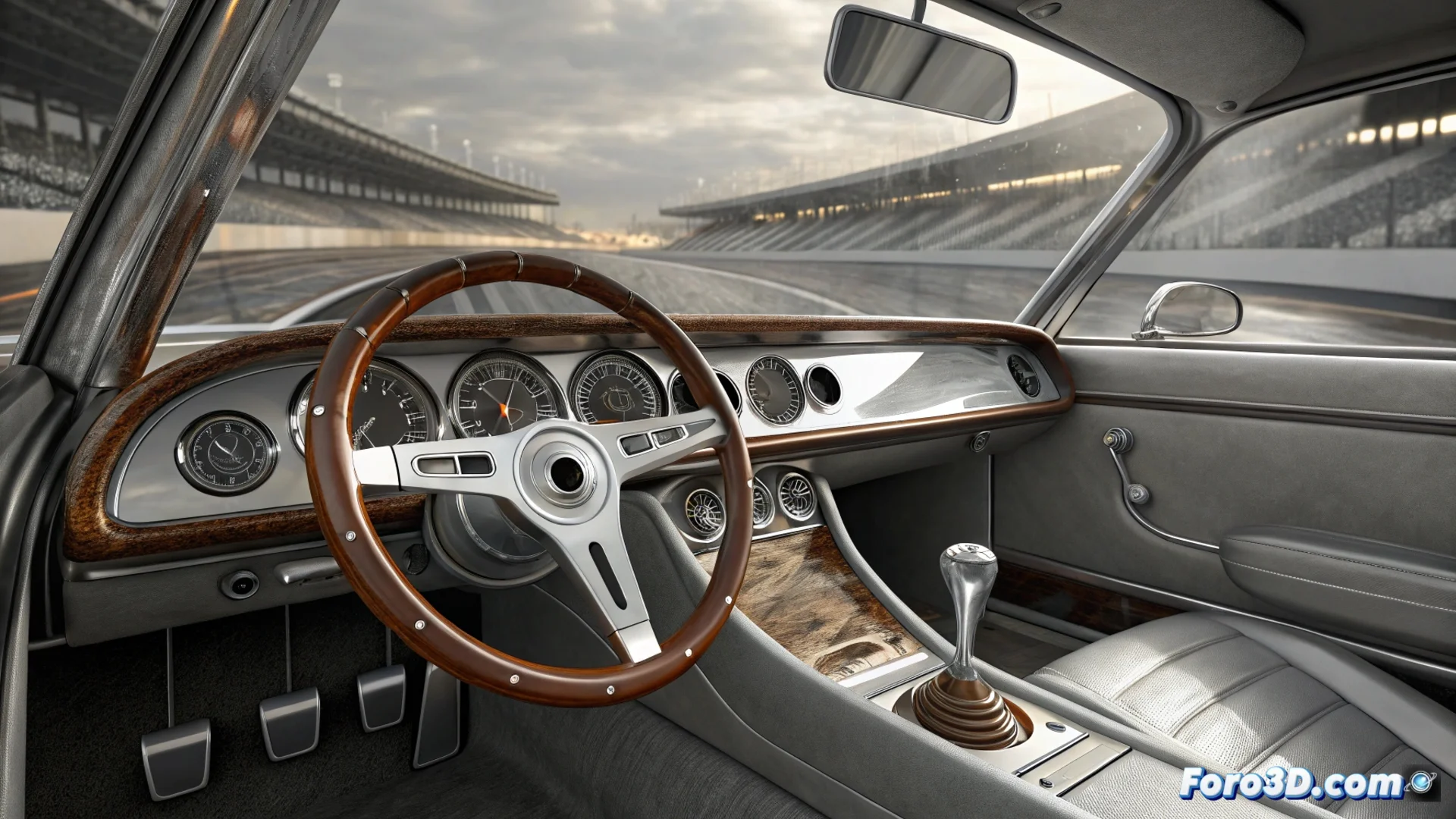
Forza Motorsport 2023 and its Graphics Engine ForzaTech
The latest installment in the simulation saga, Forza Motorsport (2023), is built on proprietary technology called ForzaTech. This engine, created and maintained by Turn 10 Studios, gives developers absolute control over every technical element of the project, from the physical foundation to the most advanced visual aspects. 🏎️
The Foundation of Physical Simulation is Renewed
For this launch, the team completely rebuilt the foundations that simulate vehicle behavior. A new tire model was implemented that uses eight contact points with the asphalt, along with a more complex suspension system. The goal is to make the cars respond with unprecedented realism and precision in the series.
Key Features of the Physics Engine:- Tire model with eight contact points for more detailed interaction with the track.
- Redesigned suspension system that calculates forces and movements with greater fidelity.
- Total control over simulation parameters to adjust the handling of each vehicle.
Although the engine calculates physics with great detail, sometimes the car behaves as if Newton's laws had been written by a romantic poet.
ForzaTech in Charge of Graphics
In the visual realm, the engine deploys cutting-edge techniques. It integrates real-time ray tracing to generate dynamic reflections during races. To recreate the circuits, the team used photogrammetry, digitizing the geometry and textures of the real world with an extremely high level of detail. Additionally, a specific rendering system was developed for materials, focusing especially on car paints. This system simulates layers of varnish, metallic particles, and dirt accumulation to achieve a visually authentic finish. ✨
Advances in Rendering and Assets:- Use of real-time ray tracing for precise and dynamic reflections.
- Creation of scenarios using photogrammetry for extreme fidelity.
- Advanced system for rendering complex materials like metallic paints and varnishes.
The Workflow and Tools
Producing assets for a game of this magnitude requires a specialized pipeline. It's likely that the team started from CAD software to obtain the base models of the automobiles. Subsequently, these models would be optimized and prepared in applications like 3ds Max to convert them into efficient meshes that the engine can run in real-time. Turn 10 also has a set of internal tools specialized for managing physical simulation, organizing the large number of game assets, and processing track data. The wheels can perceive the track surface, although sometimes it feels like they perceive it excessively, adding a touch of unpredictable character to the driving. 🛠️